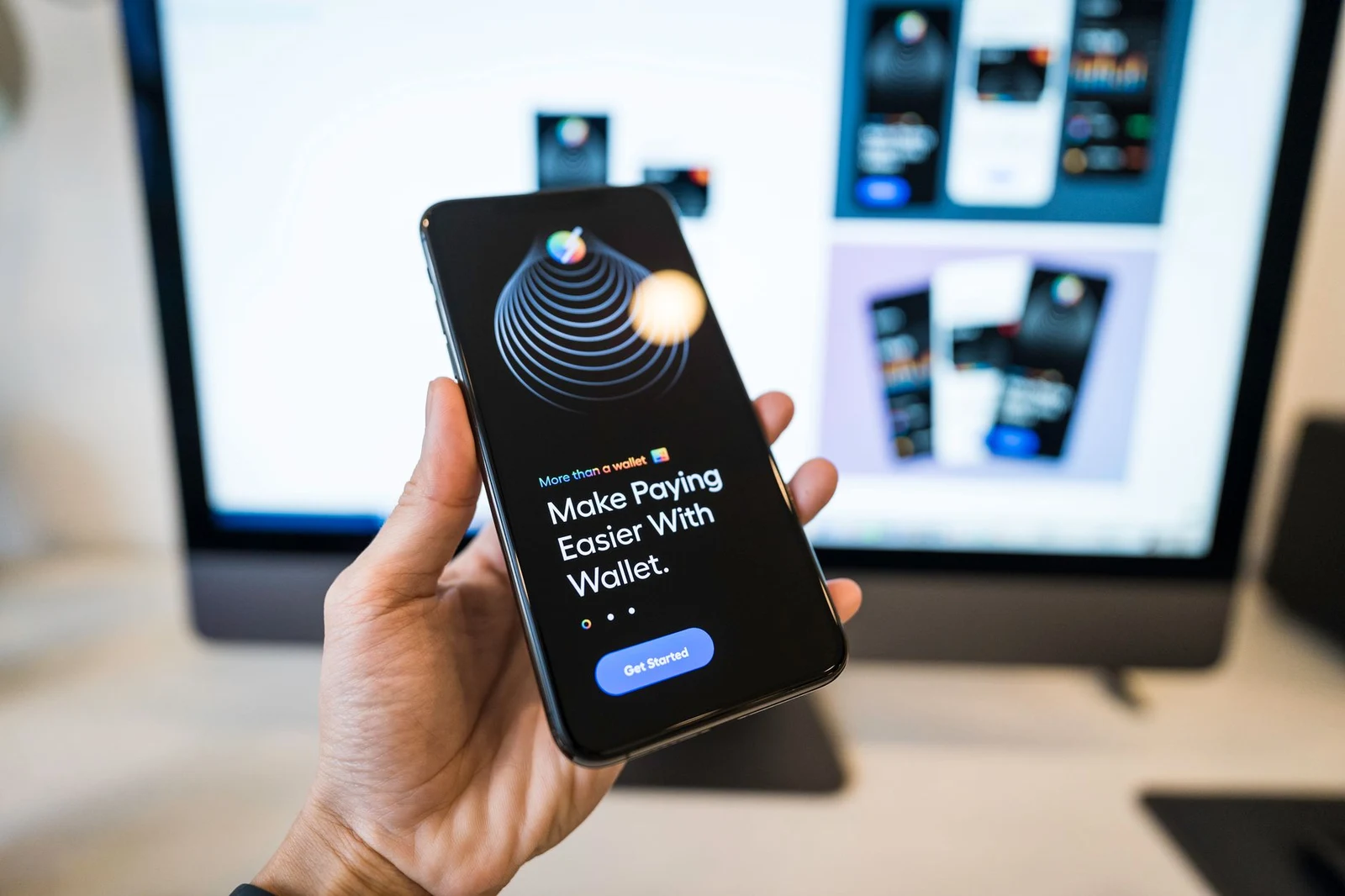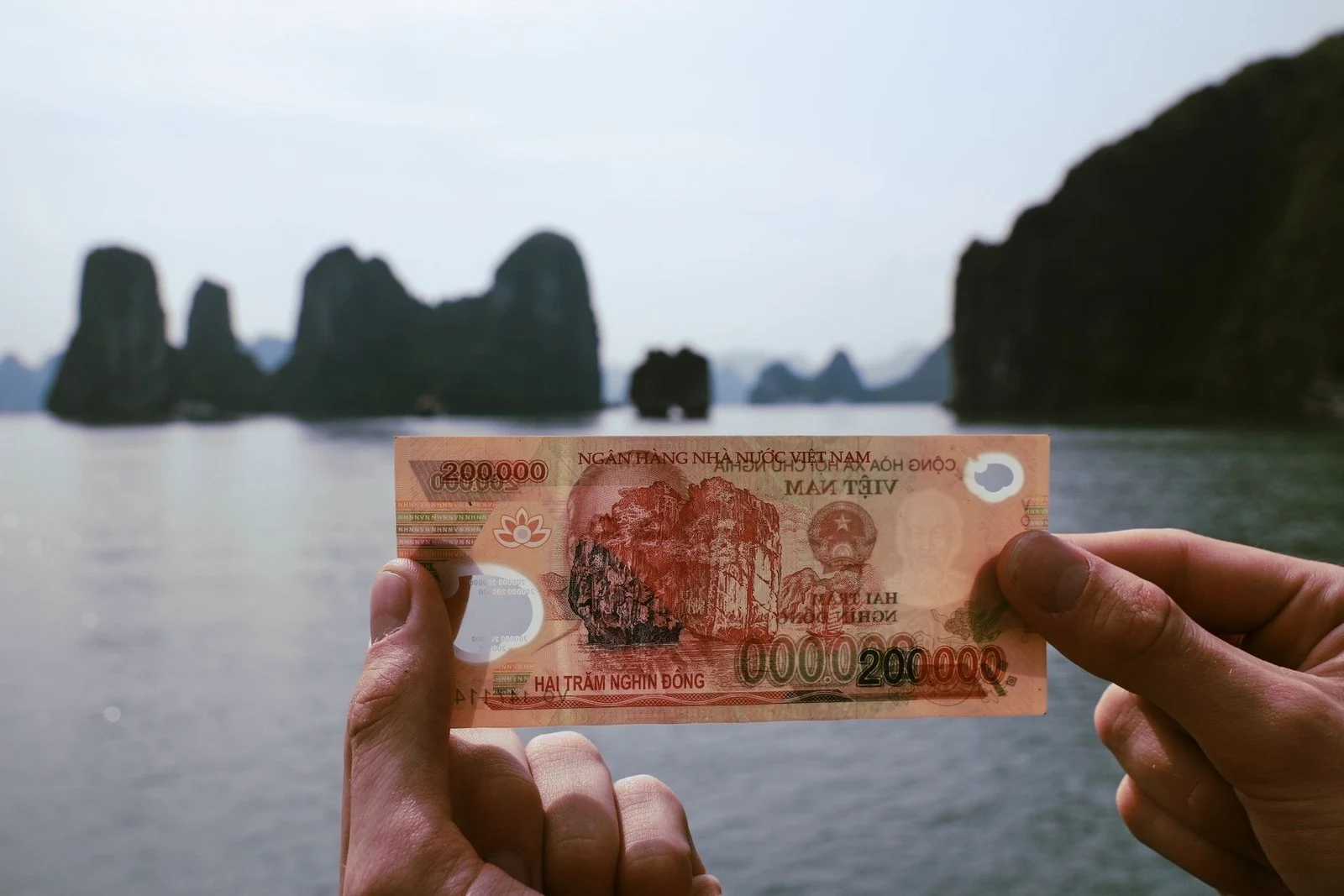
Foreigners can pay with VietQR in Vietnam, but the route depends on where your bank is. Visitors from China, South Korea, Thailand, Laos, Cambodia and Singapore can scan Vietnamese QR codes straight from their home banking app. Everyone else, including US, EU, UK and Australian cardholders, needs a Vietnamese payment app with a foreign Visa, Mastercard or JCB linked to it, and VNPAY is the one I would set up first.
I live in Da Nang and spend my days on visa questions from people who have just landed, so card and payment trouble reaches me constantly. Anything below that I could not confirm from NAPAS, the State Bank of Vietnam or the payment apps themselves is marked as unconfirmed.
What is VietQR and who can scan it?
VietQR is Vietnam’s national QR payment standard, built by NAPAS together with 14 launch banks. One printed code can be paid from many different bank apps and wallets, which is why a street vendor and a supermarket both show the same style of black-and-white square. The standard itself is open to anyone, but your payment app has to be able to read it and move money.
Can I scan VietQR with my home bank or foreign card?
Only if your bank sits inside VietQRGlobal, NAPAS’s cross-border scheme for inbound tourists. The markets announced so far are China, South Korea, Thailand, Laos, Cambodia and Singapore, with Alipay, WeChat Pay and UnionPay among the Chinese connections. I found no US, EU, UK or Australian bank on that list, so a Western tourist should not expect to open a home app and scan.
How do I pay by QR with the VNPAY app?
VNPAY is the practical answer for a Western visitor, because it signs you up with a passport and lets you link a foreign card. The Da Nang Department of Culture, Sports and Tourism recommends it to international visitors. The card link needs a code from your issuer, so do it in your room with a signal rather than at a till.
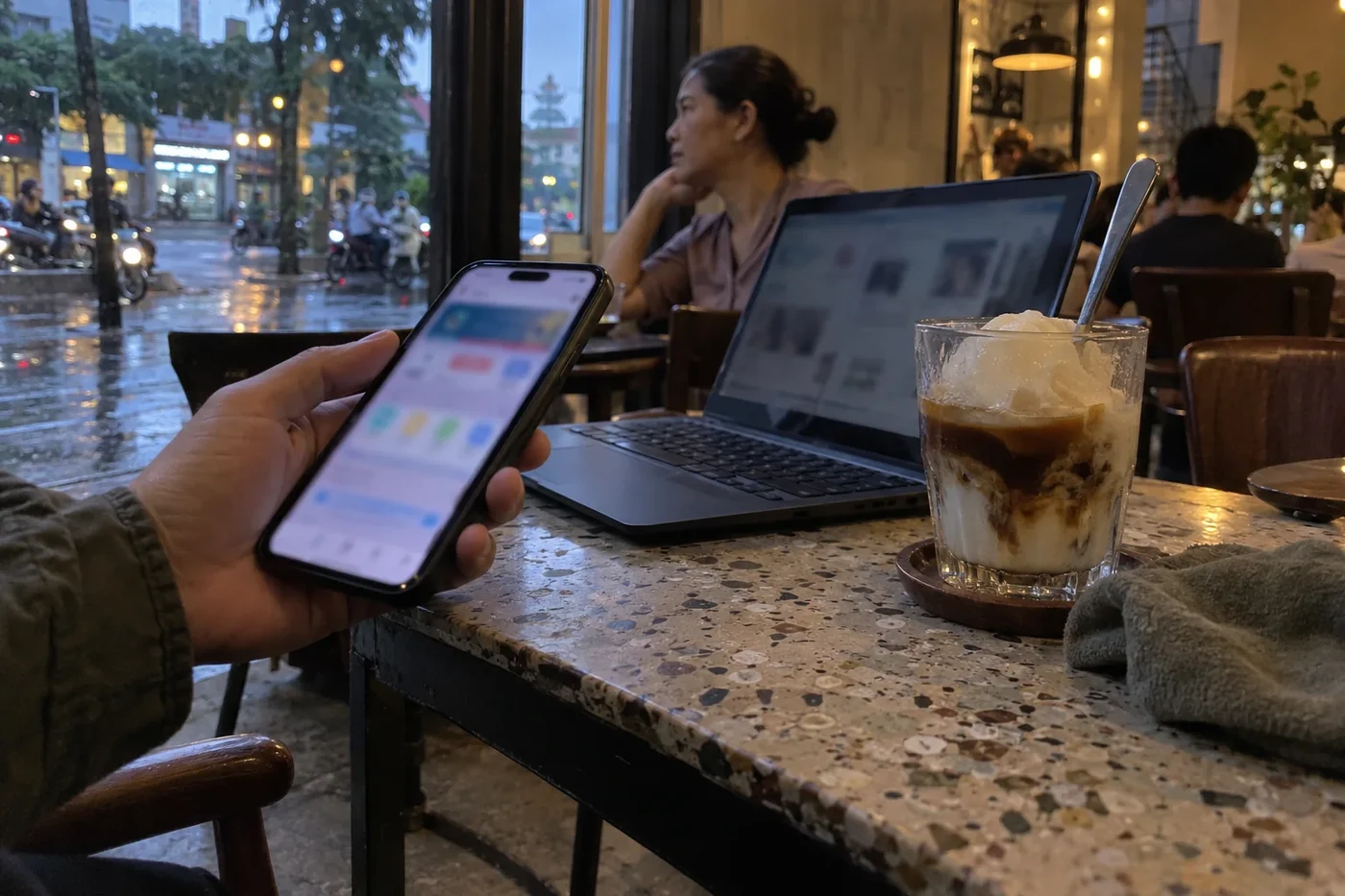
- Install VNPAY from the official app store and register with your international phone number, name, nationality, passport number, entry date and email.
- Confirm the one-time code that arrives by email.
- Create a six-digit PIN for the app.
- Add your Visa, Mastercard or JCB card and enter the one-time code your card issuer sends.
- Scan the merchant’s VNPAY-QR code, which is VNPAY’s own merchant code shown at shops that take the app, and check the amount.
- Approve the payment with your PIN and the soft OTP, a one-time code the app generates itself.
The charge lands on your linked card, so you never need a Vietnamese bank account or a cash top-up to use it.
Can tourists use MoMo or ZaloPay instead?
MoMo is a maybe and ZaloPay is unconfirmed. MoMo’s help page says a foreign passport still works for verifying a wallet. What I could not confirm is whether a visitor can then fund the wallet from a foreign card, so read the full MoMo registration walkthrough before relying on it. For ZaloPay, I only found a target to accept foreign cards by the end of 2025 and no proof it is live.
Can I pay the Vietnam e‑visa fee with a QR code?
No QR option exists on evisa.gov.vn as far as I could find. The portal collects the fee online by bank card through its payment gateway, and the amounts are set by Circular 28/2026/TT-BTC: $25 for a single-entry e‑visa and $50 for multiple entry of up to 90 days, effective 1 April 2026.
This is where many visitors get stuck: a foreign card that the portal’s gateway declines is the usual snag, and a VNPAY wallet or a VietQR scan cannot stand in for the missing card. You can fill in the form and pay yourself with a card the gateway accepts. If you would rather not risk a failed payment on a deadline, at BestBus Vietnam we pay the government fee with our own card and file the application for you. Send me your arrival date on WhatsApp and I will tell you what is realistic. The e‑visa payment troubleshooting guide lists the usual causes of a declined payment.
What limits and fees apply to VietQR payments?
NAPAS says a VietQR transfer stays under 500 million dong per transaction, far above what a traveller spends. The tighter rule is biometric, and I found no source explaining how it applies to a passport-only visitor. Since July 2024 the State Bank of Vietnam requires face or fingerprint checks for online transfers of 10 million dong or more, and above 20 million dong a day.
I found no published daily cap for NAPAS transfers as a whole, and no published exchange rate or fee for foreign cards in VNPAY. Your own card issuer’s foreign-exchange charge is separate, so check it before you pay.
Can a tourist open a Vietnamese bank account to use VietQR?
Usually not. Vietcombank, BIDV and Techcombank generally ask for proof of a long stay, typically a visa or residence permit valid for about 12 months, and a plain tourist visa rarely qualifies. Tourist-visa holders also cannot apply for a credit card.
Sources disagree on digital banks: one guide says Timo accepts tourist visas and the account stops working when the visa lapses, while Wise says no bank accepts them. Of the two versions I trust Wise’s cautious one, because an account that dies with your visa is a weak thing to build a payment plan on. The bank account guide for foreigners covers the long-stay route.
Which way of paying by QR fits you?
Pay from your home app if your bank is in one of the six VietQRGlobal markets. Everyone else should set up VNPAY with a foreign card before the first scan. A Vietnamese bank account on a tourist visa is not worth planning around, and the e‑visa fee always goes through a bank card on the government portal.
The overview of payment methods for foreigners compares cards, cash and wallets. If you would prefer to hand over the card problem, message me on WhatsApp and I will tell you whether your card is likely to pass and what to do if it does not.
Frequently asked questions
What if a vendor shows only a bank VietQR code?
I could not confirm that VNPAY reads a plain bank VietQR code. Ask whether the vendor takes VNPAY, and pay cash if not. Home apps from the six VietQRGlobal markets do read those codes.
What if my card will not link in the app?
VNPAY asks your card issuer to send the one-time code, so the block is usually on the bank side. Call your issuer, confirm the card allows online and foreign use, and try again. Keep some cash for the day.
Are Mastercard Pay Local and Visa QR payments live in Vietnam?
Mastercard says it is working with Vietnamese partners to roll out Pay Local, and Visa has named VNPAY and ZaloPay as QR connectors. I could not confirm which apps accept foreign cardholders today, so do not plan around either.
Does VietQR work at night and on weekends?
Yes. NAPAS describes its FastFund 247 service as running around the clock, including weekends and outside office hours, so a late scan at a night market is not a problem on the banking side.