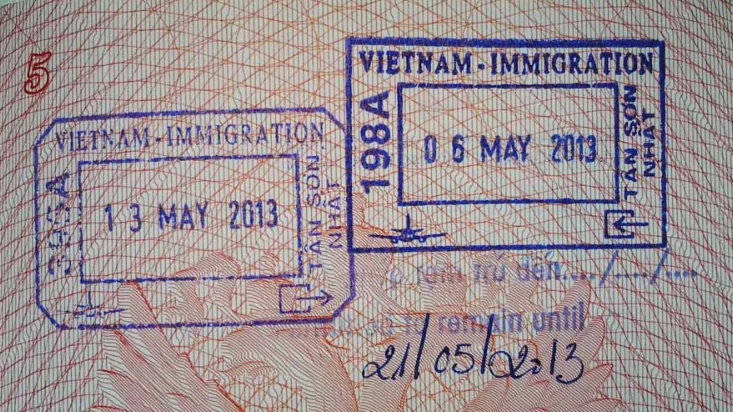
Vietnam rewrote its entry rules twelve separate times between March 2025 and July 2026 - new visa-free countries, a near-doubling of overstay fines, a jump from 42 to 83 e‑visa checkpoints, and two brand-new visa categories that didn’t exist before. I live in Da Nang and file e-visas for clients every week, so I track each decree the day it lands, not the day a blog gets around to summarizing it. This page is the one timeline: every rule, its exact decree number, and the date it actually took effect.
| Document | Effective Date | What Changed | Who It Affects |
|---|---|---|---|
| Resolution 44/NQ-CP | 2025-03-15 | Visa-free stay extended 15 → 45 days for 12 countries incl. Russia, Japan | Tourists from Germany, France, UK, Russia, Japan, South Korea + 6 more |
| Decree 221/2025/ND-CP | 2025-08-15 | New 5-year “special visa exemption card”, 90-day stay per entry | High-level investors, experts, corporate leaders |
| Resolution 229/NQ-CP | 2025-08-15 | Visa-free 45-day entry added for 12 more European countries | Belgium, Netherlands, Poland, Switzerland + 8 more |
| Decree 219/2025/ND-CP | 2025-08-07 | Work permit processing cut to 10 days; exemption raised to 90 days/year | Foreign employees, employers |
| Decree 282/2025/ND-CP | 2025-12-15 | Overstay fines roughly doubled; deportation review from 16 days | Any traveler overstaying a Vietnam visa |
| Resolution 389 | 2025-12-02 | E‑visa checkpoints expanded from 42 to 83 nationwide | All e‑visa holders |
| Decree 327/2025/ND-CP | 2025-12-18 | IFC entry/residence framework, groundwork for UD1/UD2 visas | IFC-linked workers and investors |
| Circular 28/2026/TT-BTC | 2026-04-01 | E‑visa fee set at $25 single-entry / $50 multiple-entry | All e‑visa applicants |
| UD1 / UD2 visas | 2026-07-01 | Two new visa categories for talent and their families | Tech/STEM experts, IFC specialists, spouses, children |
| Decree 165/2026/ND-CP | 2026-07-01 | Mandatory health declaration at all border gates, incl. transit | Every traveler entering, exiting, or transiting Vietnam |
| Law on Investment 2025 | 2026-03-01 | “ERC-first” incorporation option speeds up TRC evidence | Foreign investors and their TRC applications |
| VNeID for TRC filings | 2025-07-01 | Verified VNeID corporate account required for online TRC filing | Organizations filing TRC applications |
What Are the Biggest Visa Exemption Changes in 2025-2026?
Vietnam extended unilateral visa-free entry to 24 more European countries and kept Russia and Japan on the list, all through two separate resolutions eight months apart. Resolution 44/NQ-CP, effective March 15, 2025, extended visa-free stays for citizens of Germany, France, Italy, Spain, the UK, Russia, Japan, South Korea, Denmark, Sweden, Norway, and Finland from 15 to 45 days, regardless of passport type or purpose of entry, running through March 14, 2028.
Resolution 229/NQ-CP followed on August 15, 2025, adding the same 45-day visa-free entry for citizens of Belgium, Bulgaria, Croatia, Czech Republic, Hungary, Luxembourg, Netherlands, Poland, Romania, Slovakia, Slovenia, and Switzerland, through August 14, 2028. Separately, Decree 221/2025/ND-CP created a new “special visa exemption card” for high-level investors, experts, and corporate leaders, valid up to 5 years with each entry granting a 90-day temporary residence certificate.
What Happens If You Overstay Your Visa in Vietnam Now?
Overstay fines roughly doubled and now scale by how many days you’re over, under Decree 282/2025/ND-CP, effective December 15, 2025. Under 16 days overdue costs VND 500,000-2,000,000 (about $19-76) plus a formal warning; 16-30 days jumps to VND 5,000,000-10,000,000; 60-90 days reaches VND 15,000,000-20,000,000, and the top bracket runs up to VND 40,000,000 (around $1,520). The decree replaced Decree 144/2021/ND-CP.

The bigger change isn’t the money - it’s the trigger point. Immigration can now open a mandatory deportation review once an overstay hits 16 days, earlier than the old threshold. If you’re not sure whether your current visa clears your travel dates, that’s worth checking before you plan anything else - I break down the current fine schedule day by day if you want to see exactly where a given date lands.
How Much Does a Vietnam E‑Visa Cost in 2026?
An e‑visa costs $25 for single-entry and $50 for multiple-entry as of April 1, 2026, under Circular 28/2026/TT-BTC, which replaced two older fee circulars from 2021 and 2023. Multiple-entry visas cover up to 90 days of validity, and children under 14 pay a flat $25 no matter which entry type the family books.

The fee itself hasn’t been the hard part for most travelers I talk to - getting evisa.gov.vn to accept the card is. The portal rejects a meaningful share of foreign-issued cards, including most Russian ones, and a failed payment two days before a flight is one of the more stressful ways to start a trip. This is the exact snag I handle for readers who’d rather not gamble with a declined card near a departure date: I pay the government fee with a card the portal always accepts, fill the form with the correct entry point, and get the visa confirmed the same day. On your side, that means sending a passport photo and your travel dates - nothing else.
Where Can You Actually Use an E‑Visa in 2026?
E‑visa entry points jumped from 42 to 83 nationwide after Resolution 389, adopted December 2, 2025, added 41 new border gates: 4 airports (including Vinh and Chu Lai, plus Long Thanh and Gia Binh once operational), 11 land crossings, and 26 seaports. That brings the total to 17 airports, 27 land crossings, and 39 seaports where an e‑visa now works for entry and exit.
For anyone planning a land crossing specifically - Laos, Cambodia, or China - it’s worth confirming your exact checkpoint made this list before booking transport, since not every land border was included. I keep a full list of all 83 checkpoints updated as new gates go live.
Do You Need a Health Declaration to Enter Vietnam?
Yes, starting July 1, 2026, under Decree 165/2026/ND-CP: every traveler - inbound, outbound, and even airport transit without leaving the terminal - must file a health declaration at all Vietnamese border gates. The form is bilingual Vietnamese/English from the Ministry of Health, and it has to be submitted electronically or on paper within 7 days before you enter, exit, or transit.

How Does the New Investment Law Affect Your TRC?
The amended Law on Investment 2025, effective March 1, 2026, introduced an “ERC-first” option: qualifying foreign investors can now get their Enterprise Registration Certificate before the Investment Registration Certificate, letting them open a bank account and start preliminary operations while the IRC is still processing (must complete within 12 months). The implementing rules landed in Decree 96/2026/ND-CP, issued March 31, 2026.
Since IRC and ERC documents are standard evidence for a Temporary Residence Card application, this indirectly speeds up TRC processing for investors. Separately, since July 1, 2025, organizations submitting TRC applications online through the Public Service Portal need a verified VNeID corporate account - a step that trips up a fair number of first-time applicants.
What Are the New UD1 and UD2 Visas?
UD1 and UD2 are two visa categories launching July 1, 2026, built for people connected to Vietnam’s new International Financial Centre in Da Nang and Ho Chi Minh City. UD1 covers high-quality talent - digital tech and STEM experts, academic and research talent, corporate leaders, and IFC specialists - valid up to 5 years generally, or 10 years for those tied directly to the IFC, with multiple entry.
UD2 covers spouses and children under 18 of UD1 holders on the same terms. The framework traces back to Decree 327/2025/ND-CP, issued December 18, 2025, though a standalone implementing decree specifically for UD1/UD2 hadn’t been separately confirmed as of this writing.
What Changed for Work Permits and Foreign Workers?
Work permit processing dropped to 10 working days, down from 15-20, under Decree 219/2025/ND-CP, effective August 7, 2025. The decree replaced Decrees 152/2020 and 70/2023, and approval authority moved to provincial People’s Committees.
It also lowered the “expert” experience requirement from 3 years to 2 (just 1 year in priority sectors like science, tech, and digital transformation), raised the short-term work-permit exemption from 30 days per trip to 90 cumulative days per year, and expanded exemptions to 15 categories, including foreign spouses of Vietnamese citizens.
So Which of These Changes Actually Fits Your Trip?
If you’re on a tourist visa or e‑visa, the $25/$50 fee, the 83 checkpoints, and the new overstay fines are what matter - check your visa’s exact expiry against your travel dates now that the deportation trigger is 16 days, not longer. If you’re working or investing in Vietnam long-term, the work permit reform and ERC-first incorporation are the real story. Timings and what’s actually included are laid out on our Vietnam e-visa 90 days page.
Both cut weeks off processes that used to drag.
Every rule on this page changes what you pay or how long you can stay, and the one that trips people up most is the e‑visa payment - a card rejection two days before a flight, with no easy fix on the government portal itself. I file these applications for readers every week, paying the fee with a card that clears and confirming the visa the same day. Message me on Telegram with your passport photo and travel dates and I’ll tell you what applies to your trip specifically.
Methodology: Where These Numbers Come From
Every decree, resolution, and circular number on this page is cross-checked against at least two independent sources - official Vietnamese government publications (baochinhphu.vn, thuvienphapluat.vn), embassy notices, or major legal and advisory firms (KPMG, Baker McKenzie) that publish decree summaries the week they’re issued. Two items are explicitly flagged as not yet law: a standalone decree number for UD1/UD2 beyond the IFC framework, and any golden-visa or long-stay investor visa, which remains a draft proposal with no decree number as of this writing. This page is updated as new decrees land - last checked August 2026.
Frequently asked questions
Did Vietnam extend e-visas to 90 days as part of these 2025-2026 changes?
No - that happened back in 2023, before this timeline starts. What changed in 2025-2026 is the fee (now $25/$50 under Circular 28/2026) and the number of entry points (now 83), not the 90-day validity window itself.
Is Vietnam launching a golden visa or digital nomad visa in 2026?
Not yet. Vietnam’s Tourism Advisory Board has proposed a long-stay investor visa, but as of August 2026 it has no decree number, no effective date, and no application channel. Don’t plan a trip around it.
Which older fee rules did Circular 28/2026 replace?
Circular 28/2026/TT-BTC replaced two older Ministry of Finance circulars - Circular 25/2021/TT-BTC and Circular 62/2023/TT-BTC - both of which set the previous, lower exit/entry/transit/residence fee schedule.
Do you need VNeID to apply for a Temporary Residence Card online?
Yes, if the application goes through an organization. Since July 1, 2025, companies submitting TRC applications via the Public Service Portal need a verified VNeID corporate account before they can file.
Which older visa rules did Decree 282/2025 replace?
Decree 282/2025/ND-CP replaced Decree 144/2021/ND-CP on administrative penalties for immigration violations, roughly doubling overstay fines and moving the mandatory deportation-review trigger to 16 days overdue.