Vietnam’s unilateral 45-day visa exemption now covers 18 of the European Union’s 27 member states, not just the original handful most people remember. Germany, France, Italy and Spain got it first in March 2025 under Resolution 44/NQ-CP; a second wave of 12 more countries, including Poland, the Czech Republic and Slovakia, was added in August 2025 under Resolution 229/NQ-CP. If your passport isn’t on either list, you still need a $25-$50 e‑visa.
I live in Da Nang and deal with this mix-up constantly: travelers from Poland or Czechia show up assuming they need an e‑visa, because that was true before August 2025, and travelers from Austria or Ireland assume they’re covered because “most of the EU is visa-free now.” Both assumptions cost people money or a rejected boarding pass. Here’s the actual list, split by which resolution covers you and what changes between the two.
| Group | Countries | Duration | Purpose allowed | Legal basis |
|---|---|---|---|---|
| Resolution 44/NQ-CP (EU members) | Germany, France, Italy, Spain, Denmark, Sweden, Finland | 45 days, multiple entry | Any purpose | Effective 2025-03-15 to 2028-03-14 |
| Resolution 229/NQ-CP (EU members) | Belgium, Bulgaria, Croatia, Czech Republic, Hungary, Luxembourg, Netherlands, Poland, Romania, Slovakia, Slovenia | 45 days, multiple entry | Tourism only | Effective 2025-08-15 to 2028-08-14 |
| Non-EU on the same 45-day list | UK, Russia, Japan, South Korea, Norway, Switzerland | 45 days | Any / tourism, mixed by resolution | Same two resolutions |
| EU members still on e‑visa | Austria, Cyprus, Estonia, Greece, Ireland, Latvia, Lithuania, Malta, Portugal | Up to 90 days, single or multiple entry | Any purpose | evisa.gov.vn |
Which EU Countries Get Vietnam’s 45-Day Visa-Free Entry?
Eighteen EU passports currently qualify for entry without a visa. Seven got the exemption first, under Resolution 44/NQ-CP, in effect since March 15, 2025: Germany, France, Italy, Spain, Denmark, Sweden and Finland. Eleven more joined five months later under Resolution 229/NQ-CP: Belgium, Bulgaria, Croatia, Czech Republic, Hungary, Luxembourg, Netherlands, Poland, Romania, Slovakia and Slovenia.

Both groups get 45 days per entry, multiple entries allowed, and neither pays a government fee for the stamp. The passport still has to be an ordinary passport, and the usual requirement circulating among visa agencies is at least 6 months of validity from your entry date, though I’d confirm that against your own embassy’s guidance rather than treat it as gospel. What actually separates the two groups isn’t the number of days, it’s who they’re allowed to be in the country for, and that trips up more people than the country list itself.
What’s the Difference Between Resolution 44 and Resolution 229?
Resolution 44 covers any purpose of entry: tourism, business meetings, visiting family. Resolution 229 is explicitly labeled a tourism-stimulus measure and its exemption applies for tourism purposes only, according to both Vietnam’s national tourism authority and a professional tax alert covering the same resolution.

In practice, that means a French or German business traveler is unambiguously covered by their 45-day exemption for a work trip, while a Polish or Czech citizen flying in for a client meeting is on shakier ground and would be safer applying for a business-purpose e‑visa instead of relying on the tourism exemption. Nobody I’ve found has published a clear answer on how strictly this gets enforced at immigration counters, so if your trip is anything other than tourism and your country is only in the August 2025 group, don’t assume the exemption covers you.
Which EU Countries Still Need a Vietnam E‑Visa?
Nine EU member states are not on either exemption list: Austria, Cyprus, Estonia, Greece, Ireland, Latvia, Lithuania, Malta and Portugal. Citizens of these countries apply for a Vietnam e‑visa online and get up to 90 days of stay once approved.

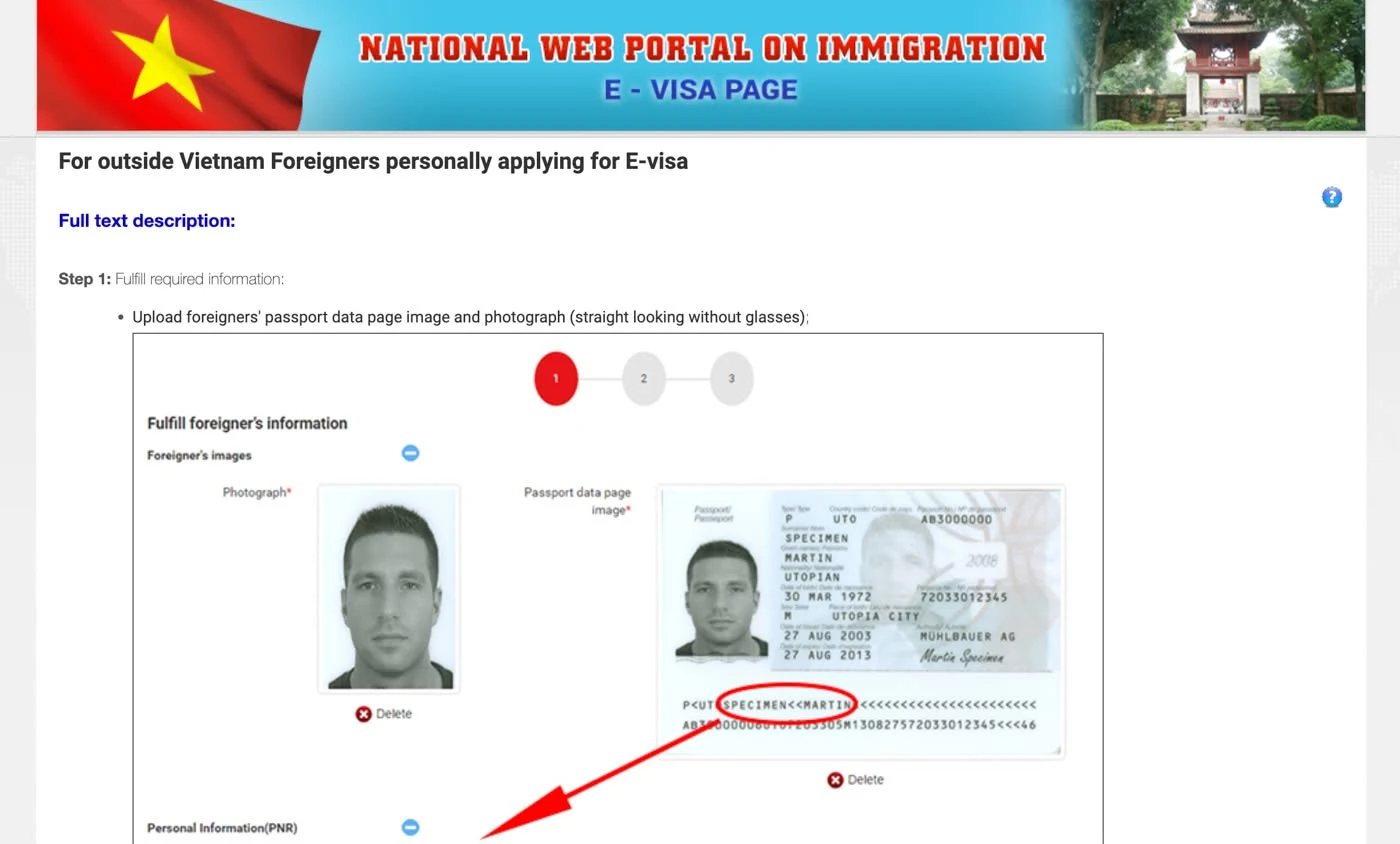
The government fee is commonly quoted as $25 for single entry or $50 for multiple entry, and processing is usually described as taking around 3-5 working days, so applying at the last minute is the main way people end up stuck.
This is the exact gap where things go wrong for people I talk to: evisa.gov.vn rejects a large share of foreign-issued cards outright, and there’s no error message that tells you why the payment failed, just a stuck application. If you’re from one of these nine countries and your card keeps bouncing on the portal, that’s a solvable problem, not a sign you’re doing something wrong. Some travelers I’ve worked with paid on the government e‑visa portal themselves with a friend’s card and just needed the entry point confirmed; others handed me the whole thing because they were traveling in three days and couldn’t afford a second failed attempt. Message me on WhatsApp with your passport country and travel dates and I’ll tell you exactly what’s needed.
How Do I Check If My Passport Qualifies?
Match your country against the two 2026 lists above, not against older blog posts written before August 2025, since several countries that needed an e‑visa in early 2025 don’t anymore. If you’re not exempt, budget the $25-$50 fee plus a few working days for the e‑visa application, and double-check the airport or land border you’re entering matches what you declared. This part can be handed over end to end — what that covers is on our Da Nang visa run page.

Full walkthroughs of the wider visa system, including work and long-stay options, are in my Vietnam visa decision guide, and the 90-day e‑visa breakdown covers single vs multiple entry for the nine countries still on that track.
One more thing worth checking before you fly: some reports say the old rule requiring a 30-day wait between visa-free re-entries has been scrapped under the new exemption, letting exempt travelers leave and come straight back with a fresh 45 days. I’d treat that as likely true but unconfirmed for your specific case, and verify it doesn’t apply differently to the August 2025 group before planning a same-week border run around it.
With BestBus Vietnam I run e‑visa applications and border transfers out of Da Nang every week, so I see both sides of this list: travelers who didn’t need to pay a cent and travelers who lost a day figuring out why their card wouldn’t go through. If your passport is one of the nine still on the e‑visa track and you’d rather not gamble a rejected payment against a flight date, send me your dates on WhatsApp and I’ll confirm what your passport actually needs before you book anything.
Frequently asked questions
Does Germany need a visa for Vietnam in 2026? No. Germany has been on Vietnam’s unilateral 45-day visa exemption since March 15, 2025 under Resolution 44/NQ-CP, and that covers any purpose of travel, not just tourism.
Is Poland visa-free for Vietnam? Yes, as of August 15, 2025, under Resolution 229/NQ-CP, but only for tourism purposes. A Polish citizen traveling for business should apply for a business e‑visa instead of relying on the exemption.
Do Czech Republic and Slovakia citizens need a visa for Vietnam? No for tourism trips up to 45 days, since both joined the August 2025 tourism-only exemption alongside Poland. For any other purpose, an e‑visa is the safer route.
Can I re-enter Vietnam visa-free immediately after my 45 days end? Multiple recent reports say the earlier 30-day wait between visa-free re-entries was dropped, but this hasn’t been independently confirmed for every nationality on the list, so check with your airline or a Vietnamese embassy before planning a same-week re-entry.
Do Austria, Ireland, Portugal and Greece citizens need a Vietnam visa in 2026? Yes. None of these four are on either 2025 exemption resolution, so citizens still apply for the standard 90-day e‑visa and pay the government fee.
How much does a Vietnam e‑visa cost for EU citizens not on the visa-free list? The government fee is commonly quoted as $25 for a single-entry e‑visa and $50 for multiple entry, paid directly on evisa.gov.vn, with processing typically taking a few working days.