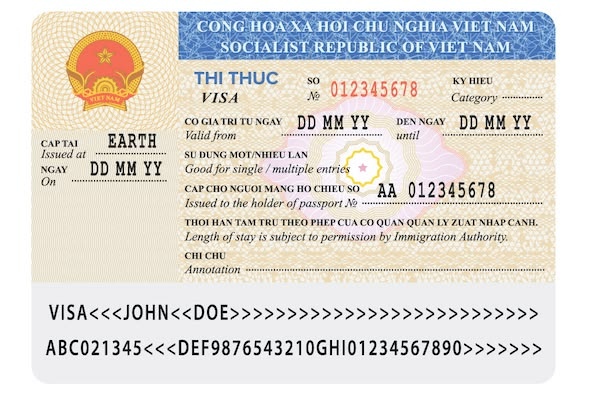
Australian and New Zealand passports get zero visa-free days in Vietnam in 2026 - every other traveler from these two countries needs an e‑visa before boarding. That surprises a lot of people, because the UK, Germany, France, Russia, South Korea and a dozen other countries walk in on a 45-day exemption. I run visa and transport logistics for travelers in Da Nang, and the AU/NZ question comes up almost every week from people who assumed Vietnam works the same for everyone.
Do Australians and New Zealanders Get Visa-Free Entry to Vietnam?
No. Vietnam’s unilateral visa-exemption list covers 25 countries as of 2026 - the original 13 (UK, Germany, France, Italy, Spain, Russia, Japan, South Korea, Denmark, Sweden, Norway, Finland, Belarus) plus 12 more European countries added on 15 August 2025 (Netherlands, Belgium, Switzerland, Poland, Czechia, Hungary, Romania, Slovakia, Slovenia, Croatia, Bulgaria, Luxembourg) - and Australia and New Zealand are not on it.
That list is set country by country, not by region or alliance, which is why it feels arbitrary: Vietnam’s other major English-speaking source markets - the US, Canada, Australia, New Zealand - all sit outside it too. If you’re holding an Australian or New Zealand passport, the only legal way in is an e‑visa or, in narrow cases, a sponsored approval letter. There’s no walk-up visa-free lane at the airport, the same way there isn’t for South Korean passport holders, who face a similar 45-day trap on a different list.
How Much Does the Vietnam E‑Visa Cost for Australian and New Zealand Citizens?
The e‑visa costs $25 for a single-entry visa and $50 for a multiple-entry visa, both valid for up to 90 days, under the fee schedule that took effect 1 April 2026. You apply and pay on the official e‑visa portal, not through a third-party site that adds a markup.
| E‑visa type | Government fee | Max validity | Entries |
|---|---|---|---|
| Single-entry | $25 | 90 days | 1 |
| Multiple-entry | $50 | 90 days | Unlimited within validity |
| Visa on arrival letter | Varies by agency | Up to 90 days | Depends on category |
Processing for both Australian and New Zealand applicants typically takes 3-7 business days on the official portal - processing times vary by nationality, and this range is what I’ve seen consistently for both passports. Third-party agencies advertise faster turnaround for an extra fee, but that’s an agency service charge on top of the $25/$50 government fee, not a different government rate.
How Do You Apply for a Vietnam E‑Visa as an Australian or Kiwi?
You apply directly on evisa.gov.vn with a passport scan and a digital photo, pay the government fee online, and wait for the approval to land in your inbox before you fly. Nobody stamps a visa into your passport on arrival - you print or save the approved PDF and show it at immigration.
- Scan your passport photo page and take a passport-style digital photo (white background, no glasses).
- Create an account on evisa.gov.vn and fill in the application - dates, entry/exit port, purpose of visit.
- Choose single-entry ($25) or multiple-entry ($50) and pay by card.
- Wait 3-7 business days for the approval email, then download the PDF.
- Print two copies - one for check-in at your departure airport, one as backup in your luggage.
Vietnam has 83 approved e‑visa entry points listed on the official portal, including Da Nang, Noi Bai (Hanoi) and Tan Son Nhat (Ho Chi Minh City) international airports - check your entry port matches what you selected on the form, because a mismatch is one of the more common reasons an approved e‑visa still gets you pulled aside at the counter.
Is Visa on Arrival Still an Option in 2026?
Not really, for a straightforward Australian or New Zealand tourist trip. Visa-on-arrival approval letters technically still exist for some categories through sponsoring agencies, but the e‑visa has replaced VOA as the standard route since it’s cheaper, doesn’t need a sponsor, and skips the arrival-hall paperwork counter entirely.
Automated e-gates (“Autogate”) have been running at five airports - Noi Bai, Da Nang, Cam Ranh, Tan Son Nhat and Phu Quoc - since August 2023, but as of 2026 they’re open mainly to Vietnamese diplomatic and official passport holders, flight crew and residence-card holders. E‑visa tourists, including Australians and New Zealanders, still go through the regular manned immigration counters.
Single-Entry or Multiple-Entry E‑Visa: Which Should You Choose?
Take single-entry at $25 if you’re flying in, staying in Vietnam the whole trip, and flying out - that covers most two-to-four-week holidays. Take multiple-entry at $50 if your plan includes a side trip to Cambodia, Laos or Thailand and a return to Vietnam within the same 90-day window, because re-entering on an expired single-entry visa means applying and paying again from scratch.
The extra $25 for multiple-entry is cheap insurance against an itinerary that changes mid-trip. I’ve had travelers land in Da Nang on single-entry, decide two weeks in they want to cross to Laos and come back, and end up paying for a second full application because their first visa only allowed one entry.
What Happens If You Overstay Your Vietnam Visa?
Overstay fines were roughly doubled under Decree 282/2025, in force since 15 December 2025: fines run from VND 500,000-2,000,000 (about $19-76) for overstays under 16 days, rising to as much as VND 40,000,000 (about $1,520) for overstays of a year or more, with deportation a real possibility past 16 days.
Your e‑visa’s 90-day validity is a hard ceiling, not a soft target - it doesn’t reset or extend itself, and Vietnamese immigration checks the exit date against your entry stamp at the airport counter on the way out. See the full overstay fine breakdown by number of days if your trip is already running close to the line. If your trip runs long, apply for an extension or a fresh e‑visa before the current one lapses, not after. We run this one start to finish — details on our Da Nang visa run page.
Australian and New Zealand E-Visas: The Bottom Line
For Australian and New Zealand travelers, there’s one practical path into Vietnam in 2026: apply for the e‑visa on evisa.gov.vn before you fly, pick single-entry at $25 or multiple-entry at $50 depending on whether you’re crossing a border mid-trip, and keep the approval PDF on you at check-in and at the immigration counter. Visa-free entry and visa-on-arrival aren’t realistic backup plans for this passport pair - the e‑visa is the whole game.
Filling in the form yourself and paying with an international card is entirely doable if your card works on the government portal and you’re comfortable double-checking every field before you submit. But if you’d rather not risk a rejected application two days before your flight - wrong entry port, a photo the system flags, a date typo that means resubmitting from zero - message me on Telegram and I’ll walk through your dates and entry point with you. At BestBus Vietnam we handle the e‑visa application end to end for travelers who’d rather land and go straight to the beach.

Frequently asked questions
Do Australians need a visa for Vietnam in 2026?
Yes, every Australian citizen needs a visa for any entry into Vietnam in 2026 - there’s no visa-free allowance for Australian passports. The practical route is the e‑visa, applied for on evisa.gov.vn before departure, not a visa issued on arrival.
Do New Zealanders need a visa for Vietnam in 2026?
Yes. New Zealand isn’t on Vietnam’s 45-day exemption list either, so New Zealand citizens need an e‑visa arranged before they fly, the same as Australian passport holders.
Can I get a Vietnam e‑visa on my phone right before I board?
Technically the portal is mobile-friendly, but processing takes 3-7 business days, so applying at the gate won’t work - you need the approval email in hand before check-in, and airlines have refused boarding to travelers who only had a pending application.
Does my Vietnam e‑visa let me leave and re-enter through Cambodia or Laos?
Only if you bought the $50 multiple-entry version. A single-entry e‑visa is used up the moment you exit Vietnam, even for a day trip across a land border, and re-entering means applying and paying for a new visa from scratch.
What if my Vietnam e‑visa application gets rejected?
Rejections for Australian and New Zealand applicants are usually a technical fix - a blurry photo, a name that doesn’t match the passport exactly, or a payment that didn’t clear - not a character-based refusal. You can correct the details and resubmit through the same portal, though it restarts the 3-7 business day clock.