
Whether you pay income tax in Vietnam comes down to one number: 183 days. Stay 183 days or more in a calendar year - or across any 12 consecutive months from your arrival - and you become a tax resident, taxed on your worldwide income on a 2026 scale of 5% to 35%. Stay under that, and you’re a non-resident who pays a flat 20% on Vietnam-sourced income only. If you’re staying long enough for tax to matter, you’re usually staying long enough that your visa needs sorting too - and that part I can actually help with.
I’ve lived in Da Nang for the past four years and spend my days helping travelers and expats handle visas, e-visas, and long-stay paperwork. I’m not a licensed tax advisor, so treat this as the map, not your filing - for numbers tied to your exact contracts, see a Vietnamese accountant. But after four years of watching people get caught out by the 183-day line, here’s what actually applies in 2026.
Do foreigners have to pay tax in Vietnam?
Yes - if you earn income while living in Vietnam, or from a Vietnamese source, you are inside the personal income tax (PIT) system, foreign passport or not. How much you owe depends entirely on whether you count as a tax resident. Residents are taxed on worldwide income at progressive rates; non-residents pay a flat 20% on Vietnam-sourced income only. A tourist earning nothing here owes nothing.

The line that trips people up is “Vietnam-sourced.” If you sit in a Da Nang cafe doing remote work for a foreign client, Vietnam’s tax authority still treats the days worked here as work performed in Vietnam. Once you become a resident, even that foreign-paid income is technically in scope. The rules are set nationally by the General Department of Taxation under the Ministry of Finance, so they don’t change city to city.
What is the 183-day rule in Vietnam?
The 183-day rule is Vietnam’s tax-residency test. You are a tax resident if you are physically present in Vietnam for 183 days or more, counted either within one calendar year or across any 12 consecutive months from your first arrival. There is a second path too: having a permanent or leased place of abode - a lease of 183 days or more - makes you a resident even if your day count is lower.

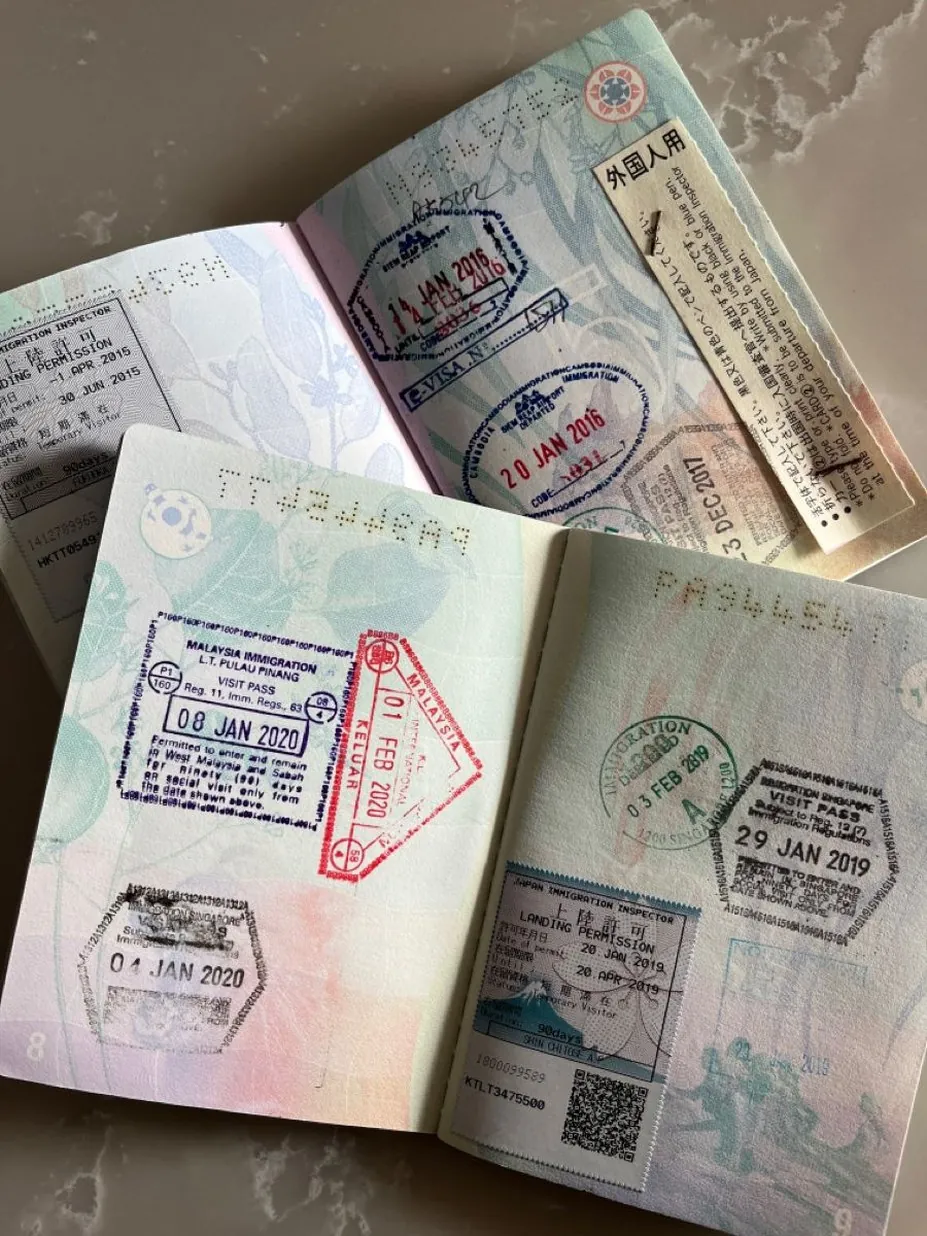
That 12-month clause catches a lot of people. Arrive in September, stay through to the following June, and you can cross 183 days across two calendar years while never hitting it inside either one - and you’re still a resident. Days of arrival and departure generally each count as a day in Vietnam. Keep your entry and exit stamps; if the tax office ever asks, your passport is the evidence.
If you’re staying long enough for that 12-month clause to catch you, your visa clock is usually ticking too - and that’s the half I can actually take off your plate. I sort visa runs, fresh e-visas, and extensions so your stay stays legal while the days add up. Message me on Telegram with how long you’re planning to stay and I’ll map the visa side for you.
How much tax do Vietnam residents pay in 2026?
Vietnam tax residents pay progressive PIT from 5% to 35% on employment income, applied to taxable income - what is left after deductions. For 2026, Law No. 109/2025/QH15 cut the old seven-band scale down to five bands and lifted the top 35% threshold to monthly taxable income above 100 million VND. The rate you hit is marginal: each band applies only to the slice of income inside it.

| Monthly taxable income (VND) | Annual (VND) | Rate |
|---|---|---|
| Up to 10 million | Up to 120 million | 5% |
| 10-30 million | 120-360 million | 10% |
| 30-60 million | 360-720 million | 20% |
| 60-100 million | 720-1,200 million | 30% |
| Over 100 million | Over 1,200 million | 35% |
Before those rates apply, you subtract deductions. From 2026 the personal deduction rose to 15.5 million VND a month (about $590-620), up from 11 million, and it is granted automatically to every resident. Each registered dependent adds a 6.2 million VND monthly deduction (about $235-250), up from 4.4 million. Mandatory Vietnamese social, health, and unemployment insurance - an employee share of roughly 10.5% - also comes off before the scale is applied. One caveat on timing: the salary provisions are dated from 1 January 2026 while the wider law became fully effective 1 July 2026, so confirm the current thresholds with your accountant before you file.
So a resident earning 40 million VND a month, single, subtracts the 15.5 million personal deduction and insurance first, leaving well under 20 million taxable - the bulk taxed at 5-10%, not the headline 20%. The scary top rates only bite on genuinely high salaries.
How are non-residents taxed in Vietnam?
Non-residents pay a flat 20% on Vietnam-sourced employment income, with no personal deduction, no dependent deduction, and no progressive scale. If you spend under 183 days here and have no registered place of abode, this is you. The 20% attaches only to income tied to work physically done in Vietnam or paid by a Vietnamese entity - a foreign salary for foreign work stays outside Vietnam’s net.
This is why short-term consultants and seasonal workers often end up paying a higher effective rate than a full resident on a modest local salary: 20% from the first dong, with nothing deductible. If you’re close to the 183-day line and expect a low-to-mid income, crossing into residency can genuinely lower your bill. Crossing it deliberately usually means lining up a longer visa base first - I’ve mapped the work permit, TRC and investor routes separately, and our Vietnam visa and long-stay services handle the actual filing once you’ve picked one.
How do double taxation agreements help expats?
Vietnam has double taxation agreements (DTAs) with more than 80 countries, including Russia, so you rarely pay full tax twice on the same income. Under a DTA, foreign tax you already paid abroad is credited against your Vietnamese PIT, capped at the Vietnamese tax that would be due on that income. The treaties are OECD-model based, which means the mechanics are broadly familiar wherever you’re from.

You don’t get the relief automatically - you claim it. In practice that means filing a DTA notification with the tax authority, ideally 15 days before the relevant payment deadline, with late applications accepted up to three years back. Bring your foreign tax residency certificate and proof of tax paid. If your home country has no treaty with Vietnam, a foreign tax credit may still be available under domestic rules, but the treaty route is cleaner.
How to sort out your Vietnam taxes step by step
Handling Vietnam PIT as a foreigner is a short, ordered process, not a mystery. The sequence below is what I walk people through when they realize the 183-day line is coming up. Do it in order and most of the guesswork disappears.
- Count your days in Vietnam across the calendar year and across 12 months from arrival - whichever crosses 183 first decides your status.
- Register for a tax code (ma so thue / TIN), usually done through your employer, or directly at the tax office if you have none.
- Confirm who withholds: an employer deducts and remits your PIT monthly by the 20th of the following month; without one, you self-declare.
- Apply your deductions - the 15.5 million personal deduction, 6.2 million per registered dependent, and mandatory insurance - before the rate scale.
- Check whether a DTA covers your foreign income and file the relief notification with your tax residency certificate.
- File your annual finalization: by March 31 if your employer finalizes for you, or April 30 if you self-file; within 45 days if you leave Vietnam for good.
What mistakes do foreigners make with Vietnam tax?
The costliest mistake I see is assuming a foreign salary is invisible to Vietnam. Once you cross 183 days, your worldwide income is technically in scope - remote work for overseas clients included. People treat the day count as a formality until a bank transfer or a visa renewal puts them on the radar.
The next three are all avoidable. Skipping the tax code means your employer can’t remit correctly. Missing the finalization deadline turns a routine filing into penalties and interest. And leaving Vietnam permanently without completing the 45-day exit finalization can create a loose end that surfaces the next time you apply for a visa. If tax has you weighing a switch to a longer-stay visa, the full fee breakdown by visa type is worth a look before you commit. None of these are hard to handle if you know they exist - which most first-year expats don’t.
Frequently asked questions
Do foreigners have to pay income tax in Vietnam?
Yes, if you earn income in Vietnam or from a Vietnamese source. Tax residents (183+ days) are taxed on worldwide income at 5-35%; non-residents pay a flat 20% on Vietnam-sourced income only. A tourist earning nothing here owes no PIT.
What is the 183-day rule in Vietnam?
You become a Vietnam tax resident if you are present 183 days or more in a calendar year, or across any 12 consecutive months from your first arrival. Having a leased or permanent place of abode for 183+ days also makes you resident even below that day count.
How much tax do expats pay in Vietnam in 2026?
Residents pay progressive PIT on taxable income: 5% up to 10 million VND a month, rising through 10%, 20%, 30% and 35% above 100 million VND. Because the personal deduction is 15.5 million VND a month plus insurance, a modest local salary is often taxed mostly at 5-10%.
How much is the flat tax rate for non-residents in Vietnam?
A flat 20% on Vietnam-sourced employment income, with no personal or dependent deductions. It applies from the first dong to work physically performed in or paid from Vietnam.
Does Vietnam have a double taxation agreement with Russia?
Yes. Vietnam has DTAs with more than 80 countries, Russia included. Foreign tax already paid can be credited against your Vietnamese PIT, up to the Vietnamese tax due on that income, once you file a DTA notification with the tax authority.
When is the Vietnam personal income tax deadline?
The tax year is the calendar year. Annual finalization is due by March 31 if your employer finalizes for you, or April 30 if you self-file. If you leave Vietnam permanently, you must finalize within 45 days of departure.
Sorting your taxes and sorting your visa usually land in the same month - and while I’m not the person to file your PIT, keeping your stay legal is exactly what I do every day. If you’re settling in for the long haul, reach out:
- Best Bus - danangvisarun.com - book your visa run, e-visa or transfer directly on the site.
- Telegram @learnx1000 - message me for visa, e-visa, extension and visa-run help.