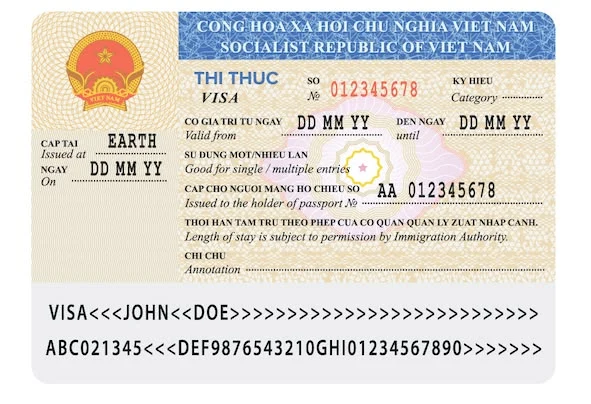
South Korea’s passport gets you into Vietnam without a visa, and for a lot longer than the old rule allowed. Since 15 August 2023, that unilateral exemption has stood at 45 days per entry, extended again by Resolution 44/NQ-CP through 14 March 2028. I’m Sergey - at BestBus Vietnam I’ve run visa and border-crossing services out of Da Nang since 2023, and almost every Korean long-stayer who messages me has lost count of exactly which day their 45 runs out.
That’s the part nobody warns you about before you land: 45 days feels generous for a holiday and disappears fast if you’re actually living somewhere. Below is what the exemption covers, when the e-visa is the better tool instead, and what Vietnam now charges if you get the math wrong.
How Many Visa-Free Days Do South Koreans Get in Vietnam in 2026?
South Korean citizens get 45 visa-free days in Vietnam for any purpose - tourism, business, or a family visit - under Resolution 44/NQ-CP, running from 15 March 2025 to 14 March 2028. The exemption applies to a standard passport with at least 6 months of remaining validity, 2 blank visa pages, and proof of onward or return travel.
Before August 2023 the same list gave South Korea only 15 days. The current 45-day rule now covers 12 nationalities, alongside Germany, France, Italy, Spain, Russia, Japan, Denmark, Sweden, Norway and Finland - it’s a country-wide policy, not a special deal for Korean travelers specifically, which is worth knowing before you assume any bilateral agreement is behind it.
What Happens When Your 45 Days Run Out?
Once your 45 days are up, you either leave Vietnam or you’re overstaying - there’s no button on evisa.gov.vn that quietly stretches a visa exemption further, and no grace period built into the rule itself. Long-stayers who assume they can slide past day 45 unnoticed are the ones who end up with the biggest bill later.
If you leave and come back, most current sources - including the visa agencies that publish South Korea’s own entry rules - say there’s no mandatory waiting period: you re-enter and get a fresh 45 days from the new entry date. Treat that as the working assumption, not a guarantee, if you’re planning a border run purely to reset the clock.
How Do You Apply for a Vietnam E-Visa From South Korea?
If you already know you’ll be in Vietnam longer than 45 days, the e-visa is the legitimate path from outside the country: $25 for a single entry, $50 for multiple entries, valid up to 90 days, applied for through evisa.gov.vn before you fly.
- Go to the official evisa.gov.vn portal, not a third-party listing
- Upload your passport bio page and a plain-background photo
- Enter your arrival dates and intended port of entry
- Pay the $25 single-entry or $50 multiple-entry fee by Visa or Mastercard
- Wait 3-5 working days and download the approved PDF
The e-visa is built for people applying before they travel, not as an in-country upgrade. Whether South Korean citizens can switch from the exemption to an e-visa without leaving Vietnam isn’t clearly documented anywhere I’ve found - if that’s your plan, confirm it with Vietnam Immigration directly rather than assuming it works like a renewal.
What Happens If You Overstay in Da Nang or Anywhere Else in Vietnam?
Overstaying now costs more than it used to. Under the decree that tightened enforcement through 2025 and 2026, fines roughly doubled compared with the previous rules, and deportation procedures can start from 16 days of overstay under Decree 59/2026/ND-CP, in force since 1 April 2026.
Reported figures put the fine at roughly $19-76 for the first two weeks, climbing to $570 or more past 30 days - treat those as directional, since the exact tiers aren’t published on an official Vietnamese-language legal page I can point to directly. I broke the exact per-day math down separately in my overstay fine by day guide.
This is the stage where I usually get a panicked message. Someone tracked their 45 days on a phone calendar that reset when they changed time zones, or they assumed a quick Laos border run would reset the clock the same day they left. I check the exact date your exemption or e-visa expires against your actual passport stamp, and if you need a fresh e-visa or a supervised border crossing before that date, I set the whole thing up so you’re not filling in a Vietnamese government form under time pressure. Message me on Telegram and I’ll tell you exactly how many days you have left.
Visa Exemption or E-Visa: Which One Should You Actually Use?
If your trip fits inside 45 days, the visa exemption is simpler and free - just watch the calendar from your actual entry date, not the day you booked the flight. If you already know you’re staying longer, or you’re not sure yet, apply for a 90-day e-visa before you fly instead of gambling on an exact departure date.
Either way, the moment you’re not 100% sure which category you’re in is exactly the moment worth a five-minute check instead of a guess.
Send me your entry date and passport details on Telegram and I’ll tell you which option actually covers the length of stay you need. Message me on Telegram.

Frequently asked questions
Can I apply for a Vietnam e-visa without leaving the country while I'm on the visa exemption?
The self-service e-visa is built for people applying from outside Vietnam. Switching from the exemption to an e-visa while staying inside the country isn’t clearly documented - check directly with Vietnam Immigration before assuming it’s an option.
Does a quick Laos border run reset my 45-day count immediately?
Most current guidance says yes - you can re-enter right after exiting and receive a fresh 45 days, with no mandatory waiting period. A few sources mention a 30-day cooldown instead, so confirm before betting a whole trip on it.
What if my passport has less than 6 months of validity left when I land?
Vietnam’s exemption requires at least 6 months of remaining passport validity and 2 blank visa pages. Land with less and you risk being turned back at the border, regardless of your nationality or how many exemption days you’d otherwise get.
Can overstaying lead to deportation, or is it just a fine?
Both. Fines apply from day one of overstay, and deportation procedures can be triggered from 16 days overstay onward under the rules Vietnam tightened through Decree 59/2026/ND-CP, in force since April 1, 2026.
Is there a new arrival declaration for flights landing in Da Nang in 2026?
Vietnam introduced a Pre-Arrival Information Declaration in 2026 covering five airports, including Da Nang. It isn’t confirmed everywhere as strictly mandatory, but filing it online within 3 days of arrival costs a few minutes and avoids a conversation at the counter.
Does my Korean partner's family member from a non-exempt country get the same 45 days?
No. The exemption is tied to the passport, not the relationship. A spouse or child holding a passport from a country outside Vietnam’s current exemption list needs their own visa or e-visa regardless of who they’re traveling with.