This is the change log, not the form-filling guide: overstay fines, the new UD1 and UD2 visas, VNeID, and tighter work permit and TRC rules in 2026. The pre-arrival declaration appears here only as one of the changes — the step-by-step walkthrough of that form lives in its own article. I’ve lived in Vietnam for 9 years, run a visa-run and e-visa service out of Da Nang, and track every regulation change that affects our clients directly, so I’m not guessing here.
I’m not paid by any government agency to write this - half the blog posts still floating around describe the old rules, and getting this wrong at immigration costs time and, sometimes, real money in fines.
What is the Pre-Arrival Information declaration?
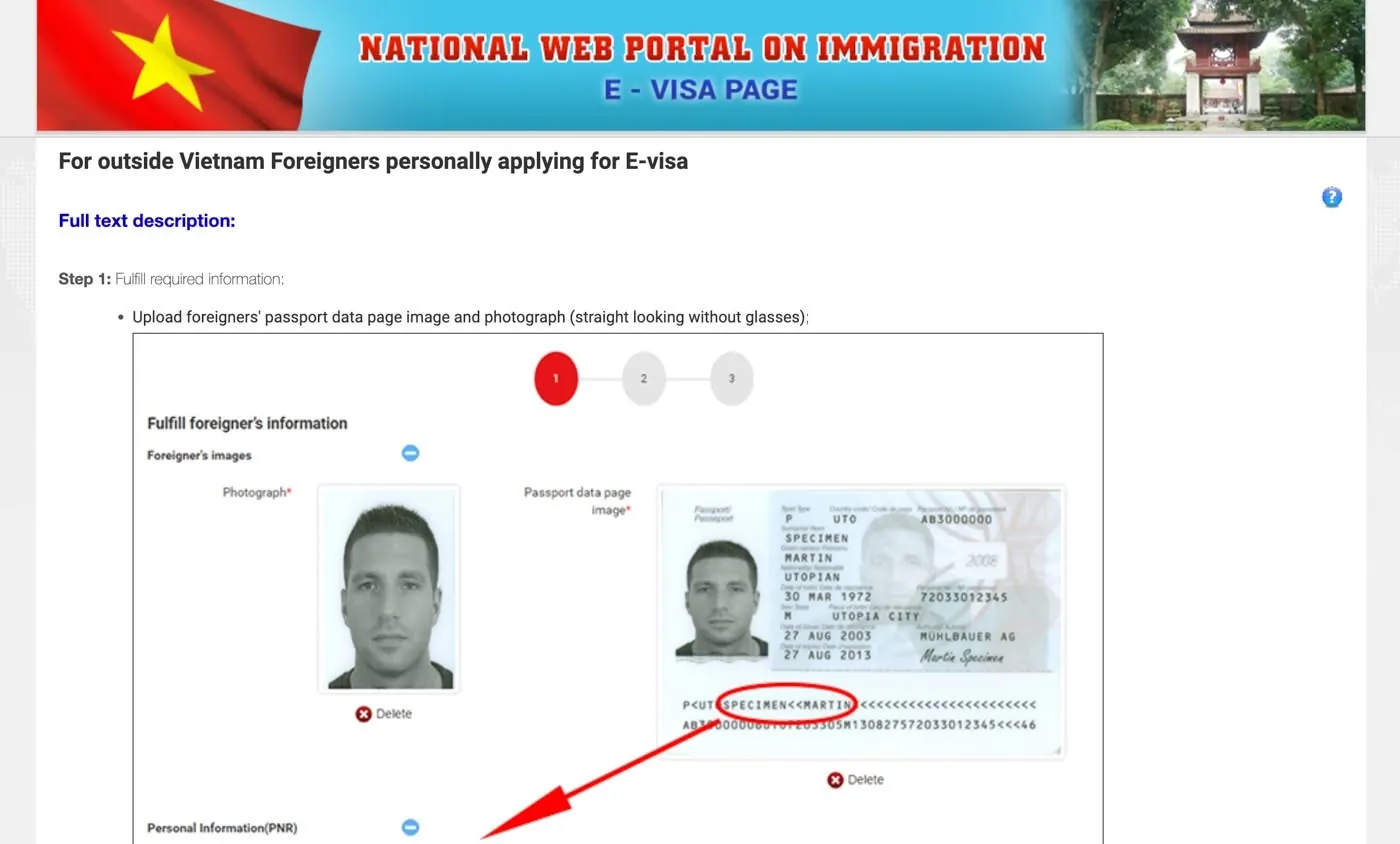
The Pre-Arrival Information declaration is a mandatory online form for foreign arrivals by air, completed at prearrival.immigration.gov.vn within 72 hours before your flight. It generates a QR code that immigration officers scan on arrival, in addition to your valid visa or e-visa.

The pre-arrival declaration rollout has happened airport by airport rather than all at once. Tan Son Nhat (SGN) in Ho Chi Minh City went first, on 15 April 2026. Phu Quoc (PQC) followed on 1 June 2026. From there it expanded to Noi Bai (HAN) in Hanoi in early-to-mid June, and by mid-2026 the requirement had reached Da Nang (DAD) and Cam Ranh (CXR) too, covering all five major international airports.
Which Vietnam airports require the mandatory pre-arrival declaration in 2026?
As of mid-2026, the Pre-Arrival Information declaration is mandatory at Tan Son Nhat (SGN), Phu Quoc (PQC), Noi Bai (HAN), Da Nang (DAD), and Cam Ranh (CXR) - the five main international gateways. Smaller regional airports and land border crossings hadn’t been added to the system as of publication, but the rollout has moved fast, so check prearrival.immigration.gov.vn directly rather than assuming your airport is exempt. The form itself takes a few minutes: passport details, flight number, accommodation address.
What happens if I don’t complete the Pre-Arrival Information declaration before arriving?
Airlines and immigration counters at airports where the pre-arrival declaration is mandatory can deny boarding or delay processing if you don’t have your QR code ready. This is functionally similar to how airlines already check e-visa approval letters before letting you board - the pre-arrival declaration adds a second document to that pre-flight checklist.
I’ve had clients get stopped at check-in simply because they didn’t know the rule existed for their arrival airport. The fix takes five minutes done before you leave home, and it’s miserable done on your phone in a boarding queue. Set a reminder 3 days out, do the form, screenshot the QR code.
Do I still need a Vietnam e-visa if I complete the pre-arrival declaration?
Yes. The Pre-Arrival Information declaration and your e-visa are two completely separate requirements - one doesn’t substitute for the other. The Vietnam e-visa costs $25 for single-entry or $50 for multiple-entry, takes around 3 working days to process, and works across dozens of airports, land borders, and seaports nationwide.

This is where I usually get involved, because the part people actually get wrong isn’t the paperwork - it’s the payment. Foreign cards get declined on evisa.gov.vn for reasons that have nothing to do with your balance, and picking the wrong entry point is a common reason applications get flagged. I handle it by hand: pay the government fee with a card the portal reliably accepts, and set the correct entry point so nothing bounces back — what that takes from you is your passport details and travel dates, nothing more. Full details are on our Vietnam e-visa 90 days page.
What is the new overstay fine in Vietnam in 2026?
Overstay fines effectively doubled under Decree 282/2025/ND-CP, effective 15 December 2025. The maximum penalty for overstaying one year or more is now VND 40,000,000 (roughly $1,520), up from the previous cap.
The fine scale is tiered by how long you overstayed, and it climbs fast:
| Overstay length | Fine (VND) | Fine (approx. USD) |
|---|---|---|
| Under 16 days | 500,000 - 2,000,000 | $19 - $76 |
| 16 - under 30 days | 5,000,000 - 10,000,000 | $190 - $380 |
| 30 - under 60 days | up to 15,000,000 | up to $570 |
| 60 - under 90 days | up to 20,000,000 | up to $760 |
| Up to 6 months | up to 25,000,000 | up to $950 |
| 6 months - under 1 year | up to 30,000,000 | up to $1,140 |
| 1 year or more | up to 40,000,000 | up to $1,520 |
Deportation is now authorized starting at just 16 days overstayed, a lower bar than most long-term expats assume. If you’re doing visa runs to reset your clock, cutting it close on the calendar isn’t worth the risk - a “few extra days” mistake now costs real money. Full breakdown in our overstay fine guide.
What are the UD1 and UD2 visas and who qualifies for them?
UD1 and UD2 are new visa categories under Decree 327/2025/ND-CP, effective 1 July 2026. UD1 is for skilled professionals and investors at Vietnam’s International Financial Centre (IFC) and high-quality digital-tech workers; UD2 covers the spouse and children under 18 of a UD1 holder.
Both are multiple-entry, generally valid up to 5 years, and processed in a maximum of 3 working days - fast compared to older long-term visa categories. This is a narrow-audience change: it matters if you’re a specialist recruited into Vietnam’s fintech or digital-tech sector, or a family member of one. Most tourists and short-term visitors won’t touch UD1/UD2 - you’ll still use a standard e-visa or a visa-exemption category.
Is Vietnam requiring a health declaration for all travelers from July 2026?
No - despite reports circulating in 2025, there is no active blanket mandatory health declaration for all arriving, departing, or transiting travelers as of mid-2026. Routine thermal screening continues as before.
What does exist is a legal framework: Decree 165/2026/ND-CP, effective 1 July 2026, tied to Vietnam’s new Law on Disease Prevention. It lets authorities activate a mandatory health declaration quickly during a specific outbreak - but no such declaration was active as of publication. If you’ve read otherwise, that’s an outdated report conflating the framework with an active requirement. Worth rechecking if there’s a health event in the news, since this rule can turn on with short notice.
How has Vietnam’s work permit and TRC process changed in 2026?
Standard work permit processing has generally shortened to around 10 working days, down from 15-20, and the mandatory job-advertising period before hiring a foreign worker was cut from 15 calendar days to 5 business days. The short-term work exemption also expanded, now covering up to 90 cumulative days per year instead of 30 days per trip capped at 3 trips.
Temporary Residence Card (TRC) issuance got a bit more particular: if you entered Vietnam on a visa type other than LD2 (work) or TT (dependent), you’ll generally need to complete a visa-conversion step before you’re eligible for a TRC, which can add about two weeks to your timeline. Budget for that extra step upfront rather than discovering it mid-application - it’s the kind of delay that catches people who assumed their existing visa would just roll into a TRC application. I go through the full comparison of long-stay paths - Work Permit vs. TRC vs. investor visa - in our long-stay visa guide.
What is VNeID and do tourists need it to enter Vietnam?
VNeID is Vietnam’s national digital identity platform, and from 1 June 2026 it became mandatory for organizational immigration procedures - entry approval letters, visa extensions, work visas, exit visas, and TRC applications now have to go through the organizational VNeID portal.
Tourists on standard short-term visas or e-visas aren’t directly affected the same way. Only foreigners already holding a Temporary or Permanent Residence Card (and aged 6+) can register a personal VNeID account. If you’re a tourist or short-stay visitor, this change happens on the institutional side of the process rather than something you need to set up yourself before flying.
Step by step: what to check before you fly to Vietnam in 2026
- Confirm your arrival airport is SGN, PQC, HAN, DAD, or CXR, and if so, complete the Pre-Arrival Information declaration at prearrival.immigration.gov.vn within 72 hours before departure.
- Screenshot or save the QR code the pre-arrival portal gives you - you’ll show it at immigration on arrival.
- Separately, confirm your visa or e-visa is valid and matches your correct entry point; the e-visa costs $25 (single-entry) or $50 (multiple-entry) and takes about 3 working days.
- Check the current 45-day visa-exemption list on the official portal if your nationality might qualify - don’t rely on a 2025 screenshot.
- If you’re staying long-term, calculate your exact planned exit date against the overstay fine tiers above, and build in a buffer - deportation risk starts at just 16 days over.
- If you’re applying for a work permit or TRC, confirm which visa type you entered on, since it affects whether you need a conversion step first.
The most common mistakes people make with these changes
The biggest mistake is treating the Pre-Arrival Information declaration and the e-visa as the same thing, when immigration checks each one independently. The second is underestimating the new overstay fine scale; long-term expats who mentally priced overstaying at the old, lower numbers get caught off guard by a fine roughly double what they expected.
The third, and one I see constantly: people pay the e-visa government fee with a card their home bank flags for a Vietnamese government portal, the payment bounces silently, and they don’t notice until they’re re-doing the whole application with days ticking off their trip. None of this is complicated to avoid - it just requires checking the current rule rather than what a blog post from 2024 told you.
Rather than juggling all of this solo, you can book a visa run, e-visa application, or Da Nang-Laos border transfer directly on our site - government fee paid with a card the portal accepts, entry point set correctly the first time, and if a visa gets refused we resubmit for free and refund you, no argument.
Frequently asked questions
Is there a fee to complete the Pre-Arrival Information declaration?
No, submitting the Pre-Arrival Information form at prearrival.immigration.gov.vn is free. You only pay for your actual visa or e-visa separately - the pre-arrival declaration itself doesn’t carry a government charge.
Do UD1 and UD2 visa holders still need to complete the Pre-Arrival Information declaration when flying in?
Yes. The pre-arrival declaration applies to foreign arrivals by air regardless of visa category, so UD1 and UD2 holders complete the same pre-arrival form as tourists and e-visa travelers landing at a covered airport.
Does the new overstay fine scale apply the same way to visa-exempt entries as to e-visa holders?
Yes. The fine tiers under Decree 282/2025 are based on how many days you exceeded your authorized stay, not on whether you entered visa-free, on an e-visa, or on another visa type.
What happens if the organizational VNeID portal is down or my company hasn’t registered on it yet - does that delay my TRC?
It can. The organizational registration has to be in place before the TRC application moves forward, so a company that hasn’t set up its VNeID account yet needs to sort that first - worth confirming with HR or your sponsor early rather than assuming the paperwork will process on the old channel.
Besides the Pre-Arrival Information QR code, what else should I have ready at immigration when I land at one of the five covered airports?
Your passport, the approved visa or e-visa printout or digital copy, and proof of accommodation matching what you declared on the Pre-Arrival Information form - officers can cross-check the address, so it’s worth having the booking confirmation accessible rather than relying on memory.
Which nationalities have to complete the mandatory Pre-Arrival Information declaration?
All foreign passport holders arriving by air at a covered airport, regardless of nationality or visa type - there’s no exemption list published for the pre-arrival declaration the way there is for the 45-day visa exemption.