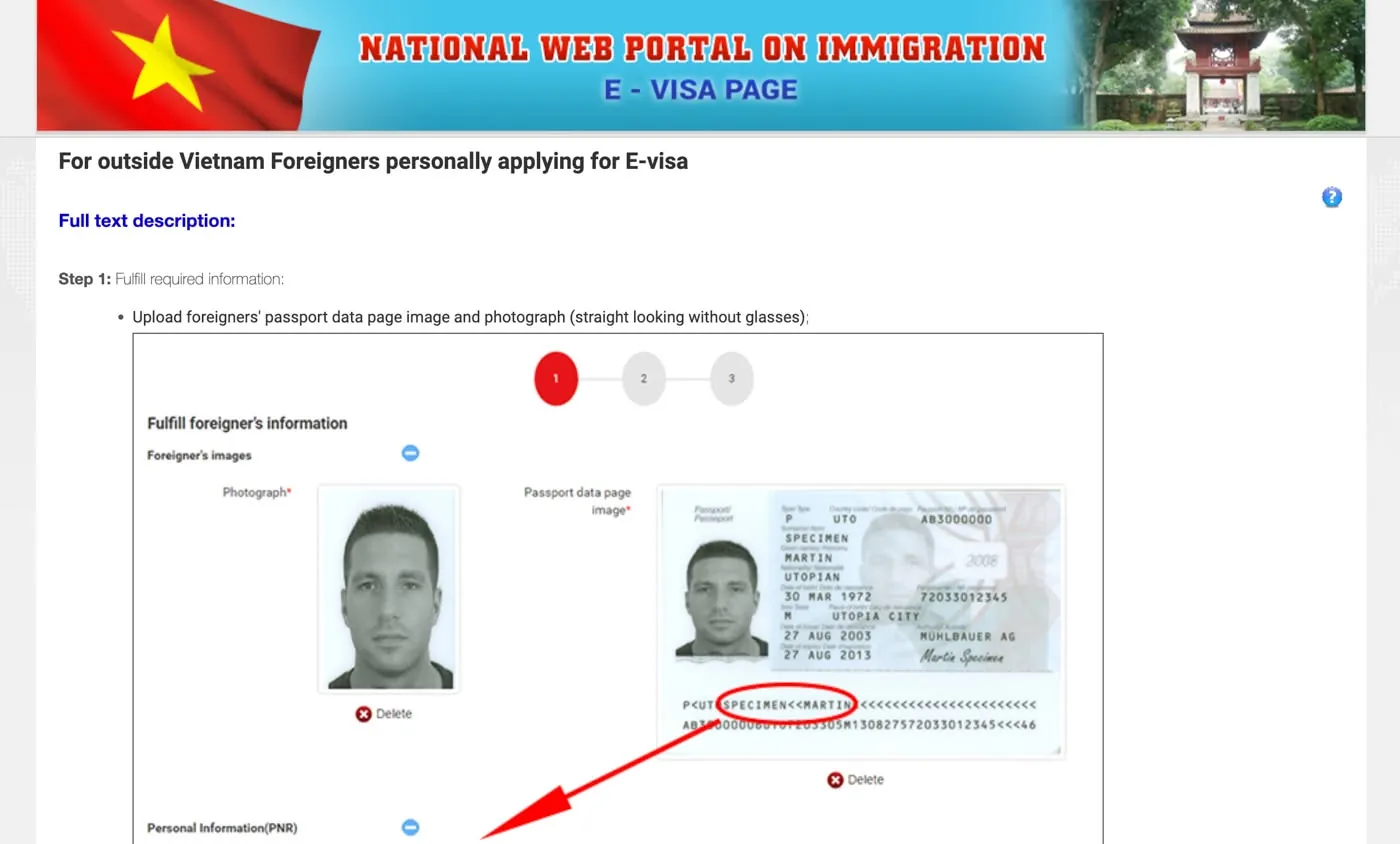
Vietnam’s e-visa officially takes 3 working days to process through evisa.gov.vn. In 2026, the realistic range for most applicants is 3–7 calendar days under normal conditions. Around Tet (February 14–21, 2026), the government portal halts all approvals for 7 consecutive days — apply by January 25 for a February trip or you risk being stuck. The fee remains $25 single-entry or $50 multiple-entry, both valid for up to 90 days, unchanged since August 2023.
There is no officially published per-nationality processing time. What your nationality determines is simpler: whether you need a visa at all, and what payment methods work for you on the portal. I’ve been organizing Vietnam border crossings and visa runs for years; here’s the clearest breakdown of 2026 processing data I could compile.
Vietnam E-Visa Processing Times 2026: The Data
| Metric | 2026 figure |
|---|---|
| Official standard | 3 working days (Mon–Fri, public holidays excluded) |
| Realistic range | 3–7 calendar days |
| Peak tourist season (Nov–Apr) | 4–6 working days typical |
| Low season (May–Aug) | 3–5 working days typical |
| Tet 2026 shutdown | Feb 14–21 — zero approvals; apply by Jan 25 |
| April 30/May 1 holiday 2026 | 9-day break; apply by April 20 |
| September 2 (Independence Day) | 5–7 extra days; apply 2–3 weeks early |
| Fee — single-entry, 90 days | $25 USD (official gov fee, non-refundable) |
| Fee — multiple-entry, 90 days | $50 USD |
| Official portal | evisa.gov.vn |
Sources: vietnam-visa.com, vietnamese-evisa.org, myvietnamvisa.com, vietnamdiscovery.com — cross-referenced June 2026.
Who Needs a Vietnam E-Visa in 2026?
Your passport determines whether you need an e-visa or can enter visa-free. Vietnam expanded visa-free access significantly in 2024–2025; the table reflects the current 2026 picture.
| Country | Visa-free entry | Days | E-visa for longer stays? | E-visa cost |
|---|---|---|---|---|
| Russia 🇷🇺 | Yes | 45 days | Yes, if stay >45 days | $25/$50 |
| Belarus 🇧🇾 | Yes | 45 days | Yes, if stay >45 days | $25/$50 |
| Germany 🇩🇪 · France 🇫🇷 · Italy 🇮🇹 | Yes | 45 days | Yes, if stay >45 days | $25/$50 |
| UK 🇬🇧 · Japan 🇯🇵 · South Korea 🇰🇷 | Yes | 45 days | Yes, if stay >45 days | $25/$50 |
| Belgium 🇧🇪 · Netherlands 🇳🇱 · Poland 🇵🇱 + 9 more EU* | Yes | 45 days | Yes, if stay >45 days | $25/$50 |
| Kazakhstan 🇰🇿 | Yes | 30 days | Yes, if stay >30 days | $25/$50 |
| Kyrgyzstan 🇰🇬 | Yes | 30 days | Yes, if stay >30 days | $25/$50 |
| USA 🇺🇸 · Canada 🇨🇦 | No | — | Yes, always | $25/$50 |
| Australia 🇦🇺 · New Zealand 🇳🇿 | No | — | Yes, always | $25/$50 |
| Ukraine 🇺🇦 | No | — | Yes, always | $25/$50 |
| Uzbekistan 🇺🇿 · Tajikistan 🇹🇯 | No | — | Yes, always | $25/$50 |
*12 EU countries gained 45-day visa-free entry under Resolution 229/NQ-CP effective August 15, 2025: Belgium, Bulgaria, Croatia, Czech Republic, Hungary, Luxembourg, Netherlands, Poland, Romania, Slovakia, Slovenia, Switzerland. See Vietnam E-Visa vs Visa on Arrival vs Visa Run 2026 for a full comparison of visa options.
Vietnam’s e-visa is open to citizens of all countries worldwide as of August 2023. No official data shows nationality-based processing differences — every application goes through the same pipeline.
When Does Vietnam E-Visa Processing Slow Down?
Four factors consistently stretch the timeline beyond 3 days:
Vietnamese public holidays — The immigration authority halts e-visa processing completely on public holidays. Tet is the longest gap: in 2026, the holiday runs February 14–21, meaning 7 consecutive days with zero approvals. If you’re traveling in February, submit by January 25. The April 30/May 1 holiday block in 2026 runs for 9 days — submit by April 20. September 2 (Independence Day) adds 5–7 days; apply 2–3 weeks early.
Peak tourist season — Between November and April, application volume is highest. Processing extends to 4–6 working days even without holidays. Add at least 2 buffer days to your estimate.
Photo rejection — If immigration returns your application because of photo quality (shadow on face, colored background, file larger than 2MB, not JPEG format), the clock resets entirely. Your application goes back to Day 1. Photo quality is the single most common rejection trigger. See our guide on how to fill the Vietnam e-visa application form to avoid this.
Data mismatches — Name transcription errors — given name and family name swapped, middle name missing from what appears in the passport’s MRZ — trigger manual review and delays. Triple-check your passport’s machine-readable zone before you submit.
Fast-Track E-Visa Options in 2026: Cost vs. Speed
The official evisa.gov.vn portal has no general express lane for self-applicants. Third-party visa agencies offer expedited processing using the same official portal, queued with priority.
| Option | Total cost | Processing time |
|---|---|---|
| Self-apply (official portal) | $25/$50 | 3–7 calendar days |
| Agency — next-day | $65–$75 | ~1 working day |
| Agency — same-day (2–4 hours) | $75–$135 | 2–4 hours |
| Agency — 2-hour rush | $95–$160 | ~2 hours |
How agencies work: they file on evisa.gov.vn using a Vietnamese bank card (the portal accepts Visa/Mastercard/JCB), queue-prioritize through volume, and handle any bounce-back for you. No government bypass — just faster submission and follow-up.
If you need to fly in the next 48 hours and haven’t applied, a reputable agency is the realistic path. For a trip 10 or more days out, self-apply and save $40–100.
If you’re in that under-48-hours bracket and don’t want to gamble on an agency you can’t vet, that’s the call I take. I file on a Vietnamese card, chase any bounce-back myself, and can turn a rush e-visa around in hours when the dates leave no room — message me on Telegram with your flight date and I’ll tell you what’s actually possible.
Why Vietnam E-Visa Applications Get Delayed or Rejected
Immigration doesn’t issue rejection codes. Your application comes back as “needs resubmission” without a specific reason. Based on patterns across thousands of applications, these are the most common causes:
- Photo quality — The single most frequent trigger. Requirements: white background, no shadows, face fully centered and not cut off, JPEG only, file size under 2MB.
- Name transcription error — Family name and given name swapped; middle name that appears in your passport’s MRZ is missing from the application.
- Passport expires too soon — Must remain valid for at least 6 months beyond your intended exit date from Vietnam.
- Wrong entry port — You must select the exact border crossing or airport you’ll use. Changing it after approval requires a full new application.
- Payment not confirmed — If payment didn’t process successfully, the system holds the application without processing it. Always wait for the email confirmation with a registration code.
- Fewer than 2 blank pages — Vietnamese immigration requires at least 2 blank visa pages remaining.
The portal evisa.gov.vn accepts Visa, Mastercard, and JCB cards. Russian Mir cards are not listed among accepted payment methods. If your card doesn’t work, an agency that accepts alternative payment methods is the practical workaround — or ask someone with a non-sanctioned international card to handle the payment. That’s the exact gap our Vietnam e-visa 90 days page fills — the fee gets paid on a card the portal accepts.
If you’ve ever had an immigration violation in Vietnam — overstay, deportation, visa fraud — your application may be flagged regardless of how well-prepared it is. See Vietnam visa overstay and Lao Bao border for how that situation plays out.
How We Compiled This Data
Processing time data is cross-referenced from vietnam-visa.com, myvietnamvisa.com, vietnamese-evisa.org, and vietnamdiscovery.com — four independent visa information sources verified in June 2026. Visa exemption data is sourced from official Vietnamese government resolutions 44/NQ-CP (March 2025) and 229/NQ-CP (August 2025). Fee data confirmed against evisa.gov.vn directly.
What we cannot confirm: No official per-nationality processing time differences are published. Any claim that passport X gets processed faster is anecdotal. We cite only facts confirmed by two or more independent sources. Where only one source exists, we flag it.
Related: Lao Bao vs Moc Bai vs Ha Tien Border Comparison 2026 if you’re planning a visa run instead of an e-visa.
Frequently Asked Questions
How long does Vietnam e-visa take to process in 2026? Officially 3 working days through evisa.gov.vn (Monday–Friday only; public holidays don’t count). In practice, allow 3–7 calendar days under normal conditions. Around Tet (February 14–21, 2026) the portal suspends processing entirely — apply by January 25 for a February arrival.
Can I get a Vietnam e-visa in 24 hours? Not through the official portal — no general express lane exists for self-applicants. Third-party agencies offer next-day service for $65–75, or 2-to-4-hour processing for $75–135, using the same official portal with priority queuing.
Do Russian citizens need a Vietnam e-visa? Russia has 45-day visa-free entry to Vietnam in 2026 under a bilateral treaty. An e-visa is only needed if your stay exceeds 45 days. If you apply, note that Mir cards are not listed as accepted on evisa.gov.vn — use Visa, Mastercard, JCB, or apply through an agency.
Does Vietnam e-visa processing stop during Tet? Yes. The Vietnam immigration authority suspends all e-visa approvals during Tet (February 14–21, 2026). Applications submitted near the holiday can wait 10+ days total. Submit by January 25 for any February arrival.
Is the Vietnam e-visa processed faster for EU or US citizens? No officially published nationality-based processing difference exists. All applications use the same 3-working-day pipeline. Claims of faster processing for specific passport types are anecdotal and unconfirmed by official sources.
What if my Vietnam e-visa status isn’t updating? Check your application status at evisa.gov.vn/e-visa/search using your registration code. If there’s no movement after 7 working days, your application may have been silently rejected — resubmit with corrected details (especially photos and name spelling) or contact a visa agency.
Useful links:
- Best Bus — danangvisarun.com — book your e-visa service, visa run, or transfer
- Telegram @learnx1000 — message me for visa and visa-run help