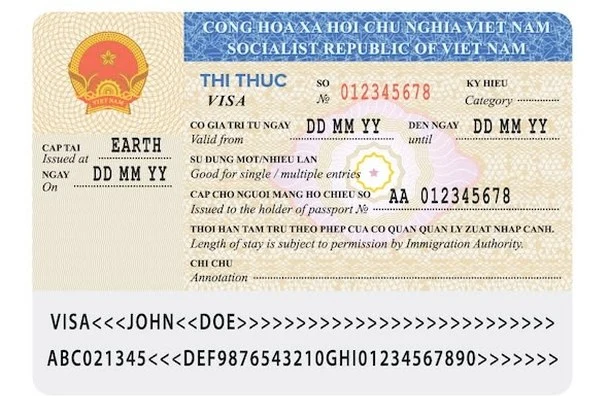
Vietnam has no digital nomad visa - not a DTV like Thailand, not a De Rantau like Malaysia. The 90-day e‑visa is what almost every remote worker here actually uses, and it costs $25 for single entry or $50 for multiple entry through the official e‑visa portal.
If you’re planning a 1-3 month stay rather than a permanent move, the visa question is simpler than it looks. Here’s the setup I see work for short-stay nomads in Da Nang.
Do You Actually Need More Than the E‑Visa?
Most people searching for a “digital nomad visa” are really asking how to stay past 90 days. If your trip is 1-3 months, the multiple-entry e‑visa alone covers it - no visa run needed, no extra paperwork, no local company required.

The multiple-entry option is worth the extra $25 over single-entry even for a shorter trip, because it lets you pop over to Thailand or Cambodia for a weekend without re-applying. Single-entry only makes sense if you’re certain you won’t leave the country before flying home.
Step by Step: Getting Your E‑Visa Before You Land
Applying yourself takes about ten minutes online and saves the agency markup. Here’s the exact sequence.
- Go to evisa.gov.vn - you don’t need an agency for this.
- Upload your passport photo page and a plain headshot on a white background.
- Fill in your dates and entry point exactly as they appear on your passport, including middle names.
- Pay the $25 (single) or $50 (multiple) fee online.
- Wait 3-5 business days, then log back in with your registration code to download the approved visa.
- Print it - Vietnamese border staff still ask for a paper copy at several land and air checkpoints.
What a Month in Da Nang Actually Costs on This Visa
A one-bedroom apartment near My Khe beach runs $350-$600 a month depending on the building and how long you sign for; shorter leases (1-2 months) sit at the top of that range. Add $150-$250 for food if you mix local spots with the occasional Western meal, and $50-$80 for a scooter rental plus fuel. Coworking desks in Da Nang run roughly $60-$100 a month, though plenty of cafes offer solid wifi for the price of a coffee.
None of that includes flights or your visa fee - but for a 1-3 month stay, $700-$1,100 a month covers rent, food, and local transport for one person without much scrimping.
What Happens If Your Trip Runs Past 90 Days?
This is where the “no digital nomad visa” problem gets real. Vietnam’s e‑visa tops out at 90 days per entry, so if you decide mid-trip to stay longer, you have two options: fly out and re-enter on a fresh e‑visa, or do a land-border visa run to Laos or Cambodia and come back the same day.
A land visa run is the faster and cheaper fix if you’re already based in central Vietnam - it turns a 90-day cap into an indefinite stay as long as you’re willing to spend a day on the road every three months. It’s the same trick long-term expats use because there’s still no dedicated long-stay visa for remote workers.
If a visa run from Da Nang sounds like more hassle than you want to deal with mid-trip, I handle the paperwork side myself - I pay the e‑visa government fee with a card the portal actually accepts (it rejects a lot of foreign cards) and set the correct entry point for your specific route. Message me on Telegram with your dates and I’ll tell you whether a visa run or a fresh e‑visa makes more sense for your trip.
Do You Pay Tax on Foreign Income While Nomading in Vietnam?
No, as long as you stay under 183 days in a 12-month period and don’t set up a local business or employment contract, you’re a non-resident for Vietnamese tax purposes and your foreign income isn’t taxed here. Most short-stay nomads never come close to that threshold on a single e‑visa.
One Day or a Visa Run: How to Decide
If your total time in Vietnam this trip is under 90 days, book the multiple-entry e‑visa and stop thinking about it - that’s the whole visa question solved before you land. If you’re already here and realize you want another month or two, a land-border visa run from Da Nang is faster than flying out and back, and it’s the same workaround long-term nomads have used for years while the country works out an actual digital nomad program.

Not sure which side of that line your trip falls on, or want the border crossing handled for you instead of driving it yourself? Send me your travel dates on Telegram and I’ll walk you through the cheapest legal option for your exact timeline.
Full monthly budget numbers, broken down by lifestyle tier, are in my cost of living guide for Da Nang - worth checking before you commit to an apartment lease.