Two neighbouring countries moved in opposite directions this year, and only one of them still lets you plan a long winter without paperwork. Vietnam kept its visa exemption at 45 days and guaranteed it until 14 March 2028, while Thailand halved its own exemption on 15 September 2026. If the forms are the part you dread, that side of it can be handed off in a day.
How many visa-free days does Vietnam still give?
Forty-five consecutive days, and the guarantee runs to 14 March 2028 under government resolution 44/NQ-CP. Russian, Belarusian and most Western European passports are covered, the purpose of the trip makes no difference, and nothing needs to be confirmed in advance.
No rollback has been announced in Hanoi, which is exactly what matters when you are booking three months of accommodation. I run border transfers out of Da Nang every week, and the flow of people asking about long stays has clearly shifted this direction since the summer.
What exactly changed in Thailand on 15 September?
Thailand’s cabinet approved a return to the 30-day visa exemption for citizens of more than 90 countries, and the rule took effect on 15 September 2026. A single paid extension of another 30 days is still available at any immigration office for 1,900 baht, roughly $55. Anyone stamped in before that date keeps the old 60-day allowance until it runs out.
So the ceiling for a visitor without a proper visa is 60 days, half of it paid for. Thai officials framed the rollback as a response to people using the long exemption for work and residence rather than tourism.
Why the land-border cap bites harder than the lost month
Buried under the headline is the change that actually reshapes long stays: entry through land checkpoints is now limited to two crossings per calendar year. Air arrivals stay unlimited, which means the cheap overland reset is finished for anyone doing it on repeat.
The old rhythm of living two months, taking a bus to a neighbouring country and coming back with a fresh stamp no longer scales. Immigration officers can refuse entry to a traveller who has already used the overland route twice in the same year, so five-month winters on repeat stamps need a real tourist visa now.
What does a 90-day Vietnamese e‑visa cost?
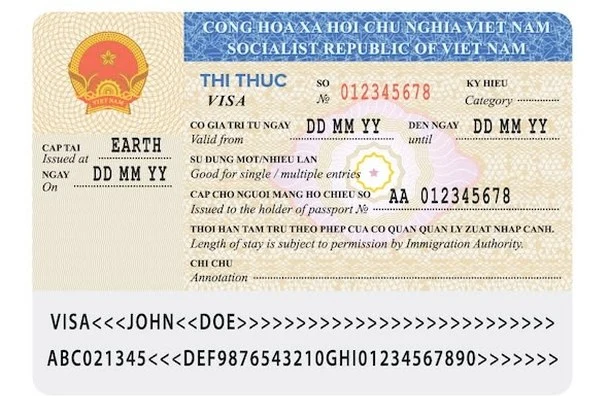
Processing takes about three working days through the official e‑visa portal, and the fee is $50 for a multiple-entry visa or $25 for single entry. It works at 27 land crossings, 17 airports and 39 seaports, 83 checkpoints in total. Every international airport also requires a free digital arrival card since 22 June 2026, filled in within 72 hours of your flight.
Two things go wrong at this stage more than anything else. The portal rejects a lot of foreign cards, so the form is finished and the fee cannot be paid. And the field marked “Intended length of stay” defaults to 30 days, so people pay for three months and receive one.
That second one is where people usually message me. At BestBus Vietnam we fill in the form, pay the government fee with a card the portal accepts, set the right entry checkpoint, and if an application is refused we refile it free and return the money. All we need from your side is the passport page and your arrival date, and the full scope sits on our 90-day e‑visa page.
Which winter plan still works on the new numbers?
Five common travel patterns land very differently in the two countries now. Here is what each one costs in paperwork once the September rules apply.
| Plan | Vietnam in 2026 | Thailand from 15 Sep |
|---|---|---|
| Two-week holiday | Nothing to do, exemption covers it | Nothing to do, exemption covers it |
| Six weeks | Fits inside the free exemption | Exemption plus a paid extension |
| Three months | E‑visa at $25 single entry | Tourist visa arranged before arrival |
| Repeat overland resets | No annual cap on entries | Two land entries per year |
| What the paperwork costs | $25 single, $50 multiple | 1,900 baht per extension |
The split is clean. Anything up to a month looks identical on both sides, and everything past six weeks now costs money and planning in one country while staying cheap in the other. The wider cost-of-living picture sits in my Vietnam versus Thailand relocation breakdown.
In short: which country wins this winter
Vietnam gives 45 days for free, sells 90 days for $25, holds that promise until March 2028 and sets no limit on how often you return. Thailand caps a visa-free visitor at two months and charges for the second half. For a short trip the two are interchangeable, and for anything longer the maths has moved decisively one way.
If the portal, the fee and the checkpoint fields are the part you would rather skip, that is the job I do every week: tell me your dates and I will work out which option is cheapest for your passport, then get the visa issued. Message me on Telegram with the week you are planning.
Frequently asked questions
Does the shorter exemption apply to a visa I already hold?
No. The change affects the visa exemption stamp only. A tourist visa issued by an embassy runs for the period printed on it, and travellers stamped in before 15 September 2026 keep their original allowance until it expires.
Can I still do a same-day border run out of Thailand?
Twice a year. The cap counts land crossings, so a third overland return within the same calendar year can be refused at the checkpoint. Flying back in is not counted against that limit.
What happens if I overstay in Vietnam by a few days?
Fines start at about $19 for under 16 days under decree 282/2025 and rise sharply after that. Anything past two weeks can also mean deportation and trouble on future entries, and the fine is paid at an immigration office before you extend or fly out.