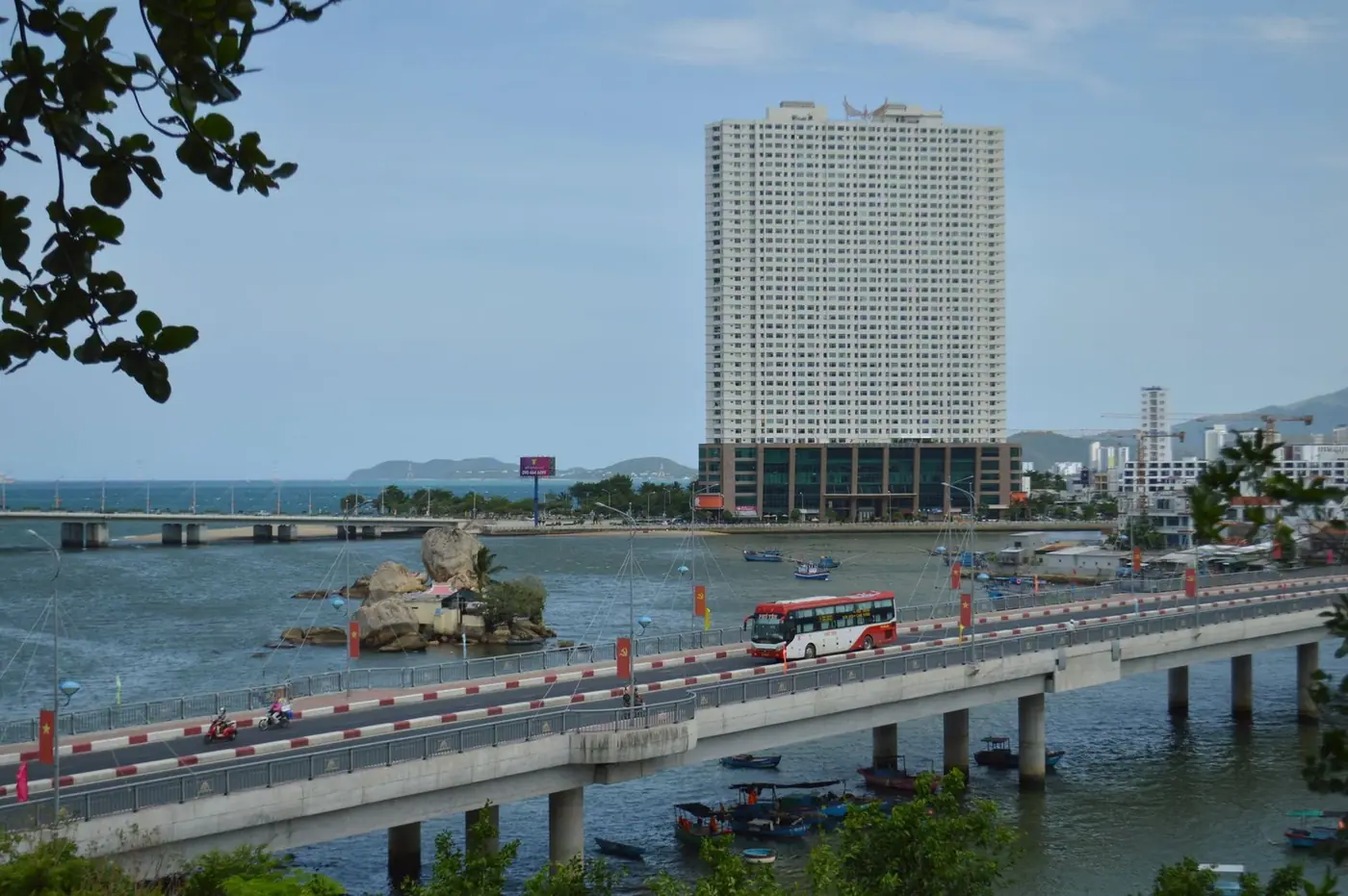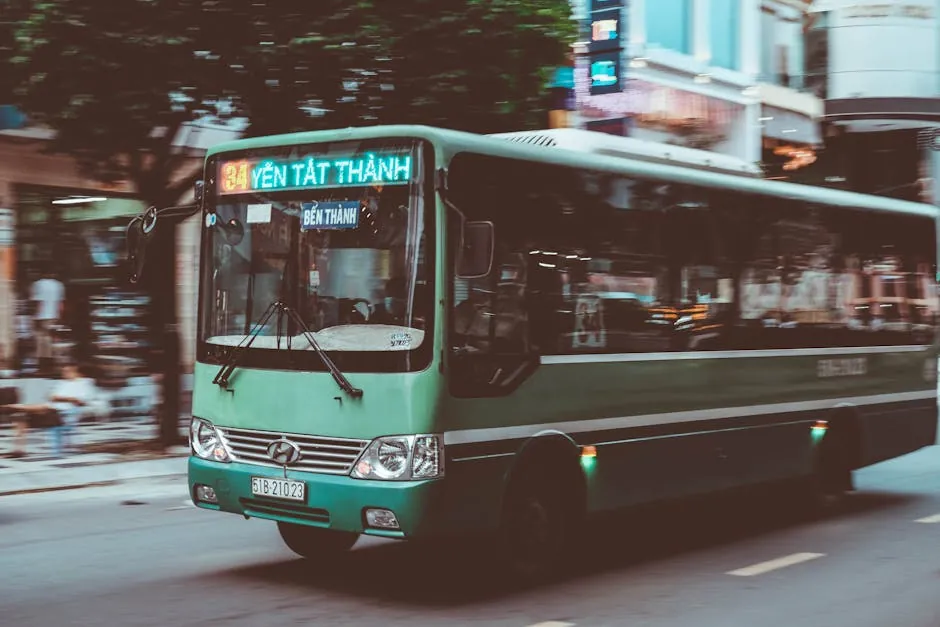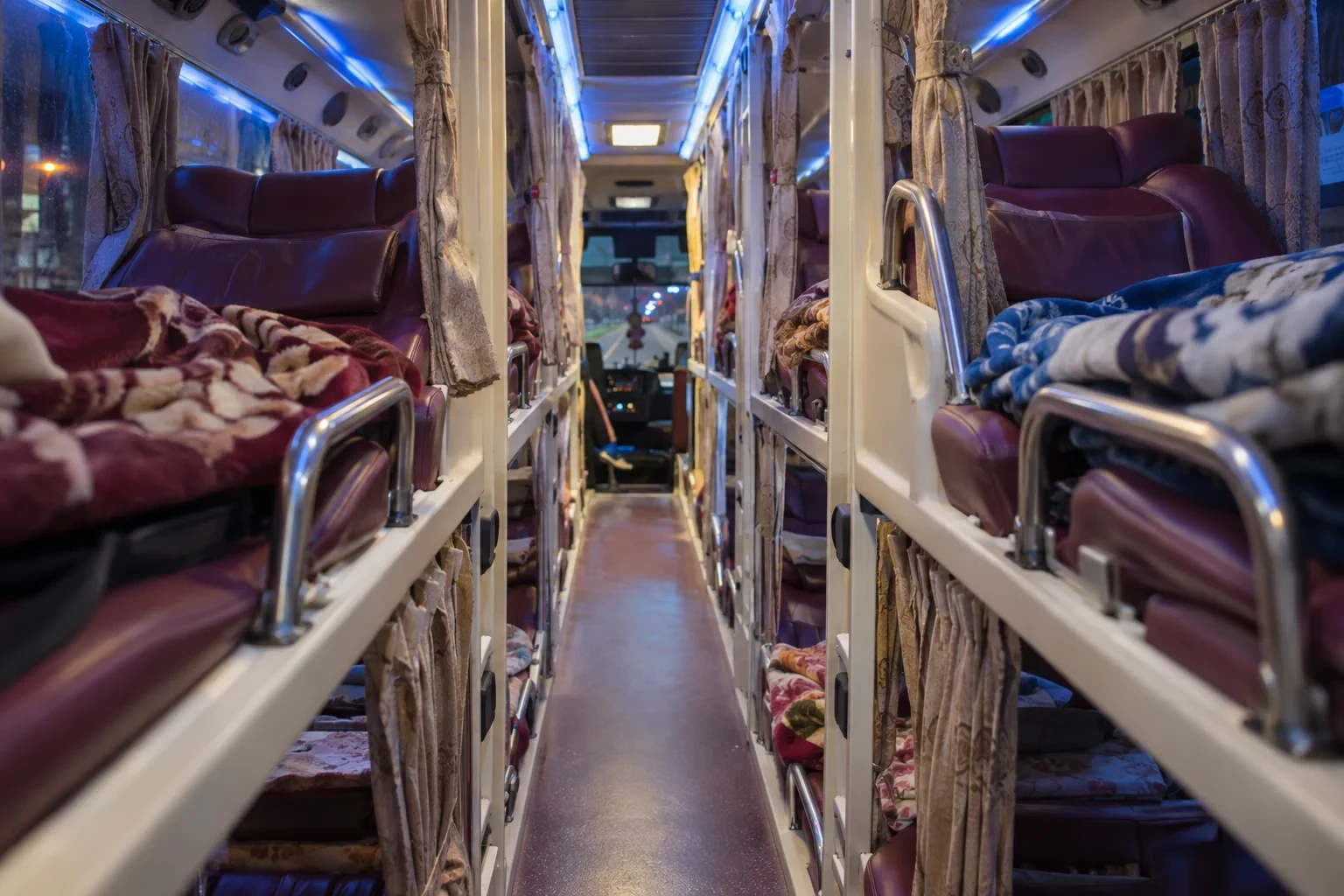
A Vietnam sleeper bus is an overnight coach with reclining berths on two levels, and a foreigner can book one online or at a station counter in about ten minutes. Fares in 2026 run from roughly $9 to $32 depending on the route and class, and the Hanoi to Da Nang ride takes 13 to 16 hours. I work with transport out of Da Nang every day, and the same four mistakes keep showing up: the wrong booking platform, a voucher mistaken for a ticket, the wrong berth and no plan for the toilet. This guide covers all four, with prices checked in October 2026.
Where can a foreigner buy a sleeper bus ticket?
A foreigner can buy a ticket in four places: the carrier’s own site or app such as Futa, a local marketplace such as Vexere, an international marketplace such as 12Go or Baolau, and the counter at the bus station. Buying direct is the cheapest. Vexere adds a service fee, and 12Go and Baolau usually add a little more, so platform fees run roughly 5% to 15%.
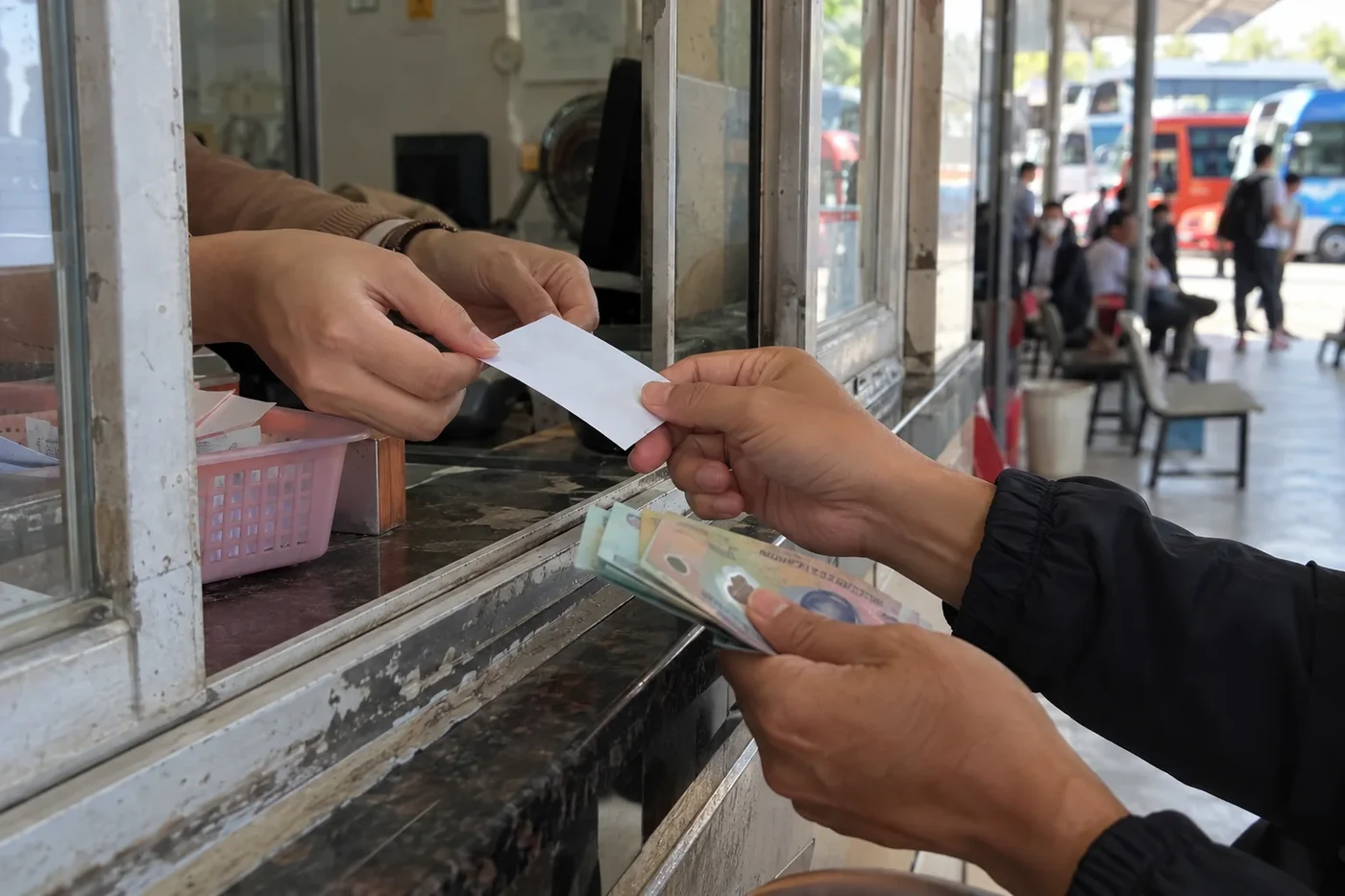
Payment decides the choice for most travelers. The Futa app is built around Vietnamese wallets and bank cards. Vexere takes Visa, Mastercard, JCB, MoMo and ZaloPay, but foreign cards are sometimes declined by the bank, and it refunds 150% of the fare if the trip does not run. 12Go accepts international cards and PayPal and sends an e-ticket at once, which makes it the safest choice when a foreign card fails elsewhere.
How do you buy a sleeper bus ticket step by step?
Booking takes five steps and about ten minutes. Reserve one to two days ahead in a normal week, one to two weeks in summer, and two to three weeks around Tet, when fares can double or triple. These lead times and surcharges come from guides that repeat each other, so treat them as a rough guide.
- Compare departures for your route on 12Go or Vexere, then check the same departure on the carrier’s own page for a lower fare.
- Choose a berth: lower for less sway and an easy climb, upper for quiet and privacy.
- Pay, then screenshot the confirmation with the operator name, phone number, pickup point and booking code.
- Match the operator name and bus number on the confirmation with the bus at the station, because third-party sellers sometimes swap the operator.
- Arrive at the pickup point 15 to 30 minutes early. With a Baolau voucher, exchange it for a paper ticket at the Futa counter first.
What goes wrong when you book through a platform?
The most common failure is a voucher mistaken for a ticket. The PDF that Baolau emails is only a voucher, and the paper ticket comes from the Futa counter. On Vexere a sold-out bus can still show as available, and refunds take a few days.
Reviewers of Futa on Baolau report a cancelled bus, a missed bus after a time change, and one drop-off at 4:20, two hours before the scheduled 6:20. Cancelling a Futa ticket bought through Baolau costs 20% of the fare plus a flat fee of about $1.40 on a normal day and 30% on a holiday, and only up to 24 hours before departure. After that there is no refund. Changes are allowed up to 48 hours ahead, but not on holidays. Terms on futabus.vn may differ, so read them before paying.
Visa runs are where a swapped or late bus costs the most, because the e‑visa date and the border timetable do not wait for it. You can book that leg yourself on Vexere or at a carrier’s counter if you are happy to chase vouchers and bus numbers. In BestBus Vietnam we take you to the border in our own transport and hold your seat for a fixed date, so all we need is your dates and your starting city. Tell me your dates on WhatsApp and I will say what fits.
What is actually inside a sleeper bus?
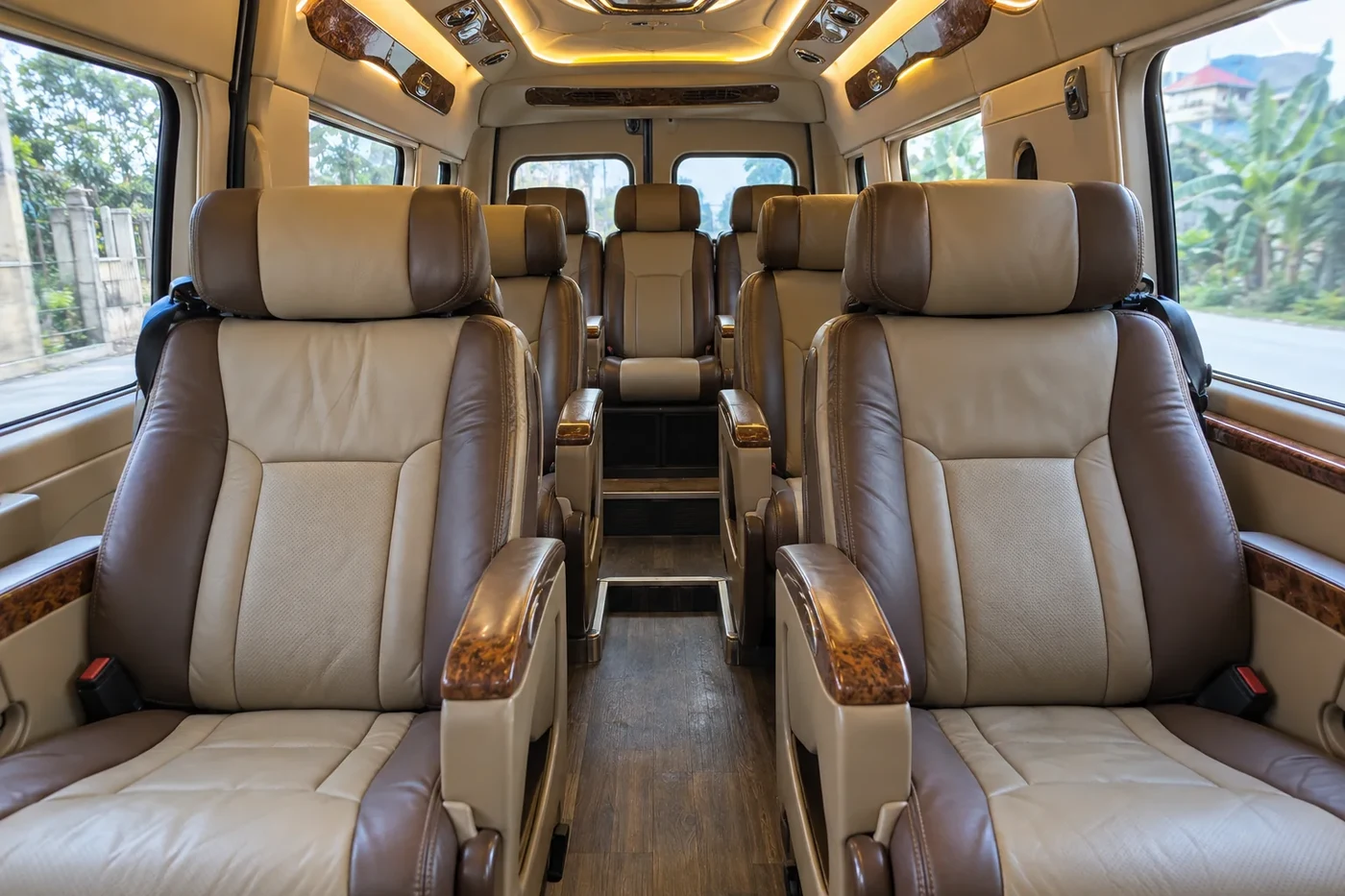
A standard sleeper has two levels of reclining berths in three rows, 32 to 44 berths per bus, while premium cabin buses carry 22 to 24 berths in two rows. A berth is about 1.7 to 1.8 meters long, which suits travelers up to roughly 180 cm. A single cabin measures about 175 by 90 cm.
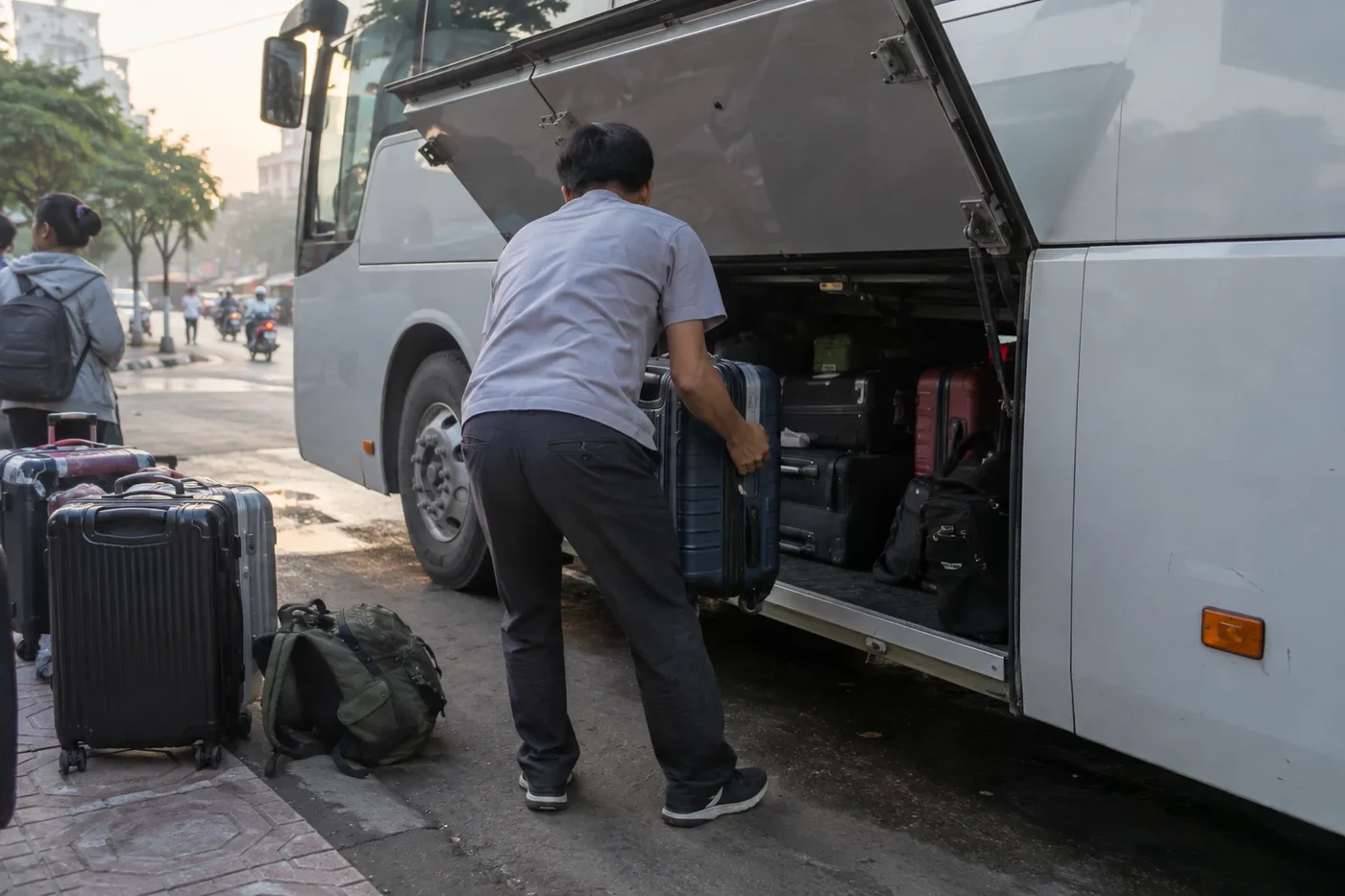
You take your shoes off at the door and carry them in a plastic bag to your berth. Large bags ride in the hold under the bus, so keep your passport, money and phone with you. Water is usually free, and a thin blanket and a small pillow are standard on many lines, although one reviewer found blankets only on every second berth.
Wi-Fi and USB charging are advertised by Futa, Phuong Trang and Camel Travel, but travel guides call the Wi-Fi slow and unreliable. Download maps and shows before boarding.
Most standard and VIP sleepers have no toilet. The bus stops every two to four hours for 15 to 20 minutes. Some premium cabin buses have one, which guides describe as small and often poorly kept, so check the listing before you pay. Add one to two hours to the scheduled time, since stops and traffic stretch every journey.
Upper or lower berth: which one should you book?
Book a lower berth if you get carsick, want to reach your bag, or dislike climbing a ladder, because it sways less and stays cooler. Book an upper berth for quiet and privacy if you do not mind a warmer spot and the climb. The middle of the bus rocks least and the back rows shake most.

On the rear four-berth platforms there are no partitions, so pick a berth outside that block if you want your own space.
How much does a sleeper bus cost in 2026?
Fares depend mostly on distance: about $9 to $12 for the short Da Nang to Hue run, $10 to $19 for six to ten hours, and $16 to $32 for the 13-hour Hanoi to Da Nang haul. A single cabin typically costs 30% to 60% more than a standard berth.
Futa Ha Son sells Da Nang to Hanoi at $18 for a VIP sleeper and $27 for a cabin (450,000 dong and 700,000 dong at the counter).
| Route | Time on the road | Price range per person |
|---|---|---|
| Hanoi to Da Nang | 13 to 16 hours | $16 to $32 |
| Da Nang to Nha Trang | about 10 hours | $12 to $19 |
| Da Nang to Ho Chi Minh City | 18 to 19 hours | $16 to $24 |
| Hanoi to Sapa | 6 to 7 hours | $11 to $15 |
| Ho Chi Minh City to Da Lat | 6 to 7 hours | from $10 |
| Ho Chi Minh City to Nha Trang | 6 to 10 hours | from $11 |
| Da Nang to Hue | 2 to 3 hours | $9 to $12 |
Dollar figures are converted from dong at about 25,500 dong per dollar and come from the route pages of redBus Vietnam, checked on October 14, 2026. Booking sites show a “from” fare, so the price on your date can be higher. Summer adds roughly 30% to 50% on beach routes such as Nha Trang and Da Nang. For the north-central route see the Hanoi to Da Nang bus ticket price guide, and for the southern leg the Da Nang to Nha Trang sleeper bus guide.
Which sleeper bus should you pick?
Pick a lower berth on a standard or VIP sleeper for any trip under ten hours, and a single cabin for overnight routes over 12 hours where you want privacy. Skip the sleeper for Da Nang to Hue, where a limousine van takes two to three hours. Book direct with the carrier when you can, and use 12Go when a foreign card is declined elsewhere.
You can handle all of this alone: compare fares on 12Go, pay with a foreign card, screenshot the confirmation and arrive early. The part that still eats a day is a bus that runs late, gets swapped, or is full on the date your visa runs out. If you would rather not gamble on that, ask me on WhatsApp what fits your week.
Frequently asked questions
Is a sleeper bus safe for a solo traveler?
The risks named in travel guides are fast driving on mountain roads and petty theft. Long night routes run with two drivers. Keep your passport, money and phone on your berth, and take a lower berth near the middle of the bus.
How much luggage can I take on a sleeper bus?
Futa Ha Son lists up to two standard bags per person in the hold. I found no weight limit published for any operator, so pack what you can lift yourself and keep valuables in a small bag at your berth.
Where does a sleeper bus drop me off?
It depends on the departure. Futa Ha Son from Da Nang to Hanoi stops at the Giap Bat and My Dinh bus stations. Some routes add a free shuttle to the center within roughly 3 to 15 km. Buses can also arrive hours early, so confirm the drop-off point before sleeping.
Which operators run sleeper buses besides Futa?
Hanh Cafe runs the south, with Ho Chi Minh City to Nha Trang sleepers at about $10. Camel Travel serves Hanoi to Da Nang from about $20. Sapa Express covers Hanoi to Sapa, and The Sinh Tourist sells open-bus tickets to backpackers.