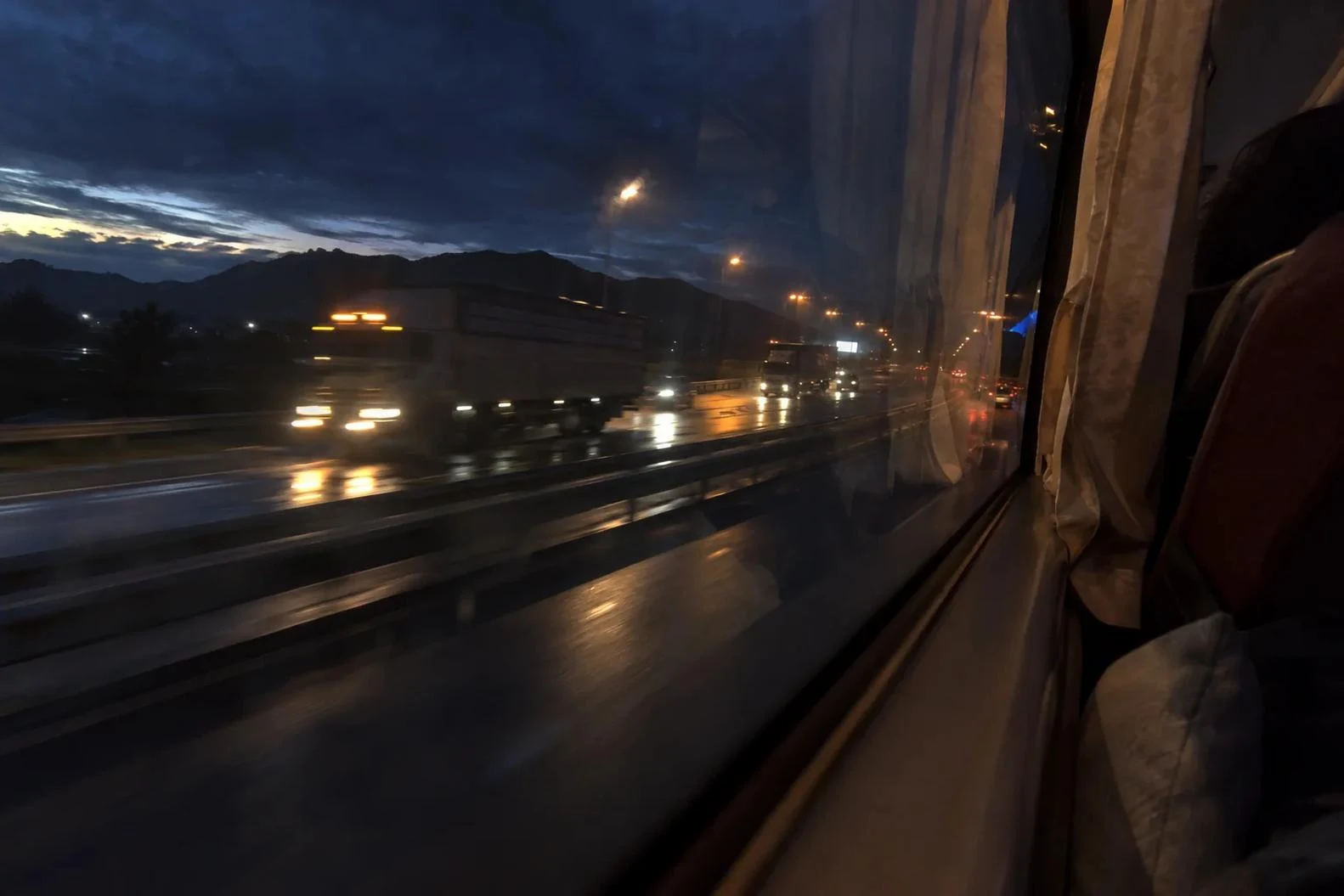
On a Vietnamese sleeper bus your suitcase or backpack goes in the hold under the floor, and only a small bag comes up to your bunk with you. I can’t point you to one national weight limit, so the real allowance is whatever the operator sets, and you only find it by asking before you pay.
Where your bags actually go
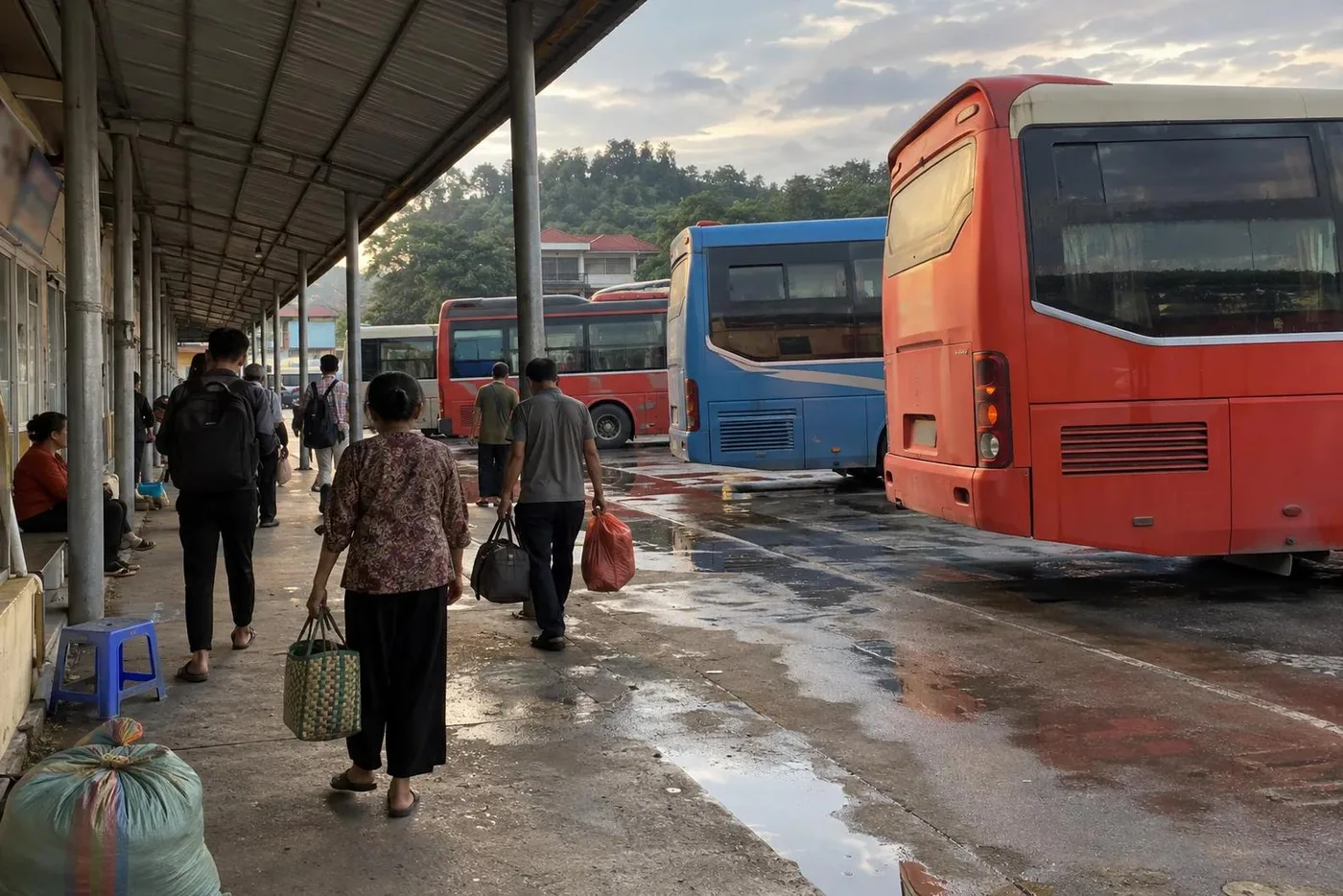
Sleeper buses in Vietnam follow the same split almost everywhere. Staff load the large luggage into the compartments under the bus while you stand on the pavement, and you climb aboard with a personal bag. Travelers on the Futa line report the same thing: there is no room in the berths for luggage, so it rides underneath and you take only what you need in a small bag.
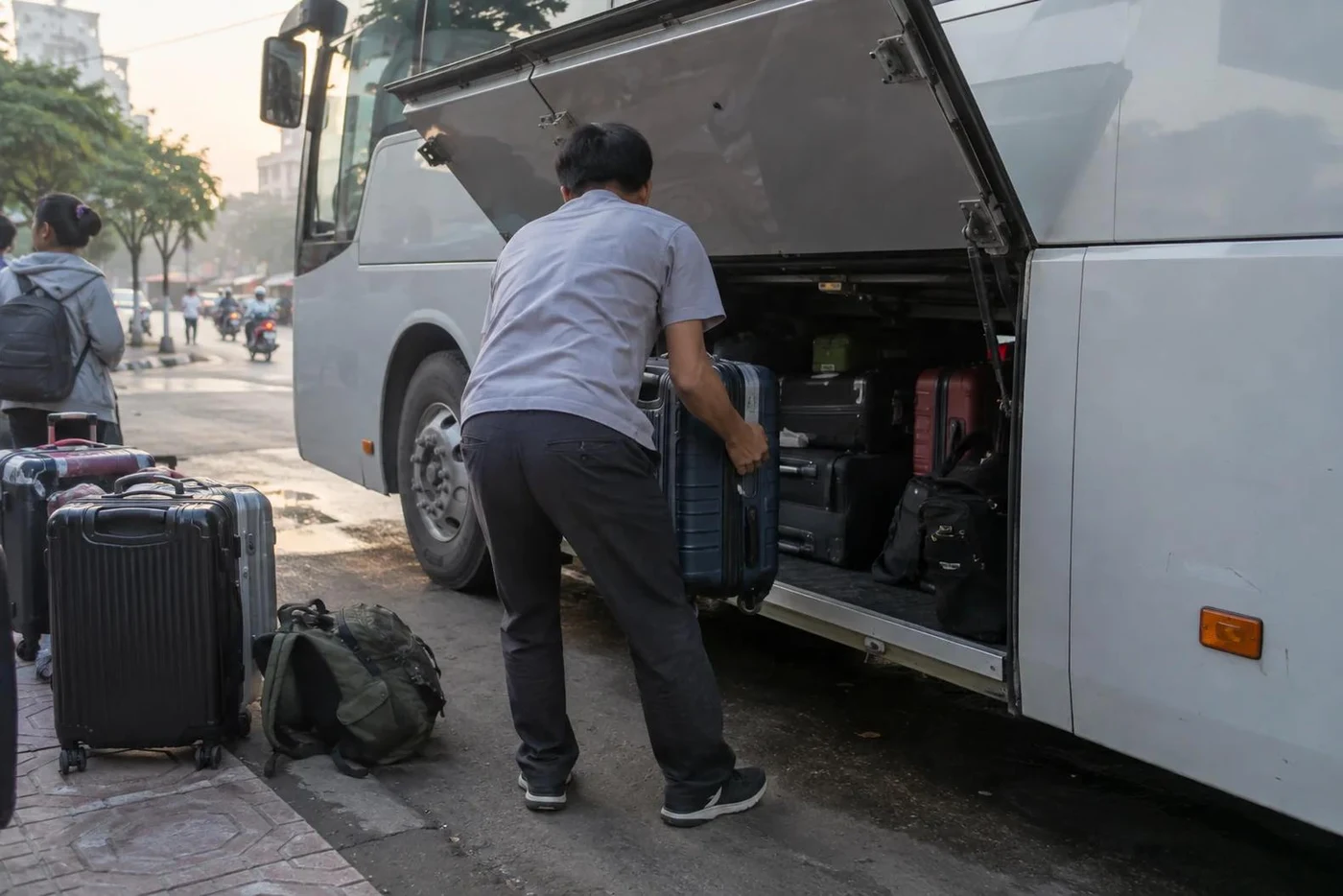
Treat the hold as a shelf you can’t see. Nothing in it is locked to you, and nobody checks it at rest stops. That decides what you pack where.
Is there a weight limit?
Nothing like the airline 20 kg or 23 kg standard applies to tourists. The attendant at the bus has the final word on what counts as too big, and each operator adds its own rules by company and bus type.
If you carry one normal suitcase or a 40 to 60 litre backpack, nobody blinks. Surfboards, bicycles, boxes of goods and anything that looks like cargo need clearing with the seller first, because some buses refuse them and others charge for an extra piece. Ask in a chat message and keep a screenshot of the answer.
What to keep on your bunk
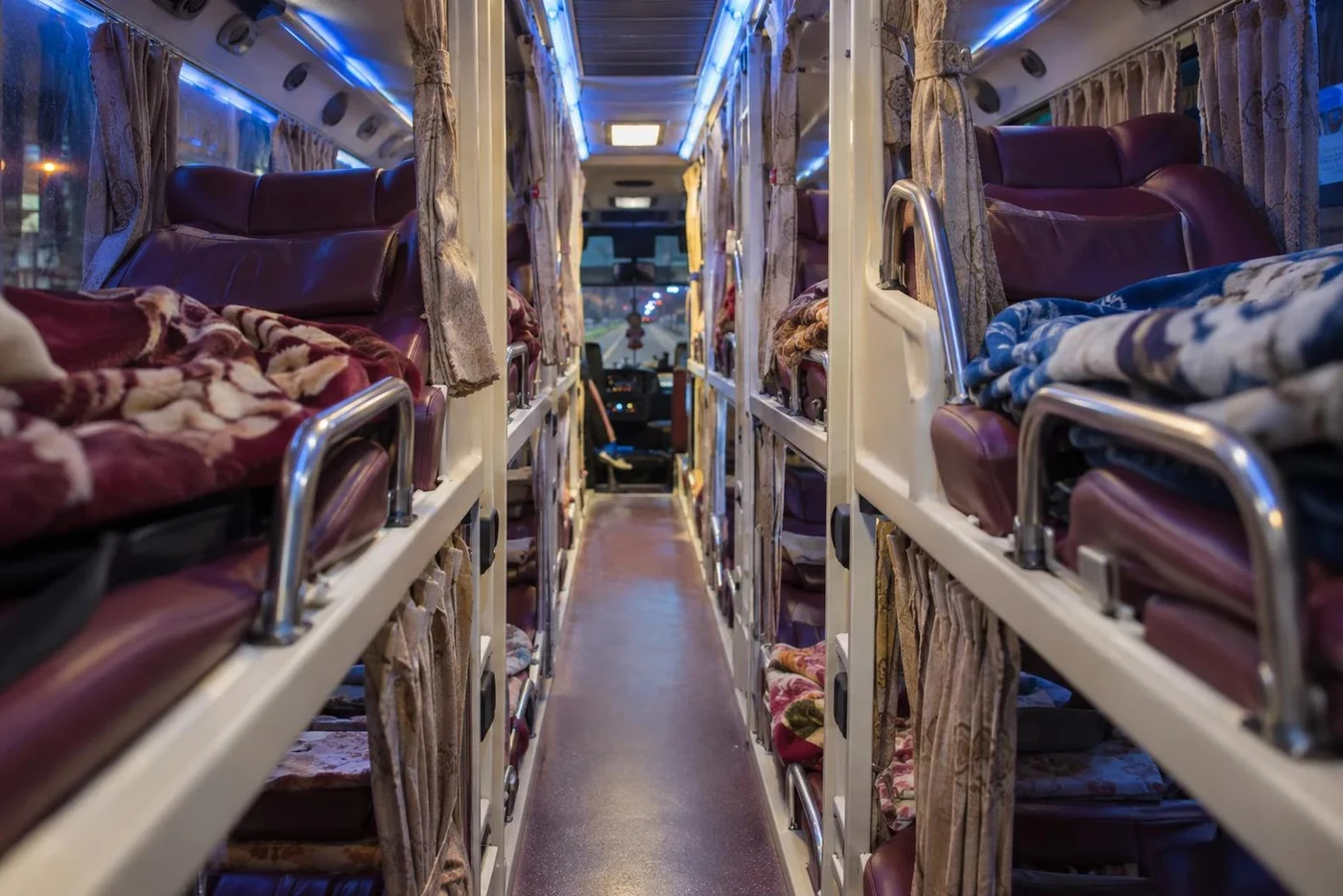
A bunk is narrow and you share the air with 20 to 40 strangers, so every item you bring up takes space from you. Keep these with you, not in the hold:
- passport, wallet, phone, power bank and charger
- laptop and any cash beyond a day’s spending
- water, snacks and a light layer, since the air conditioning runs cold
- toilet paper and hand sanitiser for rest stops
- medication you can’t do without
On a standard bus the only realistic place for a daypack is beside you or under a lower berth. Upper bunk passengers usually wedge it next to them. I use a small cross-body bag for documents and money and keep it on me even while I sleep.
Boarding: shoes off, big bag to the loader
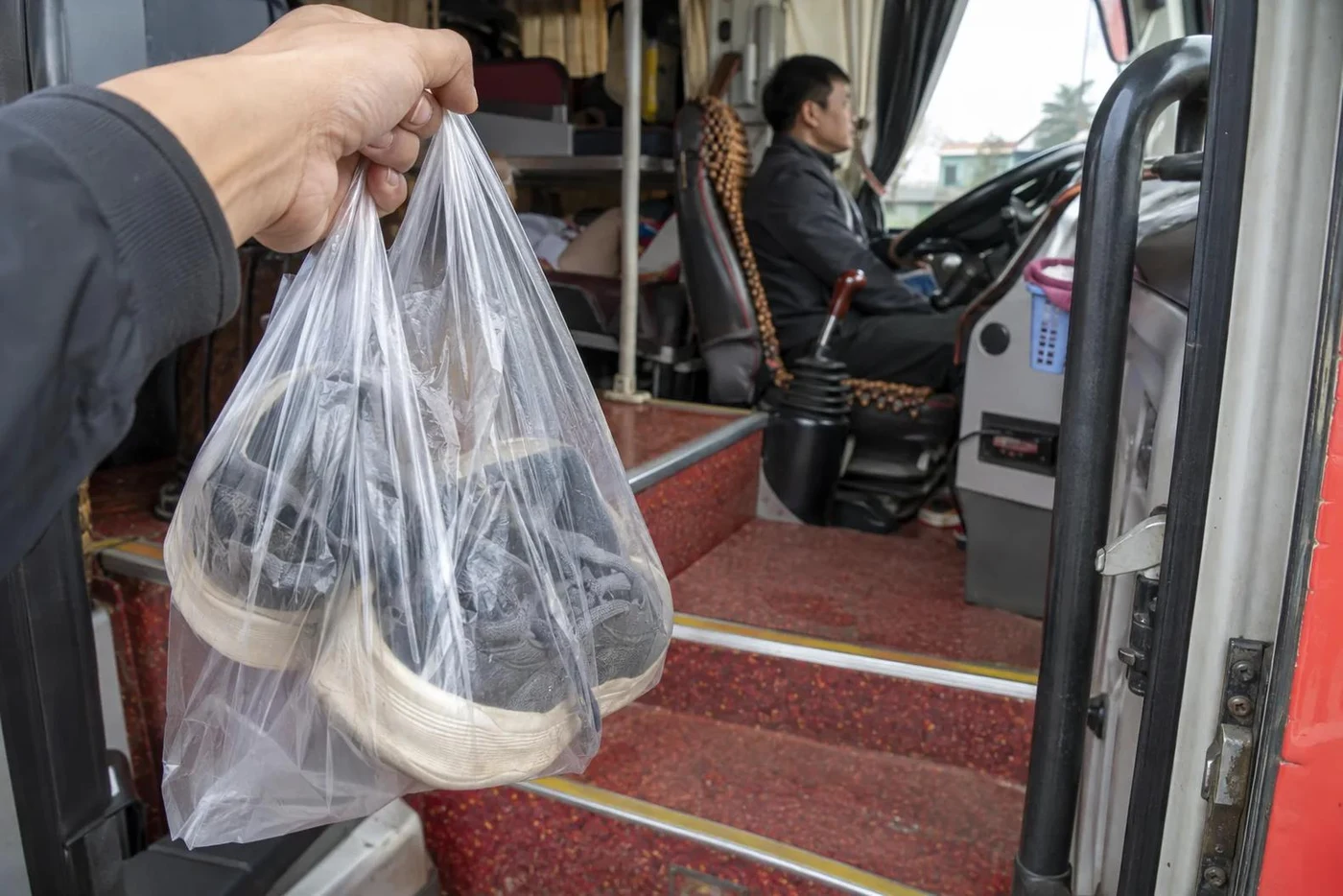
At the door you take your shoes off and carry them aboard in a plastic bag. That leaves your hands busy on the steps, so give the big backpack to the loader first, then step on with only the daypack. Dragging it up the narrow aisle gets it sent back to the hold anyway.
Rest stops and theft
Theft on sleeper buses is uncommon but not unknown, particularly on popular tourist routes where bags sit in the hold during rest stops. A few habits cover most of the risk. Put a small padlock on the hold bag’s zips and tag it with your name and phone number. When the bus stops for 20 to 30 minutes, glance at the hold while the crew works. If you’re leaving the bus for longer than a toilet visit, take the daypack with you. Daytime journeys are also safer, since you watch what happens to your things.
Ask before you pay
A standard bunk can cost as little as 7 dollars, while a cabin-style VIP bus runs up to 30 dollars or more, and both usually carry one normal bag in the hold. The price tells you little about baggage, so settle three points with the seller:
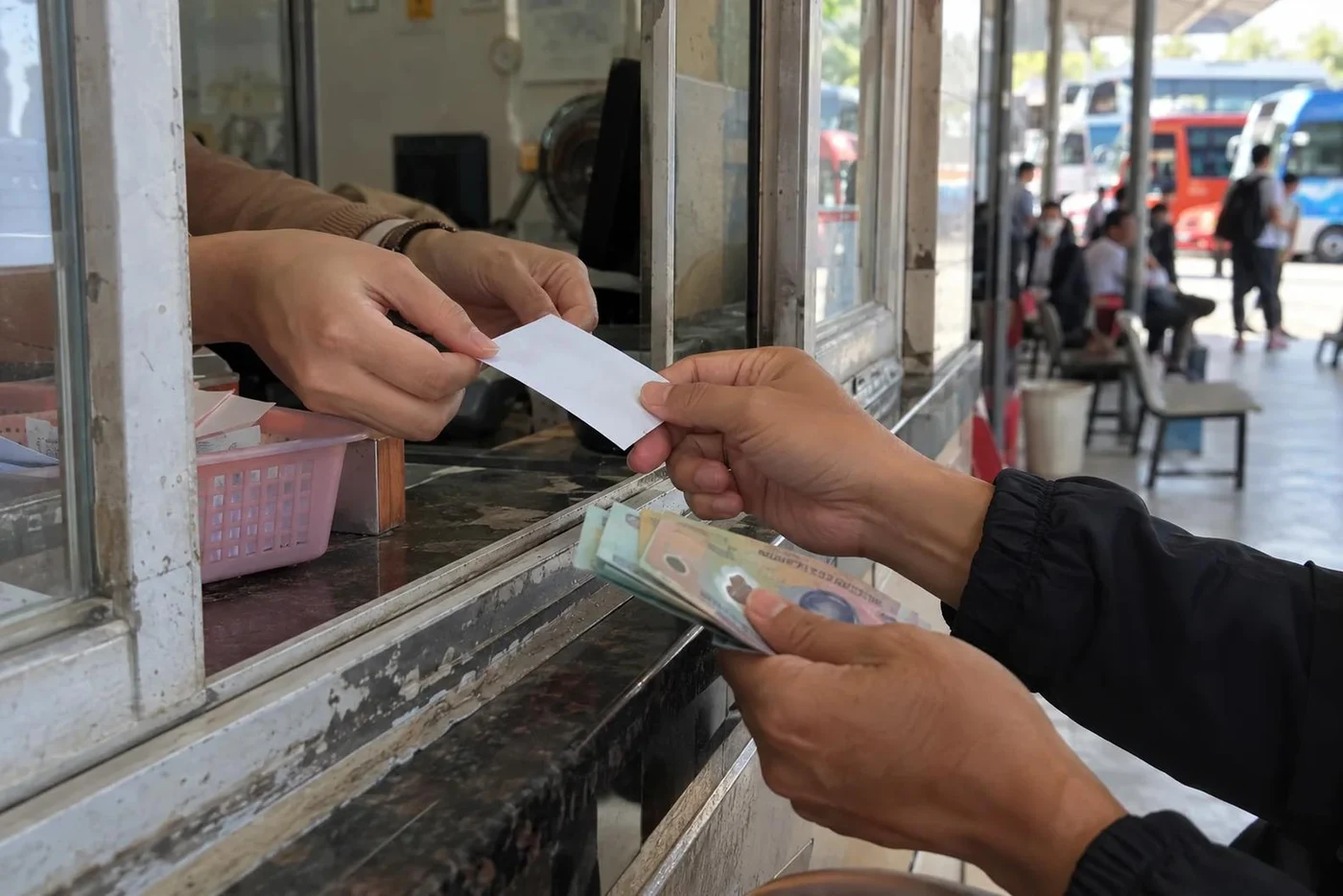
- is one suitcase or backpack included in the ticket?
- is there a size or weight limit, and a fee for a second bag?
- where does the bus pick up and drop off? Some stops sit outside the centre, and that is where your bag comes out of the hold.
The seller’s answer is often verbal only, which is why I ask for it in writing. If you plan a border run on the night bus, I do this for clients: I tell the operator how many bags are coming, pick the pickup point with them, and keep the booking message on my phone, so a visa run from Da Nang starts without a baggage surprise.
If you want the cost side of the trip first, our Hanoi to Da Nang sleeper bus ticket guide shows what a bunk costs on a busy northern route. Weighing the bus against rail? Read sleeper bus versus train in Vietnam, and if your plans might change, see what happens when you miss or cancel a sleeper bus.
What I would pack for a night bus
One 40 to 60 litre backpack or a medium suitcase in the hold, a small daypack on the bunk, and nothing in the hold that you couldn’t replace. Add a thin scarf for the air conditioning and earplugs.
The same logic fits a visa run. Your passport rides on your body, the big bag goes under the bus, and the border crossing, the entry point and the paperwork are the parts you don’t want to improvise. You can file the e‑visa yourself at evisa.gov.vn, and many travelers do. If you’d rather not risk a declined card or the wrong entry point after a night on the road, message me on WhatsApp and I will handle the e‑visa or the border run while you handle the bus.