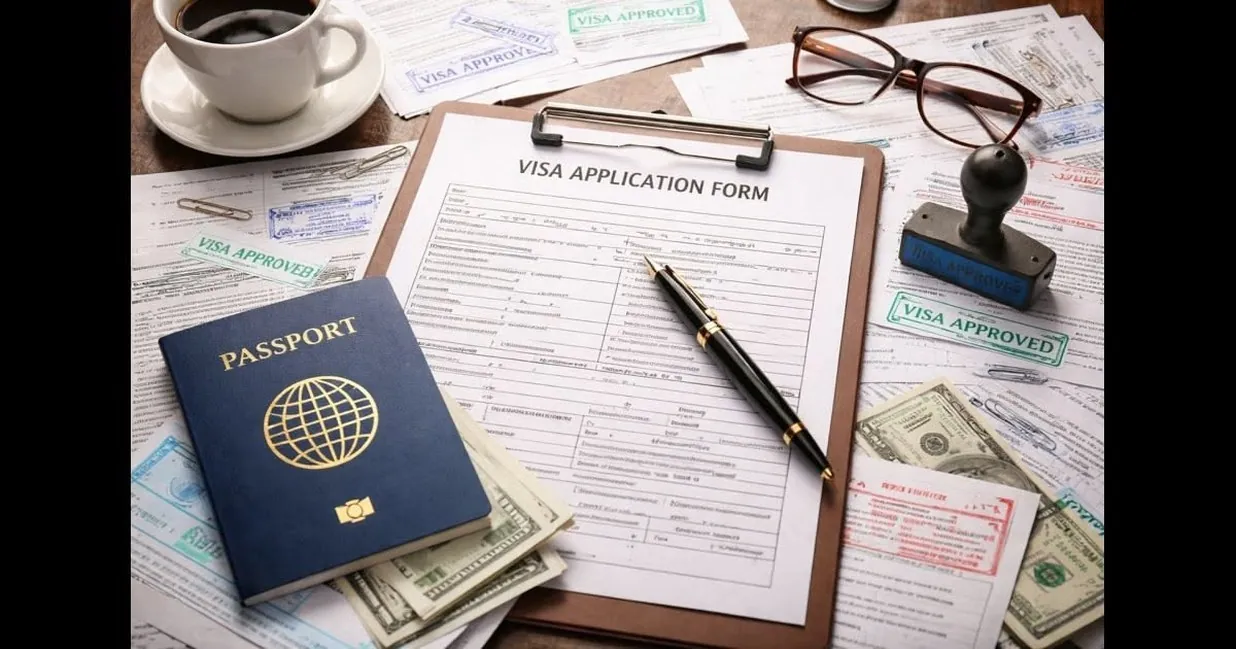
Russians and Belarusians can enter Vietnam visa-free for 45 days, but anyone planning to stay three months or more needs a 90-day e-visa before flying - $25 for a single-entry, $50 for multiple-entry. I worked through this exact checklist before my own move to Da Nang two years ago, and I still send it to friends who ask what to sort out first. If you’d rather have someone just check the paperwork for you, that part can be handled in a single day — what that covers end to end is on our services page.
Step-by-step: the first ten days
- Apply for the e-visa on the official portal several business days before departure - doing it on arrival costs more and takes longer.
- Book a flight with a connection through Hanoi, Ho Chi Minh City, or Bangkok - there are no direct flights from Russia, and Bangkok connections tend to run cheapest.
- Reserve a hotel for the first week through a booking site that takes a MIR card if you’re paying from a Russian account.
- On day one, buy a local SIM and exchange some cash - almost nothing moves here without dong in your pocket.
- Start apartment-hunting on Facebook Marketplace from day two - most listings never make it to English-language sites.
What a month in Da Nang or Nha Trang actually costs
Da Nang and Nha Trang are where most remote workers land - a beach, none of Ho Chi Minh City’s traffic chaos, and rent that runs noticeably lower than the big cities. A studio costs $200-300 a month, a two-bedroom in a decent building $300-500, usually on a minimum three-month lease with first month plus one month’s deposit due upfront. Add $150-300 for food, $90 for a scooter with gas, and a SIM on top, and the whole month lands at roughly $500-1000 - closer to $450-500 if you cook at home and rent a room instead of a full unit.

Money and connectivity on the ground
A Viettel SIM runs about $7 for 5GB of daily data, or an eSIM from Airalo starts around $4.5 if you’d rather set it up before landing. For cash, ATMs at Vietnam-Russia Joint Bank branches accept MIR cards directly, at a rate around 4.3 rubles per 1000 dong; currency exchange counters near any market work too, no MIR card required.

How much to actually save before you fly
Plan for the careful package if you want a cushion: the flight itself runs $400-600 from Russia, a week of hotel while you apartment-hunt is around $150, plus roughly $1000 set aside as emergency cash - call it $1550-2150 total before you land. If you’re comfortable figuring things out as you go, $550-650 covers the flight, the hotel week, and the first days of cash. Both paths land you in the same apartment eventually - one just leaves less room for a bad week.
Market vs. supermarket: where the food budget actually goes
Fruit and vegetables are cheaper and fresher at the local market than at chain stores like Lotte Mart or GO - worth the extra ten minutes. A plate at a local eatery, rice with chicken or pork, runs $1-3 and is easy to find on almost any street, not just the tourist strip. For pantry basics - oil, rice, cleaning supplies - the supermarket is the faster option, and prices there run roughly on par with what you’d pay back home, sometimes more, sometimes less.

When the 90 days run out
The e-visa doesn’t renew in-country - you either leave and reapply, or do a visa run to a neighboring country and come back with a fresh stamp. From Da Nang, that’s usually a same-day trip to Laos through the Lao Bao crossing: out in the morning, back that evening with a new entry stamp. It’s the one step where doing it yourself gets genuinely tedious - bus schedules, the right paperwork at the checkpoint, timing the return.
That’s the part I usually end up handling for people: booking the e-visa, riding along to the border and back, making sure the stamp goes in clean. If the logistics sound like more hassle than you want to deal with, message me on Telegram and I’ll walk you through what to book first for your dates - no Telegram.