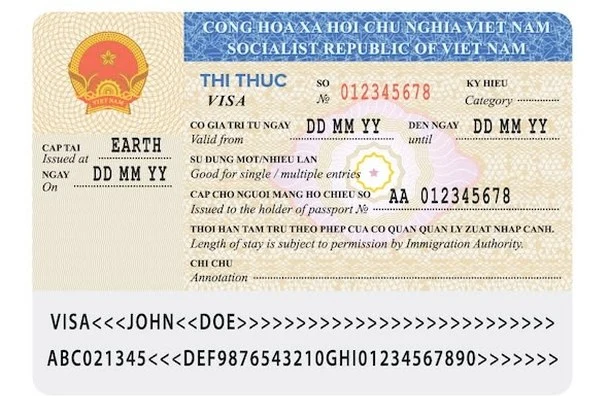
The only official Vietnam e‑visa website is evisa.gov.vn, with thithucdientu.gov.vn running in parallel since November 2024. The government fee is $25 for a single-entry visa and $50 for multiple-entry, and any site charging far more without explaining the service, or asking for payment by bank transfer to a personal account, is not the government portal.
I’ve handled visa runs and e‑visa paperwork out of Da Nang since 2023, and clients send me screenshots of “official” visa sites every few weeks. Some are legitimate agencies charging an honest markup. Others are direct clones built to look like the government portal. Here’s how to tell them apart, with specifics instead of generic “be careful” advice.
What’s the difference between a paid agency and a scam?
A legitimate visa agency charges a service fee on top of the government charge - typically $23 to $80 depending on how fast you need it, with a common all-in starting price of $48 to $55. The difference is that the money actually reaches the government system, and you get an application confirmation with a real tracking number.
A scam site can charge $50 to $200 for a visa that officially costs $25 - or never file the application at all and simply keep the money. Both look identical from the outside: a form, a passport upload field, a “Pay Now” button. The difference only shows up in where the money ends up.
The application itself isn’t hard, but the form, the English transliteration rules, and the photo requirements trip people up more than anything else - I covered the common rejection reasons in a separate guide comparing agency and DIY filing. This is the part I handle for people: I pay the government fee with a card the portal actually accepts, track the application until it’s issued, and sort it out if it comes back rejected - no extra charge for the second attempt. All you need to send me is a passport scan and your travel dates.
How do you spot a fake Vietnam visa website?
Three signs give away a clone site even before you check the domain. The site asks for payment by bank transfer or crypto instead of through the official payment gateway. No application tracking number arrives from the government system after payment, and the page promises a visa “in 30 minutes” without mentioning the standard processing window in working days.
A separate scam pattern runs through social media, especially Facebook ads from accounts with no verifiable business or even a linked website - they message you directly, ask for prepayment, then block you once you’ve paid. The Vietnamese embassy in Japan has separately warned about clones of its own official page.
Another useful test is the confirmation email address. A clone site uses its own inbox instead of the government system’s address, which means the traveler never receives an actual application code from the real e‑visa system - only a message from the middleman with promises attached.
What to do if you already paid a scam site
Stop all communication with the site and don’t send any more personal information. Then contact your bank immediately and request a chargeback on the card payment - this moves faster than waiting for a response from the site itself.

Report it to the Vietnamese embassy or consulate in your country; visa departments handle exactly this kind of report, and the embassy in India, for example, publishes a specific contact number for fake-site cases. If your passport details already went to the scam site, it’s worth checking your status directly on evisa.gov.vn in case an application does exist, just filed under a different agent’s name.
Which domains are the real Vietnam e‑visa website?
The only official portal is evisa.gov.vn, joined in November 2024 by a second domain, thithucdientu.gov.vn, run by the same government department. The older evisa.xuatnhapcanh.gov.vn portal is still live and links through to the new domain, and the department’s general site is immigration.gov.vn.
The rule is simple: a real government domain always ends in .gov.vn, with no variation. The Vietnamese embassy in India has published examples of lookalikes such as vietnamvisa.govt.vn and vietnamvisagov.com - close enough to fool a quick glance, but officially flagged as unofficial.
Steps to verify a visa website before you pay
This check takes under a minute and removes most of the risk of picking the wrong site. I run through it myself before sending anyone a payment link.
- Check the domain ending in the address bar - only
.gov.vn, never.com,.org,.net, or.govt.vn. - Compare the fee to the official rate - $25 single-entry, $50 multiple-entry; a large unexplained markup is a warning sign.
- Look at the payment method - the real portal processes card payments through its own gateway, not a transfer to a personal account.
- Wait for a tracking number - a genuine application on the official portal generates a reference number you can use to check status.
- Check for real contact details - a legitimate agency has a website with history and reviews, not just a messaging app account.
How much does the official e‑visa actually cost?
The government fee is $25 for a single-entry e‑visa and $50 for multiple-entry, set by a Vietnamese Ministry of Finance circular in effect since April 1, 2026. You can check the current fee directly on evisa.gov.vn before paying anything.
The fee is non-refundable if the application is rejected - this is stated directly on the official portal. A single typo in a passport number means paying the fee again on resubmission, which is why I always tell people to double-check the form before they hit submit the first time. Immigration rules around e‑visa tracking also changed this year - I covered what shifted in a breakdown of Decree 286, and none of it affects the fee itself.
Bottom line: how not to overpay or get scammed
The real Vietnam e‑visa website always ends in .gov.vn, the fee is $25 or $50 depending on visa type, and payment runs through a built-in gateway, not a personal transfer. Paying an honest agency more for speed and follow-up isn’t a scam, as long as the money actually reaches the government system and you get a real tracking number.
If you’d rather skip checking the domain, the form, and the application status yourself, message me on WhatsApp with a passport scan and your travel dates - I’ll file it through the official portal and stay on it if something goes wrong.
Frequently asked questions
Can I apply for a Vietnam e‑visa for free?
No, the $25 or $50 government fee always applies - it’s an official charge, not an agency commission. You can only skip the agency markup by filing directly on evisa.gov.vn yourself.
Why do some sites list the e‑visa cheaper than $25?
The price never legitimately drops below the government fee. A site advertising $10-15 is usually bait - you’ll either get asked for a “processing surcharge” later or the application won’t be filed at all.
How do I confirm my application actually reached the government system?
A real application on the official portal generates a tracking number you can check on evisa.gov.vn. If all you got after paying was an email promising a visa with no reference number, that’s a red flag. This part can be handed over end to end — what that covers is on our Vietnam e-visa 90 days page.
Does the official portal accept every foreign card?
Not always - cards from some countries fail at the official payment gateway due to international processing restrictions, which is one reason travelers turn to agencies that pay the fee with a card the portal reliably accepts.
What happens at the border if my visa came from a fake site?
If the application never reached the government system, the visa doesn’t legally exist, and this shows up immediately at immigration. Checking your status on the official portal before you fly is far better than finding out at the airport.
How long does Vietnam e‑visa processing actually take?
The official standard is 3 working days from full payment and a complete application, but during peak season and around Tet it can stretch to 7-10 days. File early rather than the day before you fly.