Moving to Vietnam sounds straightforward until you’re three weeks in and realize the things nobody mentioned. Expat communities across Da Nang have been sharing those lessons for years — here’s the condensed version.
Thinking about the visa side? We cover that below — and if you need it handled, we can help.
What is the 45-day visa-free rule — and how long does it really last?
Russians and citizens of over 25 other countries can enter Vietnam without a visa for 45 days. In practice, that window disappears quickly. The first two weeks go toward settling in, the next two toward finding a real apartment. By day 45, most people are just starting to feel at home.
An e-visa extends the stay to 90 days: $25 for single entry, $50 for multiple. The official portal is evisa.gov.vn. The catch: Russian cards and most foreign cards don’t process on the site. People spend days hunting for a workaround. Those who use a service with its own card for the portal clear it in one day without the stress.
Don’t wait until day 30 to start. Processing takes a few days, and errors reset the clock.
How much does life in Da Nang actually cost per month?
Da Nang consistently tops expat polls for quality-to-cost ratio in Southeast Asia. Here’s a realistic couple’s budget:
- Rent (1-bedroom, good area): ~$420/month
- Food (markets + local cafés): ~$530/month
- Motorbike rental: ~$85/month
- Weekend trips and activities: ~$160/month
That’s around $1,200–1,500/month for two — roughly half of what comparable living costs in Berlin, Bangkok, or Lisbon. Street food keeps costs low: a bowl of pho bo costs about $1.30, a banh mi from $0.50, fresh mango around $2.50/kg. The e-visa process for longer stays is one of the first things to sort before the budget math makes sense.
Where do expats find apartments — and what gets hidden in listings?
Facebook expat groups are the real estate market here, not Airbnb or Booking. Da Nang has active rental groups where landlords post directly — prices run 30–40% lower than aggregator rates for the same type of unit.

Two things listings don’t mention: noise and windows. Karaoke with outdoor speakers is a social institution in Vietnam and runs late. Buildings are also constructed wall-to-wall, so apartments without real windows are common — not exceptional.
Rule from the community: view apartments in the evening, not at noon. Daytime is always quiet.
What surprised everyone in the first month?
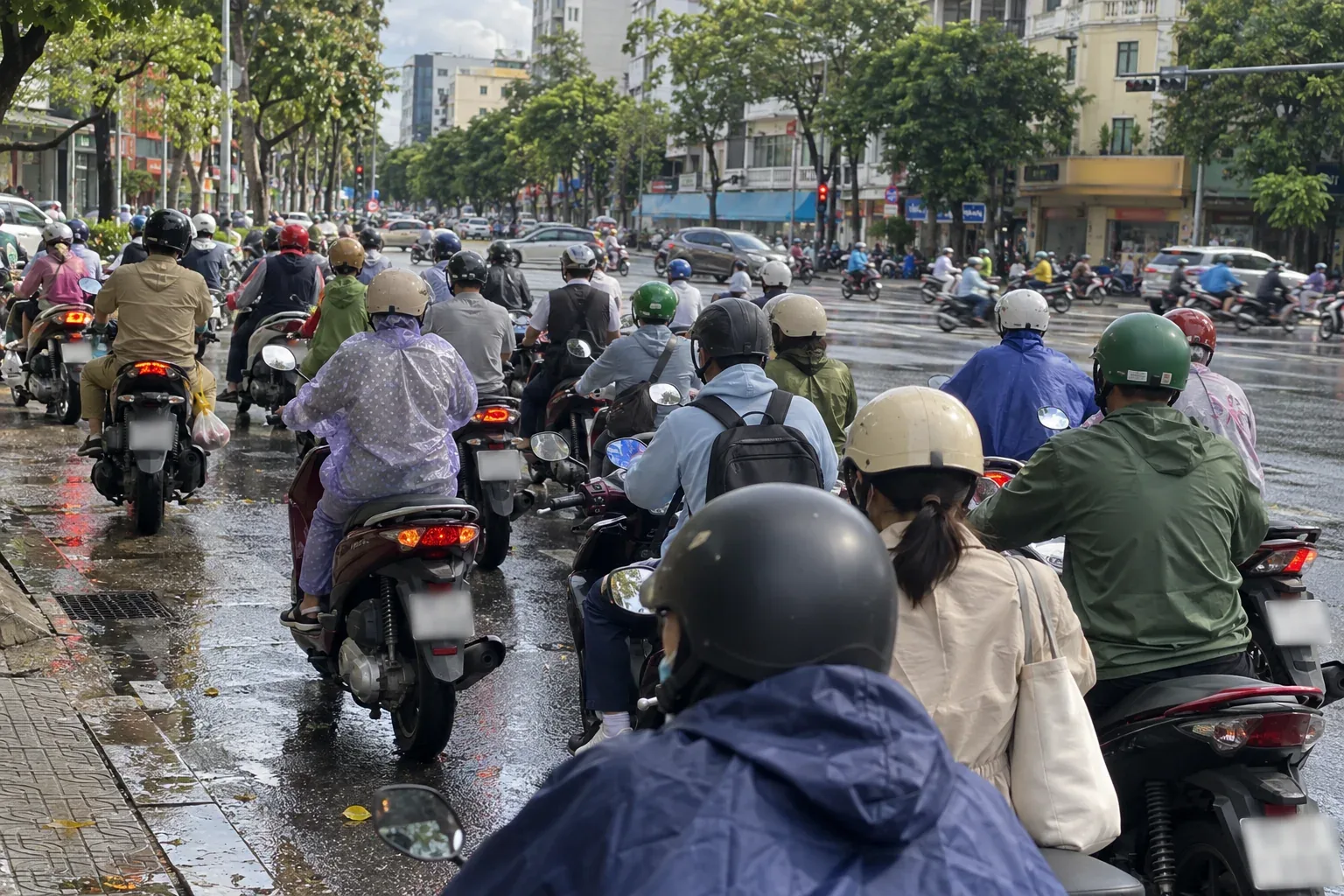
Traffic. Around 70% of road users in Da Nang are motorbike riders. Traffic signals are advisory, and lanes are suggestions. Crossing the road seems impossible until you understand the pattern: move slowly and predictably, and bikes flow around you. Most people figure it out within two weeks.

Tap water. Don’t drink it — even filtered, it’s not safe. Large water jugs delivered to the apartment are a standard monthly expense. Not a big deal, just part of the rhythm.
The people. Vietnamese are patient and genuinely friendly toward foreigners. Russians tend to get an especially warm reception — Vietnam and the Soviet Union have long historical ties, and people remember. There’s a Lenin Park in Hanoi. You’ll hear “Lenin!” on the street more than once.
How do you manage without speaking Vietnamese?
English works in international restaurants, coworking spaces, and tourist-facing shops. Everywhere else — local markets, pharmacies, the landlord — a translation app is the actual tool. Google Translate’s camera function reads menus and signs in real time. Most locals are used to tourists pointing phones at things.
Banking is the more practical challenge. Open a Vietcombank or Techcombank account at a branch — bring your passport and valid visa. Most expats keep an international card for the first month and switch once they have a local account.
For details on longer visa options beyond the 90-day e-visa, the Vietnam visa guide for Russian citizens covers work permits and TRC applications with current requirements.
Is Vietnam right for you in 2026?
Vietnam suits people who want a warm climate, low cost of living, and are comfortable with controlled chaos. Da Nang specifically works well for remote workers and couples. Families with young children usually prefer Hanoi or Ho Chi Minh City, which have more established international school options.
The climate is a real factor: Da Nang gets heavy rain in October–November. Nha Trang has more consistent sun year-round. Dalat runs at 20–24°C if you prefer cooler weather.
Visa logistics are manageable but need planning from the start. If you’re approaching the end of your visa-free days or need the e-visa sorted fast, reach out on WhatsApp — we process applications the same day and handle the card payment: WhatsApp.