A single expat should plan $900 to $1,400 a month in Hoi An in 2026, a couple $1,200 to $2,000 and a family $1,800 to $3,000 without international school. Rent is the swing factor: 12 to 15 million VND buys a compromise, 15 to 25 million a proper home. Cheap Hoi An is mostly gone.
How much does a month in Hoi An really cost?
Plan $900 to $1,400 for one person, provided you eat local food, ride a bicycle and keep the air conditioning off by day. A couple needs $1,200 to $2,000 and a family $1,800 to $3,000, without international school. The budget stretches fast once you add imported groceries, daily air conditioning in several rooms, health insurance and extra trips for your visa. For a stay of several months I keep a cushion of 15 to 20 percent for exactly those items.
| Household | Monthly budget | What it assumes |
|---|---|---|
| One person | $900 to $1,400 | Simple rental, mostly local food |
| Couple | $1,200 to $2,000 | Comfortable rent, some imports |
| Family | $1,800 to $3,000 | No international school fees |
Compared with the big cities the town is quieter and a little cheaper, but not by much anymore. If you are weighing it against the bigger neighbour, the Da Nang rent guide shows the gap in actual numbers.
What does rent cost, and what should you check before signing?
A basic house or flat starts around 12 to 15 million VND a month, and decent places below 15 million are getting hard to find. The realistic range for a home you will not regret is 15 to 25 million VND. A modern house with a garden or pool runs 30 to 40 million VND and sometimes more.
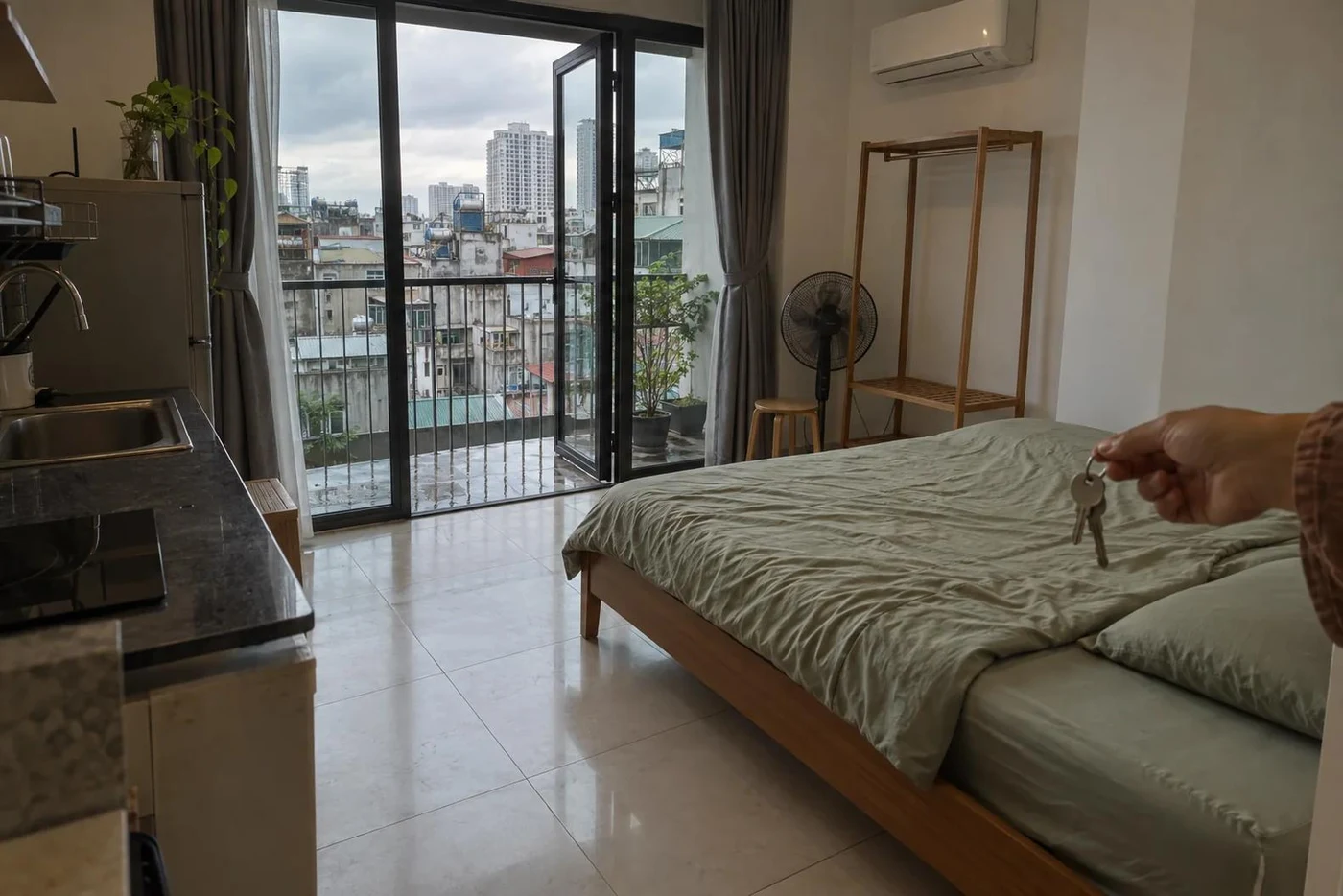
Do not sign remotely. Spend a few days in the neighbourhood and check three things: noise (karaoke is a real problem), damp, and whether air conditioning exists only in the bedrooms. Daytime viewings flatter a street that turns loud after dark, so I trust a visit in the evening more than any photo. Summer heat can reach close to 40°C, and a living room without cooling is hard to work in. Also ask what is inside the rent: internet, water, cleaning, pool, garden, maintenance. Two houses with the same price can differ by a hundred dollars a month once these are added. More on contracts is in the long-term rental guide.
Which areas suit a long stay, and which flood?
For several months Cam Chau, An Bang and Cam Thanh are the practical picks. Cam Chau sits between the old town and the beach and is quiet. An Bang puts you near the sea but costs more. Cam Thanh is greener, with larger houses and a longer ride to the centre. Of the three, Cam Chau is the one I find easiest to live in at first, since both the old town and the beach stay within cycling range.
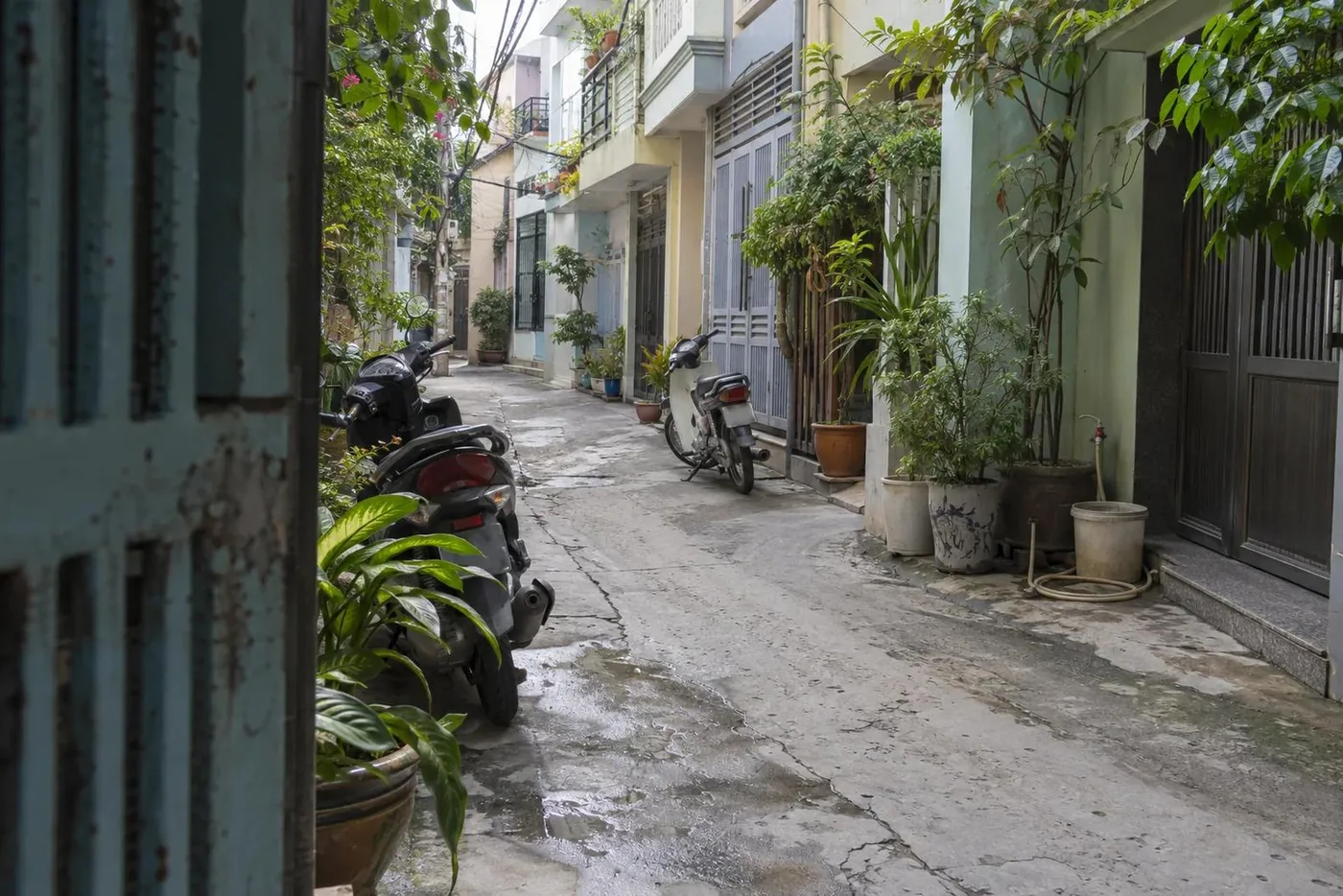
The old town is great for a week and tiring for a year, especially in the wet season. Be careful with An Hoi, Cam Nam and streets close to the Thu Bon River: the riverside is pleasant, yet low-lying, and one long-time resident reports flooding almost every year there. Ask the landlord what happened in the last rainy season.
What do food and getting around cost?
Eating properly costs $200 to $400 a month for one person, $350 to $700 for two and $500 to $900 for a family. A simple Vietnamese dish is 30,000 to 70,000 VND, about $1.20 to $2.50. The numbers climb with Western products: a packet of pasta is around 50,000 VND, grated cheese 60,000 VND and butter up to 120,000 VND.

The town is flat, so a bicycle covers most days. A scooter rental runs 1 to 2 million VND a month, and fuel is about $0.80 to $1.20 a litre. Grab handles the rest. The ride from the airport city is covered in the Da Nang to Hoi An transfer guide.
Why does electricity decide your budget?
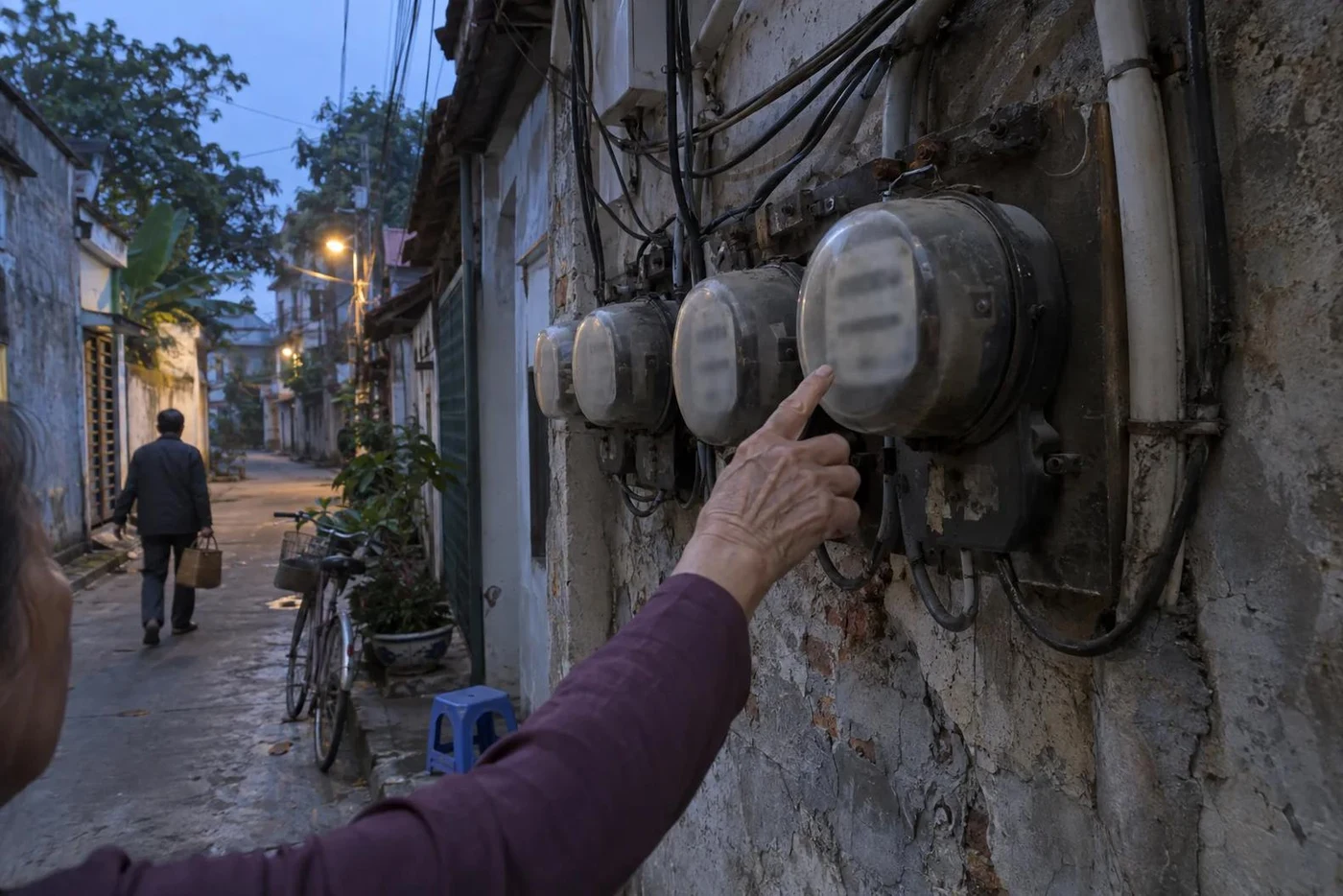
Electricity is the line to watch. One resident pays about 1 million VND, roughly $40, for two bedrooms where air conditioning runs only at night and fans work by day. Run cooling all day in several rooms between April and September and the bill grows quickly. Internet is cheap by comparison: a SIM with data is 100,000 to 200,000 VND a month and home fibre 200,000 to 300,000 VND.
Do you need a visa plan for a long stay?
Yes, and it belongs in the budget. Visa-free days depend on your passport (Russians get 45), and the official e‑visa portal issues stays of up to 90 days. You can file it yourself. Anyone staying longer needs a renewal, an exit and re-entry, or an agent, and each option adds a transport cost, a hotel night or a lost day. The hard part is matching visa dates, lease length and your exit, so settle the visa plan before you pick a lease length.
What about hospitals and schools?
Hoi An has no international hospital. Clinics and pharmacies cover small things, while serious care means Da Nang, 40 to 50 minutes away. Hoan My Hospital is the one people recommend first; Vinmec is good but pricey. International health insurance is a cost to plan before you need it.
Schools are the other limit. Hoi An International School runs from kindergarten to secondary, with primary fees from about 255 million VND a year for 2025/2026. Palm River Academy suits young children. Beyond age 7 or 8 many families look at Da Nang, where schools such as Singapore International School and APU offer a fuller programme, at the price of longer commutes.
Is Hoi An the right place for you?
Hoi An works for a single person, a couple or a flexible family that accepts a slower pace. If you need a wide choice of schools, a hospital nearby or a proper city, Da Nang is easier. Rent a place for a few weeks first, ask neighbours how their street coped with last year’s rain and then decide.
The part most people get wrong is dates, not rent. Your visa, your lease length and your exit plan have to match: write to me on WhatsApp with your passport country and the month you plan to arrive, and I will work out which visa fits the stay.