
A Vietnam e-visa application that gets a Denied status almost always fails on one of five points: the portrait photo background, a mismatch between the form name and the passport’s Latin row, a stay length still defaulted to 30 days, a card the portal won’t accept, or a border gate that isn’t on the official list. The $25 fee is not refunded — every retry costs another $25 and another 3-5 working days. Best Bus has helped expats and travelers in Da Nang clear these every week since 2019, and the pattern doesn’t change much.
This guide isn’t another walkthrough of the form. It’s the diagnostic our team uses when someone forwards a rejection email at 11 PM with a flight in five days. The fixes are mechanical once you know what to look for.
The 3 mistakes that get the most applications denied
In rough order of frequency:
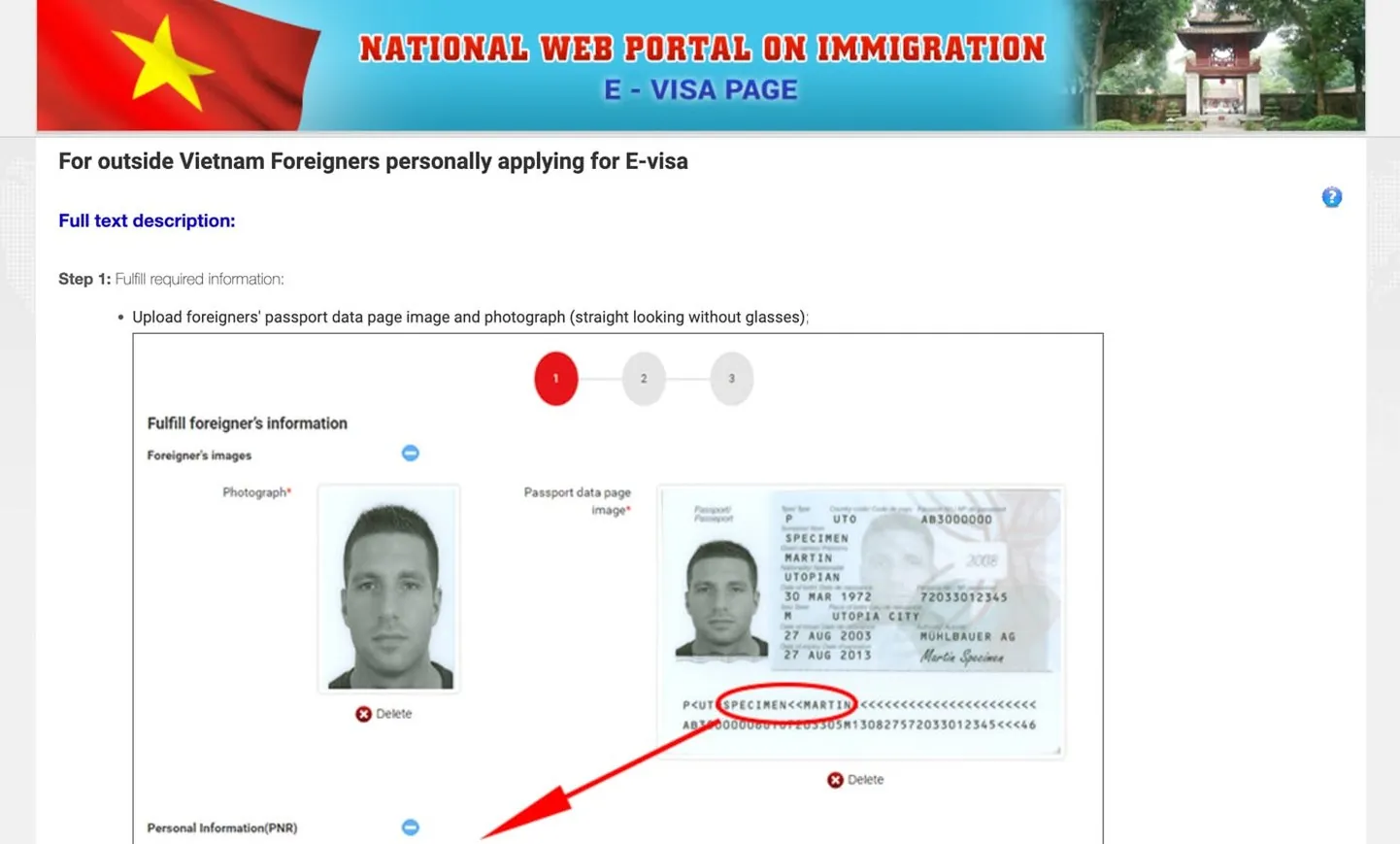
- Portrait background isn’t white enough. Even a faint grey gradient, a blurry curtain, or a desk shadow behind the head gets flagged as
Information is incorrect. The portal does not tell you it’s the background — it just denies. Run the photo through any background-removal service and re-upload on a clean white canvas. - The name on the form doesn’t match the passport’s Latin transliteration character-for-character. People retranscribe their own name as they’re used to seeing it. The system compares against the MRZ line at the bottom of the passport scan, not against intuition. If your passport says
IUNIKAEVA, the form must sayIUNIKAEVA, notYunikaeva. - The Intended length of stay field still says 30. This is its default. Travelers set the validity range to 90 days and miss this field — the visa is then issued for 30 days, the holder overstays without realizing, and the fix happens at the border for $25 per day plus paperwork. Da Nang travelers usually run into this when overstaying lands them at Lao Bao on the way out. Our Vietnam e-visa service checks that field before submission, so it’s never the border where you find out.
The first two cause a Denied status. The third silently caps your visa.
When photo and passport scans actually fail validation
The Foreigner’s Images section accepts a file as valid if it’s JPG, under 2 MB, and rectangular — that’s the upload check. The real validation happens during processing, and rejections tend to fall into:

- Photo: non-white background, glasses still on, head crooked, low resolution where the eyes aren’t clearly readable.
- Passport scan: corners cropped, glare across the MRZ, finger covering a data field, low contrast where the issue date is unreadable.
The cleanest fix is to re-shoot both with a phone camera in daylight against a white wall and a white sheet on a table. Five minutes of setup beats two days of resubmission. If you don’t have a good light situation, that’s where a visa service is faster — most of us in Da Nang have a small studio corner specifically for this.
This is exactly where I usually get pulled in. Send me the photo and the passport scan and I’ll spot the rejection trigger — a grey background, a name that doesn’t match the MRZ, glare across the passport — before you burn another $25 on a denial, then fill and file the form so the photo and entry point don’t get it bounced. Message me on Telegram with your shots and I’ll tell you what needs fixing.
Why Single-entry vs Multiple-entry matters more than people think
The two options cost $25 and $50, and the typical advice is “single is fine for tourists”. That’s true if your itinerary is one inbound flight, three weeks in Vietnam, one outbound flight.

It stops being true if any of the following is on the table:
- A weekend trip to Cambodia, Laos, or Thailand inside the 90-day window
- A planned visa run via the Lao Bao border on day 88 to reset the counter
- A multi-country itinerary that loops back through Saigon
In all three cases, a single-entry visa burns out the moment you exit Vietnam. Multiple-entry costs $25 more and saves you $25 + 3 working days when you’d otherwise reapply. The math is straightforward — people just default to “single is cheaper” without checking the itinerary.
When a local visa service actually saves you money
The honest answer: most people can fill the form themselves in 25 minutes. A service is worth the fee when one of these applies:

- No access to a non-Russian Visa or Mastercard. The portal does not accept Russian-issued cards. A service in Vietnam pays for you, you settle in cash or VND. Cleaner than asking a friend abroad to do it.
- The first application was already denied. A reapplication with the same mistake will be denied the same way. Outside eyes catch the cause faster than re-reading the form for the third time.
- You’re flying in within 5 days. The 3-5 working day window leaves no margin for one retry. A service in Da Nang typically has direct contacts at the immigration office who can flag urgent cases.
- A group of 3 or more travelers. The form is the same for everyone — but tracking five sets of photos, passports, and dates across a family or work group multiplies the chance of one mistake.
If none of these is your situation, save the fee and follow the form yourself. We say this regularly to walk-ins at the office in Da Nang.
What to do if your application gets “Denied” status
The status page shows a one-line reason. The common ones:
Information is incorrect→ almost always the photo or a name spelling mismatch. Re-shoot, re-check the MRZ, resubmit.Passport image quality is poor→ re-shoot the scan with better lighting, full page in frame.Application invalid→ usually a duplicate submission for the same passport in the same week. Wait a day and resubmit, or contact the portal support.
Reapplication is a new $25 charge — the original fee is gone. There’s no appeal process inside the portal. If you have a flight in less than 5 working days and the new submission isn’t moving, that’s the moment to call a service in Da Nang and let them push it through.
If you’re stuck on a Vietnam e-visa application and your flight is close, message me on Telegram for help with the form, the payment workaround, or an urgent resubmission. The first review is free — we’ll only quote a fee if you actually need us to file on your behalf.
Other useful reads: Vietnam e-visa processing times in 2026 for the realistic 3-5 day window, and the visa-run cost breakdown from Da Nang to Laos for how a 90-day stay actually extends past the e-visa window.
Frequently asked questions
Can I reapply after a denial?
Yes, the portal lets you submit a new application immediately. The $25 fee is not refundable from the first attempt — you pay again.
Does using a visa service raise the approval rate?
A service won’t change immigration’s decision, but it removes the three most common mistakes (photo, name spelling, stay length) before submission. That’s the value.