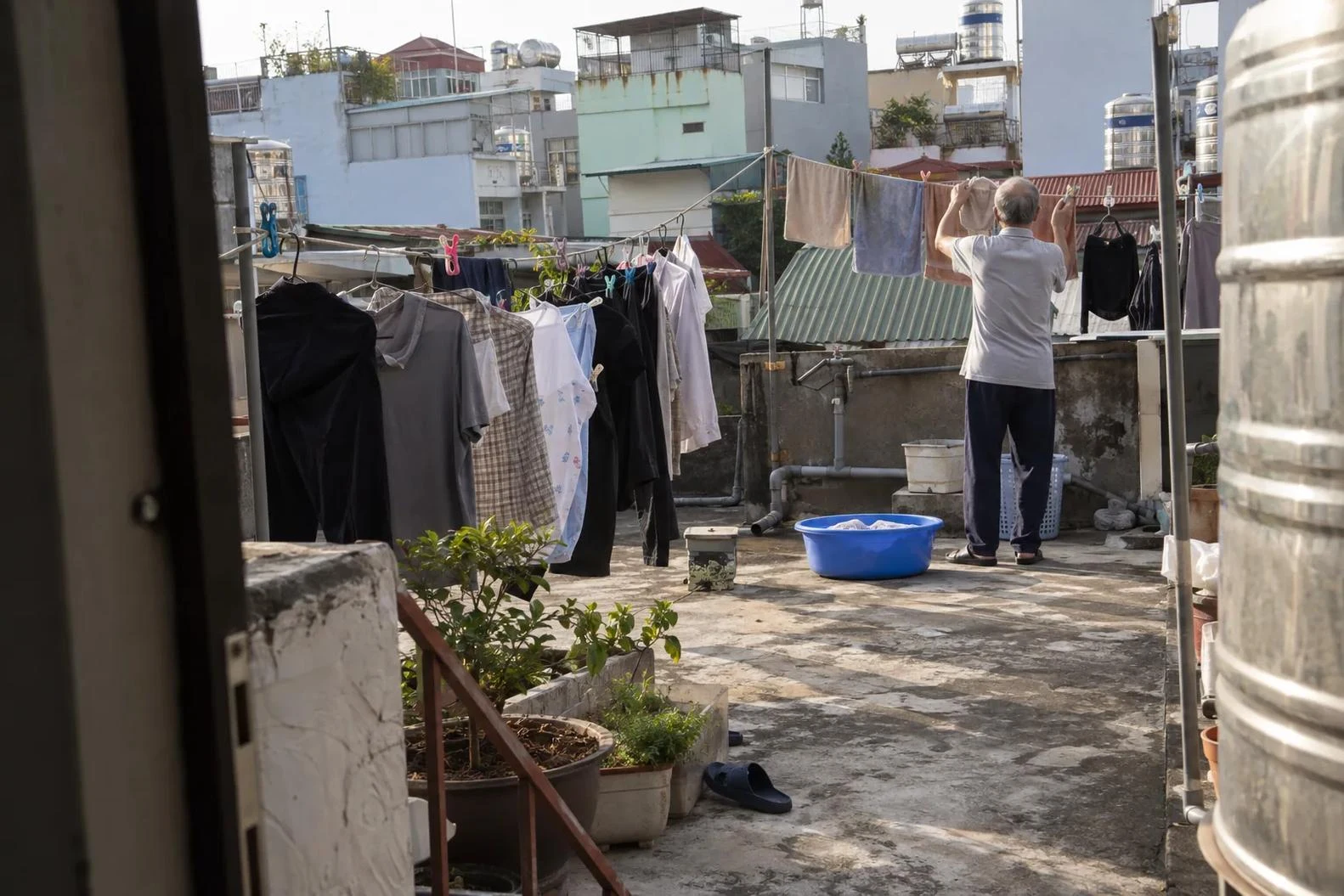
Nights in the hot season stay too warm to sleep without cooling, and the power bill is the part newcomers do not plan for. The cheapest setup that works is a small inverter air conditioner on sleep mode at a moderate setpoint. It is worth settling the lease and the visa before you arrive, while you are still choosing a season.
From June to August the night temperature in Da Nang stays at 25 to 26 °C. A night on a 1 HP inverter unit set to 26 °C uses about 6 kWh, which costs $0.55 at the EVN household rate and up to $0.90 at the price many landlords charge.
How much does one night on AC cost in Da Nang?
A night on a 1 HP inverter unit costs about $0.55 at the EVN rate and $0.80 to $0.90 at a landlord rate, because eight hours uses 5 to 6 kWh. The same night on a 1.5 HP inverter takes about 9 kWh, and an older 1 HP unit without an inverter takes about 8 kWh. I priced the EVN column at the second tier with 8% VAT. The landlord column uses 3,500 to 4,000 VND per kWh.

| Device | kWh per night | At EVN rate, $ | At landlord rate, $ |
|---|---|---|---|
| 1 HP AC, inverter | 5 to 6 | 0.55 | 0.80 to 0.90 |
| 1.5 HP AC, inverter | about 9 | 0.85 | 1.20 to 1.40 |
| 1 HP AC, no inverter | about 8 | 0.75 | 1.10 to 1.20 |
| Ceiling fan, 70 W | 0.56 | 0.05 | 0.07 to 0.08 |
| Floor fan, 50 to 60 W | 0.4 to 0.5 | 0.04 | 0.06 to 0.07 |
The AC figure comes from a measured 0.74 kWh per hour for a 1 HP unit at 26 °C. The fans come from nameplate wattage. Treat the table as an estimate from rated power; your own meter will show the real number, and an old unit burns more. If a flat comes with an old 1 HP unit without an inverter, I would ask the landlord to swap it before signing, because that 8 kWh night is the line in the table that quietly inflates the summer bill.
What will the monthly power bill be for a studio or one bedroom?
A studio in Da Nang with one AC running at night costs about $29 a month in summer at the EVN rate and $40 to $45 at a landlord rate. In December to February the same studio costs $8 to $15 because AC is rarely needed. These are tariff-based estimates, since no public source lists real monthly bills.
| Period | Studio at EVN, $ | Studio at landlord rate, $ | 1 bedroom at EVN, $ | 1 bedroom at landlord rate, $ |
|---|---|---|---|---|
| December to February | 8 | 13 to 15 | 11 | 17 to 20 |
| April | 18 | 28 to 32 | 28 | 38 to 44 |
| June to August | 29 | 40 to 45 | 41 | 53 to 61 |
The studio calculation assumes 100 kWh in winter and 300 kWh in summer, covering a fridge, a water heater, a laptop and night-time AC. An old non-inverter unit adds roughly $20 to $30 in peak summer.
What does EVN charge households in 2026?
Since 1 November 2026, EVN bills households in five tiers instead of six, and the average price was cut by 2% to about 2,160 VND per kWh. The first 100 kWh a month cost 1,901 VND before VAT, and everything above 700 kWh costs 3,844 VND. VAT of 8% is added to the total.
| Tier, kWh per month | VND per kWh before VAT | USD per kWh |
|---|---|---|
| 0 to 100 | 1,901 | 0.07 |
| 101 to 200 | 2,289 | 0.09 |
| 201 to 400 | 2,894 | 0.11 |
| 401 to 700 | 3,456 | 0.13 |
| 701 and above | 3,844 | 0.15 |
Tiers make AC costlier than the average price suggests, because each extra kWh is priced above the one before it. The old May 2025 tiers, running from 1,984 to 3,460 VND, no longer apply.
Why does my landlord charge more than the EVN rate?
Expats in Da Nang report that landlords usually bill a flat 3,500 to 4,500 VND per kWh, about $0.13 to $0.17. That is nearly double the first tiers and goes beyond the legal ceiling. A tenant on a lease of 12 months or more with registered residence pays the EVN tiers, and in every case the landlord may not charge more than the EVN bill shows.
Leases shorter than 12 months, or tenants who were never declared, can be billed at the price of the 101 to 200 kWh tier for the whole meter reading, which is 2,289 VND before VAT (how this applies to the new tariff has not been clarified yet). Published examples come from Ho Chi Minh City, and the rules are national, so confirm the local practice with the EVN office and your landlord in Da Nang or Nha Trang. My longer guide to renting an apartment in Vietnam through agents and Facebook groups covers how to read the contract.
What if my visa is shorter than the lease?
A 12-month lease with registered residence unlocks the EVN tiers, yet many people arrive on a 90-day e‑visa. Every 90 days you either renew, re-file or leave for the border, and an overstay fine costs far more than any power markup.
That is where people usually write to me. You can file the e‑visa yourself on evisa.gov.vn in one evening: the government fee is $25 for a single entry, if you have a card the payment form accepts. With BestBus Vietnam I run the 90-day e‑visa end to end for $55 with a one-week turnaround, or $110 when it must be done within a day. I pay the state fee with my own card and choose the right entry point. The other visa options are listed under visa services.
All I need from you is arrival dates and the city, so message me on WhatsApp and I will tell you what fits your lease term.
How hot is Da Nang month by month?
The hot season runs from early May to early September, with daytime highs up to 33 °C. Nights in June, July and August stay at 25 to 26 °C. In December to February the nights drop to 18 to 19 °C, and a fan plus a blanket is enough. March and April sit in between, with nights of 21 to 23 °C and AC needed on 10 to 20 nights.

Rain peaks from September to December, with October the wettest month at roughly 450 to 530 mm. Average humidity is about 83%, and the air feels muggy for around ten months of the year. In those wet months AC runs mostly to remove damp, and the dry mode helps.
How do I set up a bedroom for a hot night?
Cool the room first, then switch to a gentle night setting. A sleeping temperature of 24 to 26 °C is the usual advice for the tropics. Sleep mode raises the setpoint by 1 to 2 °C over a few hours, so the room does not turn cold by dawn. A fan lets you set the AC 2 to 3 °C higher.

- Run the AC on cool at 24 °C for an hour before bed with the windows and curtains closed.
- Switch to sleep mode at 26 °C and add a fan on its lowest speed.
- Point the airflow away from the bed, since a direct stream dries the throat.
- In the rainy season, run dry mode for a couple of hours in the evening to pull moisture from the room.
- Rinse the filter every week: a clogged filter raises consumption and smells.
Aim for 30 to 50% humidity in the bedroom and no more than 60%. In the wet months I prefer dry mode to cool for the evening, since the trouble then is damp rather than heat. Dry mode draws less power than cool because the compressor runs at low frequency, though no maker publishes an exact saving.
Which setup should I choose?
For the hot season, take a 1 HP inverter AC, set it to 26 °C in sleep mode and add a fan. On a lease of 12 months or more with registration, you pay the EVN tiers, about $0.07 to $0.15 per kWh. In every other case, compare the landlord’s figure with the EVN receipt.
When the visa, the lease term and your trips out of the country turn into one task, hand it to me. The government portal and a local bus work fine while your dates match the lease. If you would rather not align them by hand, describe your situation on WhatsApp and I will work out the visa and the dates for your stay.
Frequently asked questions
How do I avoid getting sick from AC at night?
Hold 26 °C instead of 20, and point the airflow away from the bed. Use sleep mode so the temperature rises toward morning. A sharp gap between street and room feels harsher than the number on the display.
Is a fan enough at night in Nha Trang or Ho Chi Minh City?
In Nha Trang, December to February nights are 21 to 22 °C and a fan is enough. From May to September they are 24 to 25 °C and you need AC. Ho Chi Minh City stays warm all year, at 24 to 25 °C from April to September.
How do I check that my landlord reads the meter honestly?
Photograph the meter on move-in day and at the end of every month. The difference multiplied by the price in your contract is your bill. Ask to see the EVN receipt for the same period: what you pay should not exceed it.
What is the fine for a landlord who charges above the state price?
The fine reaches 20 to 30 million VND ($760 to $1,140) under Decree 133, in force since 25 May 2026. It was 7 to 10 million VND before that. A commune-level people’s committee issues it.
Can the landlord add hallway and elevator electricity to my per-kWh price?
No. Common-area power must be billed as a separate service fee agreed with residents, not folded into the kWh price. Ask for the two amounts to be written apart in the contract.