Russian citizens can enter Vietnam with zero visa application under a free 45-day exemption (Resolution 44/NQ-CP, in force since March 15, 2025 through March 2028), or on a $25-50 e-visa valid up to 90 days if you need a longer runway. Either route, you can clear immigration inside a week of deciding to go, be in a guesthouse the same night, and be signing an apartment lease inside a month. If you’d rather someone handle the visa and border-crossing part of this while you deal with everything else you’re juggling right now, that’s also a same-day job.
I’ve lived in Da Nang since 2019, and through the second half of 2025 and into 2026 I walked a steady stream of people through exactly this sequence - visa, money, first apartment - after they left Russia with little notice. What follows is what’s actually true in 2026, not what a guide written two years ago still says.
45-Day Exemption or E-Visa: Which Gets You Into Vietnam Fastest?
If your passport has at least 6 months of validity left, the 45-day visa exemption is the fastest way in: no application, no fee, no waiting. The e-visa (evisa.gov.vn) costs $25 for single-entry or $50 for multiple-entry, runs up to 90 days, and takes 3-5 working days to process - worth it only if you already know you’ll need more than 45 days, or want to leave and re-enter Vietnam without reapplying.

Neither the government resolution nor the immigration portal publishes a mandatory cooldown between an exit and a fresh 45-day entry, so most people treat each arrival as its own clean slate. That said, if your plans are still forming, applying for the multiple-entry e-visa before you fly buys you flexibility the free exemption doesn’t.
How Do You Get Money Into Vietnam When Russian Cards Don’t Work?
Mir cards work at almost nowhere in Vietnam except VRB (Vietnam-Russia Joint Venture Bank), which runs roughly 21 ATMs across 6 cities including Da Nang - everywhere else, assume your Russian card is dead plastic. Profee, a service some people used for this kind of transfer, stopped serving Russian citizens in October 2025 and hasn’t come back; don’t build a plan around it.
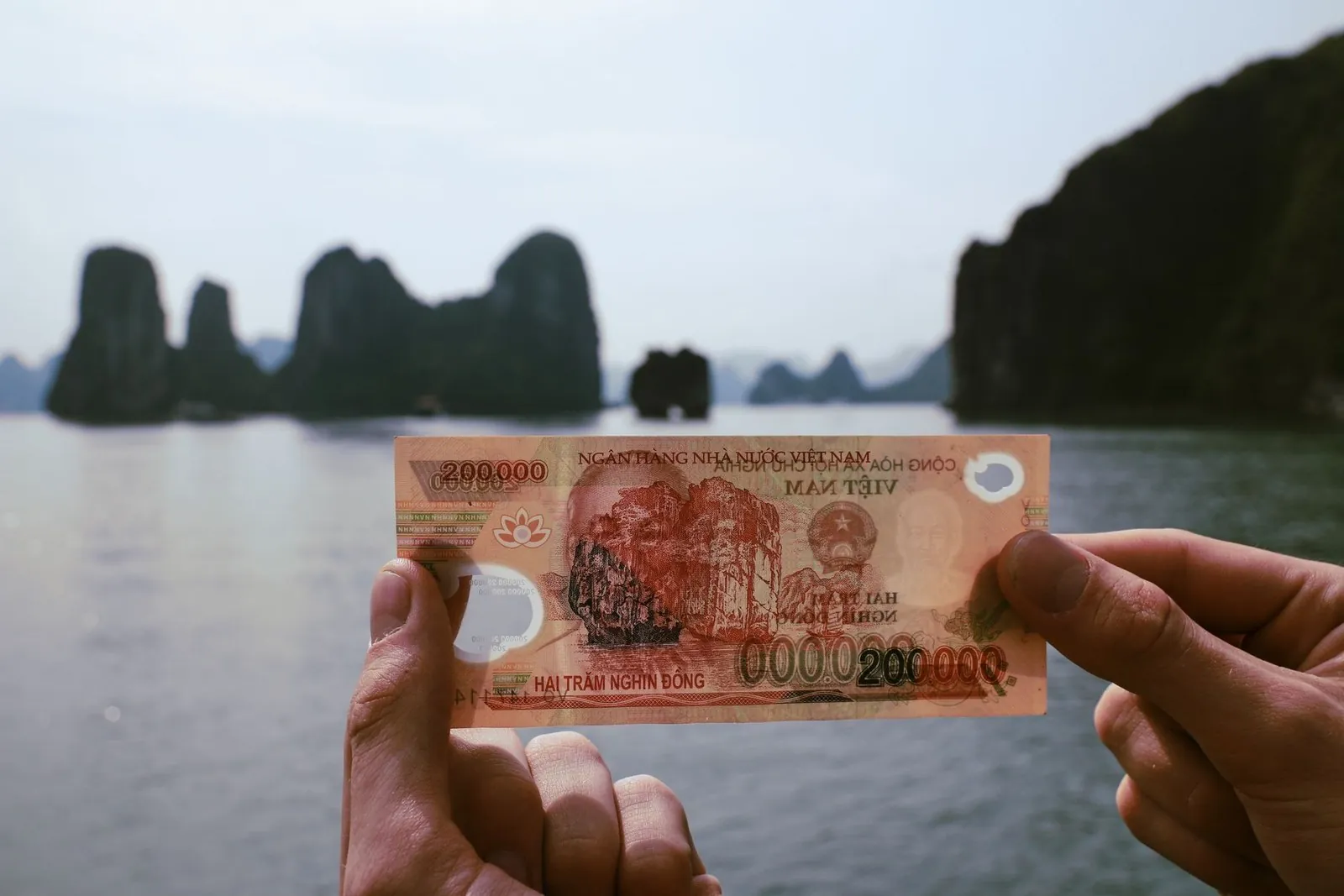
What actually works for most people right now: bring some cash (declare anything over $5,000 or 15 million VND on arrival - no hard ceiling above that, just be ready to show where it came from), and convert rubles to USDT through a P2P exchange like Binance or Bybit, then sell that USDT for dong on the same platforms once you’re here. See our full breakdown of sending and moving money in and out of Vietnam for the fee comparison.
Where Do You Stay in Da Nang for the First Week?
Book a guesthouse or budget hotel before you land - Da Nang has plenty from roughly $10-35 a night, or $35-80 if you want to be closer to the beach. Don’t sign anything longer than a few nights until you’ve actually walked the neighborhood; photos rarely match reality, and you want to see traffic noise and morning light for yourself.

Most people spend their first week doing exactly that: staying somewhere flexible while they scout areas like An Thuong, Son Tra, or My Khe on foot. It’s cheap enough that a “wasted” week of scouting costs you less than a bad 6-month lease.
How Do You Move From a Hotel Into a Long-Term Apartment?
Once you’ve picked a neighborhood, furnished serviced studios in Da Nang run roughly $200-390 a month, two-bedrooms $390-580, with about 80-90% of expat rentals move-in ready - no furniture shopping required. Landlords expect a one-month deposit (two months for higher-end units) plus first month’s rent upfront, and strongly prefer 6- or 12-month leases over anything shorter.

Get the lease in writing, even a simple one-page agreement, with the deposit terms spelled out - verbal deals are common here but leave you with no recourse if a landlord decides to keep your deposit. See our full breakdown of apartment rental prices by city if you’re weighing Da Nang against Ho Chi Minh City or Hanoi.
What Do You Do When Your 45 Days Are Running Out and You’re Not Ready for a Long-Term Visa?
This is the exact point where most people I talk to get stuck: they’ve found an apartment, they like it here, and their entry window is closing before their paperwork for anything longer is ready. The fix is either a fresh e-visa applied for before you land in Vietnam again, or a same-day border run to reset the clock without losing your spot back home.

This is also where I usually get involved. I handle the e-visa application and payment with a card that evisa.gov.vn actually accepts, and I run the Lao Bao border crossing and back in a single day so you’re not burning a week on it. What that needs from you is your entry date and how many more months you’re planning to stay - the e-visa or the border run gets picked based on that, not guessed. Both routes, with what’s included, are laid out on our services page.
What’s the Realistic Path to a Long-Term Residence Card?
A TRC isn’t something you get straight off a tourist entry - it requires an underlying visa purpose first: a work permit (LD2), marriage to a Vietnamese citizen (TT), or an investor visa. Since immigration law firms started reporting a tightening in early 2026, even converting from an e-visa now typically needs an extra visa-purpose step before the TRC application itself can go in.
Realistically, that means someone who left in a hurry should treat the first 45-90 days as the runway to sort out which of those three routes fits - job offer, relationship, or capital - rather than expecting a fast card off a plain entry stamp. See our step-by-step TRC guide and the work permit vs TRC vs investor visa comparison for the full routes.
What Is the Pre-Arrival Declaration, and Do You Need It Before You Fly?
Since April 2026 (Tan Son Nhat/Ho Chi Minh City) and June 2026 (Phu Quoc), Vietnam requires every arriving foreigner - visa-exempt travelers included - to file a Pre-Arrival Information declaration online at prearrival.immigration.gov.vn before boarding. Airlines have been told to deny boarding to anyone without the resulting QR code.
Do it from your phone or laptop before you head to the airport, screenshot the QR code, and keep it accessible offline in case the airport wifi is slow. If you land at an airport that doesn’t require it yet, nothing changes for you, but the list of covered airports has been growing through 2026, so assume you’ll need it. Related: Pre-Arrival Information card rules for visa-free Russian arrivals.
Do You Need VNeID as a Newly Arrived Foreigner?
Not yet. Vietnam’s national digital-ID system, VNeID, is currently only open to foreigners who already hold a Temporary Residence Card (TRC) or Permanent Residence Card - someone on a 45-day exemption or e-visa isn’t eligible to register at all right now. From June 2026, sponsoring employers and organizations are required to use VNeID for certain filings on your behalf, even before you personally qualify for an account.
Don’t waste time trying to register the moment you land; it simply won’t let you in until you’ve cleared the TRC stage.
What Should You Do in Your First 30 Days?
- Book a refundable guesthouse in Da Nang for your first 5-7 nights before you fly.
- File the Pre-Arrival Information declaration online before boarding and save the QR code offline.
- Enter on the 45-day exemption or your e-visa, and photograph your entry stamp the same day.
- Move money in your first 48 hours via USDT P2P (Binance or Bybit), since a Russian card alone won’t get you far.
- Spend week one walking neighborhoods before you commit to anything longer than a few nights.
- By week two or three, decide whether you need a fresh e-visa or a border run before day 45.
- If you’re staying long-term, start collecting documents for whichever TRC route - work, marriage, or investment - actually applies to you, before your entry runs out.
What Mistakes Do People Make When Relocating in a Hurry?
The most expensive one is waiting until day 40 to think about the next visa step - by then your options shrink to whatever’s fastest, not whatever’s cheapest. Close behind: assuming a Mir card will behave like a normal debit card anywhere outside a VRB branch, and signing a 12-month lease on an apartment you found only in photos.
Two smaller ones that still bite: not saving a photo of your entry stamp and pre-arrival declaration QR code (immigration and landlords both ask for it), and trying to register for VNeID before you’re even TRC-eligible, which just wastes an afternoon.
If any of this sounds like more coordination than you want to handle on top of everything else right now, I’ve laid out the visa-run and e-visa booking on danangvisarun.com.
Frequently asked questions
Can I stay in Vietnam longer than 45 days without leaving the country? Not on the exemption itself. You need to apply for an e-visa or longer visa before your 45 days lapse, or exit and re-enter, which resets the clock but costs you the travel time.
What if I’m relocating with a pet - does it need separate paperwork before you fly? Yes - a pet needs its own health certificate and import paperwork handled before departure, separate from your own visa exemption or e-visa; it doesn’t ride on your travel document.
What if my e-visa application gets rejected right before I’m scheduled to fly? Reapply immediately, and lean on the 45-day exemption as your fallback if your passport qualifies - a rejected e-visa doesn’t burn your exemption eligibility. One catch worth knowing before you resubmit - what you already paid isn’t refunded on a decline, so a second attempt means paying again, not just fixing and resending the same application. If the exemption doesn’t cover your nationality, a clean reapplication with corrected scans is faster than trying to appeal the first one.
How different is this process if you land in Ho Chi Minh City or Hanoi instead of Da Nang? The visa mechanics - exemption, e-visa, Pre-Arrival Information - are national rules, so they don’t change by city. What changes is everything downstream, like apartment supply and how fast you can get settled, which is why this guide focuses on Da Nang specifically.
Can I open a Vietnamese bank account before I have a TRC? Some banks will open a basic account on a valid visa or e-visa alone, others ask for a TRC or a work permit - it varies enough by branch that calling ahead beats assuming either way.
Do I need proof of onward travel to board my flight into Vietnam on the visa exemption? Airlines sometimes ask for it at check-in even though Vietnam’s own entry rules don’t require it for the 45-day exemption - having a return or onward ticket booked avoids a gate argument you don’t need on travel day.