Here’s the number most guides get wrong: a Belarusian passport gives you 30 visa-free days in Vietnam per entry — not 45. That changed on 30 January 2025, when a bilateral visa-exemption treaty between Belarus and Vietnam came into force, and a lot of aggregator sites never updated. On top of the 30-day-per-entry limit there’s an annual ceiling of 90 days per calendar year. Get those two numbers straight and the rest is simple; miss them and you can plan a trip you’re not actually allowed to take.
The 30-day stamp, and the 90-day-a-year ceiling
Belarus sits on Vietnam’s visa-exempt list thanks to the January 2025 treaty. Land at any international airport — Minsk travelers usually route through Istanbul, Dubai or Moscow — and immigration stamps you in for up to 30 days on the spot. No form, no fee, no letter of approval. It applies to ordinary passports for tourism, business and family visits.
The part that catches people is the annual cap: 90 days total per calendar year, counted from 1 January to 31 December. At 30 days per entry that’s three visa-free trips in a year — and the clock resets in January, not on a rolling basis. So if you burned all 90 days by autumn, a December trip needs an e-visa even though it’s a “new” visit in your head.
If you spotted a page claiming Belarusians get 45 days — including, until recently, older versions of this very guide — that was the pre-treaty figure. The treaty replaced it with 30. When a wrong number can get you refused boarding, it’s worth checking the date on whatever source you’re reading.
When you actually need the e-visa
The 30-day stamp covers most holidays outright. You need the 90-day e-visa when:
- you want a single stay longer than 30 days
- you’ve already used your 90 visa-free days for the calendar year
- you’re arriving at a land border where stamp issuance can be inconsistent
- a landlord or bank wants a formal visa document rather than an arrival stamp
The e-visa is valid up to 90 days and costs $25 for single entry or $50 for multiple. If you’ll be crossing borders more than once — say a Laos or Cambodia hop mid-stay — the multiple-entry version pays for itself by the second crossing. Apply at the official portal, evisa.gov.vn; third-party agents charge the same government fee plus a markup for an identical result.
Applying for the e-visa, step by step
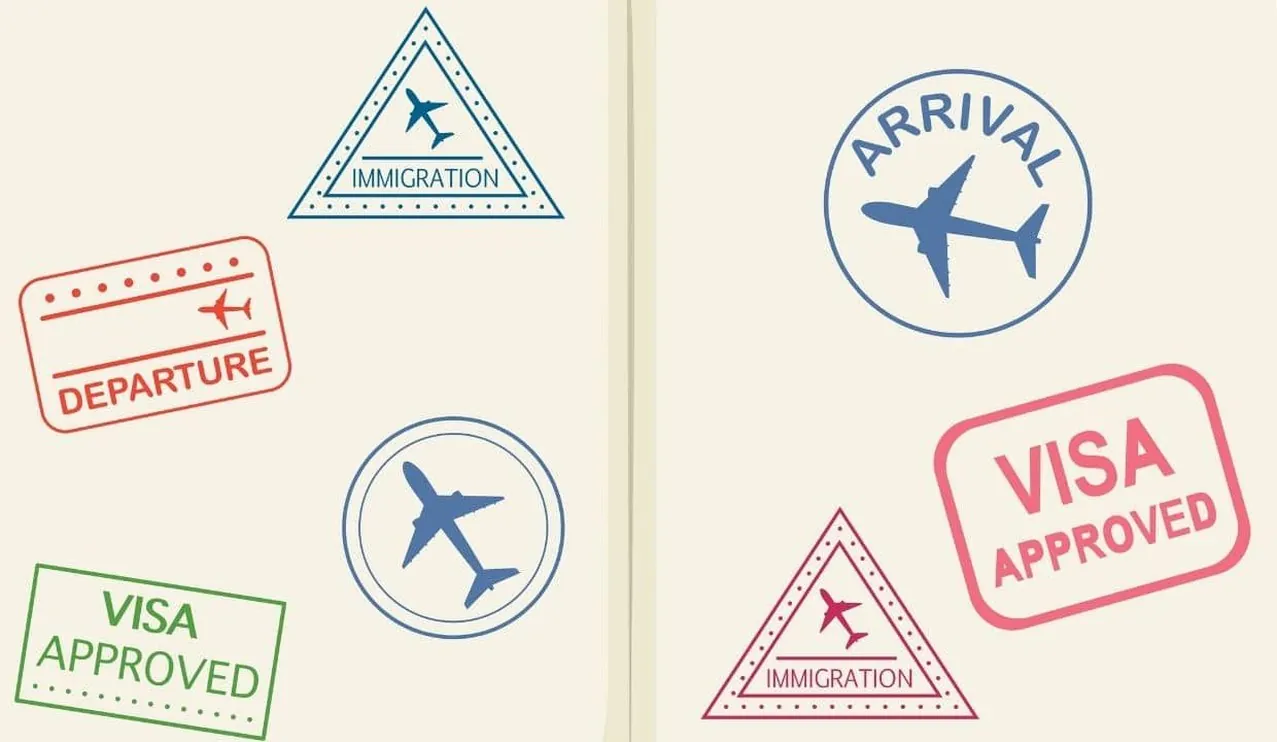
- Open evisa.gov.vn and start a fresh application.
- Enter your passport details in Latin letters, exactly as printed — name, number, expiry. Typos are the leading rejection cause and the fee isn’t refunded.
- Upload a passport bio-page scan (JPG) and a portrait photo: white background, facing forward, no glasses.
- Choose your entry checkpoint — the specific airport or land gate. You can’t change it after submitting, and arriving elsewhere means being turned back.
- Pay $25 or $50 by Visa or Mastercard. Belarusian cards sometimes have international payments switched off by default — check that toggle before you start.
- Save the tracking code; the approved PDF arrives in three to five working days. Print it before you fly.
Before you start, have three things ready: a passport valid at least six months beyond your arrival with two blank pages, a digital passport scan under 2 MB, and a recent portrait photo on a plain background. Missing any of them mid-application is the usual reason people abandon the form halfway and lose their place. Hand the whole thing over instead and our Vietnam e-visa service takes it from passport scan to approved PDF.
If a Belarusian card keeps bouncing off the portal, or you’d rather not risk a typo eating the fee, Best Bus files the whole e-visa for $55 — we check every field, run the payment on our end, and send the approved PDF to your Telegram, usually within a day. Message me on Telegram with your passport page and travel dates and I’ll tell you what it needs.
Staying past the cap: visa runs from Da Nang
Vietnam doesn’t extend visas from inside the country. Once your e-visa’s 90 days are up — or your visa-free allowance for the year is gone — you leave and re-enter with a fresh visa. From Da Nang that’s a day trip to Lao Bao on the Laos border, or Moc Bai and Ha Tien into Cambodia. The 2026 visa run guide breaks down cost and timing for each route, and if you overstay by mistake, read the overstay guide before heading to any border.
Rules differ by passport — a Russian traveler gets 45 days on the same trip, which surprises couples of mixed nationality every week. Check each passport separately.
Not sure whether your trip fits inside the 30-day stamp or trips the annual cap? Send me your dates and I’ll tell you in a message whether you’re free to fly on the passport alone or need the e-visa first — Telegram @learnx1000 or book straight through danangvisarun.com.
Frequently asked questions
How many visa-free days do Belarusians get in Vietnam?
30 days per entry under the bilateral treaty in force since 30 January 2025 — not 45. Older guides that still say 45 days are out of date.
What is the annual limit for Belarusians?
90 days total per calendar year on the visa-free regime. That’s up to three 30-day entries in one year; after that you need an e-visa.
Do I need an e-visa if I only stay two weeks?
No. A single short trip fits inside the 30-day visa-free stamp. The e-visa only matters for longer stays or once you’ve used your 90 days for the year.