The cheapest legal way to stay in Vietnam long-term in 2026 starts at $25 for a 90-day e-visa — and if you hold a Russian passport, your first 45 days cost nothing at all. The right path depends almost entirely on how long you plan to stay. I’ve been handling visa logistics in Da Nang for years and I work through these options with clients regularly — if you want help sorting yours, just reach out.
What’s the cheapest way to stay in Vietnam legally long-term?
For most people, the cheapest legal setup combines free visa-free entry with periodic visa runs. Russians get 45 days visa-free with zero paperwork — no documents required, no application fee, just land and stay. After those 45 days, you cannot extend inside the country, so your options are: leave and re-enter, or apply for a Vietnamese e-visa.
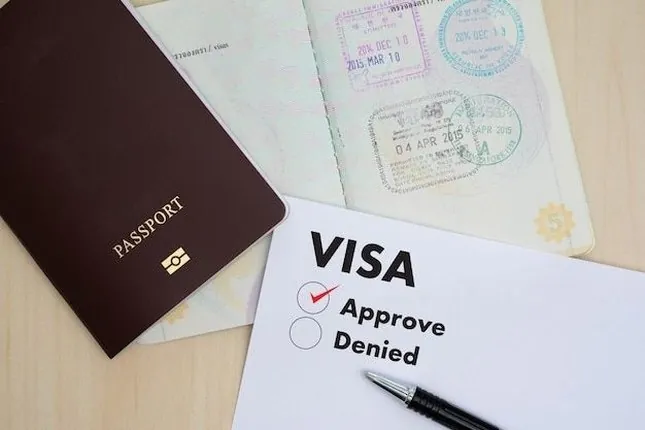
The e-visa Vietnam guide covers this in detail, but the short version: a single-entry e-visa costs $25, a multiple-entry costs $50, and both give you 90 days. Processing takes 3 working days. The official portal is evisa.xuatnhapcanh.gov.vn — one important snag worth knowing upfront: Russian bank cards are not accepted there. You’ll need a foreign card or help from someone who has one. If neither applies, our visa services run the payment on a card the portal already accepts.
If you’re planning to be in Vietnam 3–6 months a year, the math is simple: one 90-day e-visa at $50 (multiple entry) + a visa run when it expires. That’s your cheapest legal foundation.
For longer stays, student visas start from around $35 a year and renew annually — a real option if you’re taking language courses or studying anything locally.
How does the e-visa + visa run cycle actually work?
The e-visa cannot be extended inside Vietnam. When it expires, you have two choices: leave the country and apply for a new one, or do a visa run — cross the border, get an exit stamp, cross back, and get a fresh entry stamp. No new visa needed if you’re eligible for visa-free entry; new e-visa needed if you want another 90-day window.
The most popular visa run route from Da Nang is the Lao Bao border crossing to Laos. It’s about 4 hours each way, and for Russians the Laos side is free — you cross over, stamp out, stamp in, done. Total trip time is typically one long day.
The logistics of that trip — transport booking, timing, what to carry, what happens at the border — are exactly what I handle for my clients. I’ve done this route many times and know what border officers check and when queues peak. If you want this organized rather than figured out from scratch, what’s needed from you is a date and how many people are traveling - the border run gets built around that.
Step-by-step: how to stay legally for 6-12 months without a work permit
This is the route most digital nomads and long-stayers actually use. It’s not complicated, but you need to know the sequence.

Enter on 45-day visa-free (Russians). No documents needed, no fee. Use this to get settled, find accommodation, test the city.
Apply for a 90-day multiple-entry e-visa before your 45 days run out. Apply online at evisa.xuatnhapcanh.gov.vn — $50, 3 working days. Sort the payment method in advance (foreign card or ask me to help).
Do a visa run before the e-visa expires. Lao Bao to Laos is the cheapest from Da Nang. Cross the border, return same day, get a new entry stamp.
Apply for a new e-visa online if you want another full 90 days, or re-enter visa-free for another 45 if you haven’t used that recently.
Track your days carefully. Overstaying triggers fines under Decree 282/2025 — anywhere from 500,000 to 2,000,000 VND for up to 15 days late. Above that, consequences get more serious.
Reassess at the 9-12 month mark. If you’re still here and see yourself staying, that’s when to start looking at formal status — work permit, TRC, or investor visa.
When does the visa run cycle stop working?
The visa run cycle is solid for 6–12 months. After that, immigration officers start noticing patterns of continuous re-entry, and some border crossings have become stricter with frequent visitors. There’s no published cutoff rule, but the practical ceiling is roughly a year before it starts feeling risky.

The other limit is lifestyle. Visa runs take a full day and need to be planned around expiry dates. If your time in Vietnam becomes more valuable than the cost of formalizing your status, it’s time to upgrade.
Work permit and TRC: when you need to go official
The Vietnam long-stay visa: work permit vs TRC vs investor article covers this in depth, but here’s the decision framework.
A work permit makes sense when you have an employer or a Vietnamese company to sponsor you. The visa itself costs around $145, the permit $15–24, and together they get you 1–2 years with the option to renew for 2 more. Requirements: you’re 18+, clean criminal record, health certificate, and relevant education or work experience in your field.
A Temporary Residence Card (TRC) is the document-based long-term status that can come with a work permit, marriage to a Vietnamese national, or other official grounds. It’s what most long-term residents eventually hold.
The investor visa (DT series) scales from under $120,000 for a 1-year DT4 up to $2–4 million for a 5-year DT1/DT2. Not for everyone, but a real route if you have capital to deploy.
Whichever of those three routes ends up right for you, the visa-run cycle earlier in this guide is what buys the time to get there without rushing it. I keep current e-visa fees and border-run dates on danangvisarun.com.
Frequently asked questions
Can I extend my Vietnam e-visa without leaving the country?
No. The e-visa cannot be extended inside Vietnam. You must exit and either re-enter visa-free or apply for a new e-visa online.
What if I'm traveling with a child - does the 45-day visa-free entry work the same way for them?
Yes - the 45-day visa-free entry and the 90-day e-visa are both per-passport, so a child traveling on their own passport follows the same windows and needs the same exit-and-re-entry cycle as you do.
What if my e-visa application gets rejected or my payment doesn't go through on the portal?
Reapply - a rejected e-visa or a failed payment on evisa.xuatnhapcanh.gov.vn doesn’t affect visa-free days you’ve already used, so you can submit again as long as you’re still inside your current visa-free or e-visa window.