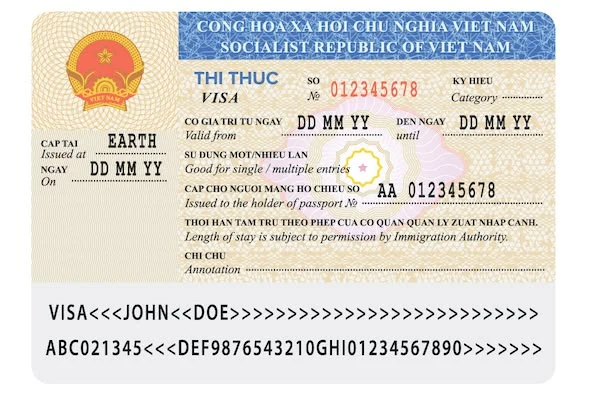
If you’re turned back at the check-in counter for a Vietnam flight over your visa, it’s the airline that makes that call, not a Vietnamese border officer. The airline checks your documents against Timatic, IATA’s database of entry rules for more than 220 countries, before it ever lets you board.
Why Does the Airline Decide, Not Vietnam’s Border Police?
An airline that boards you without a valid visa can end up flying you straight back and covering that return flight itself. That single fact is why check-in staff, not immigration officers on the ground in Hanoi or Da Nang, are the ones who stop you at the gate.
International rules (ICAO Annex 9, the Chicago Convention’s facilitation chapter) call an undocumented arrival an “inadmissible passenger.” The same carrier that brought that passenger in has to fly them back out, and it can later try to recover the cost from the passenger. Airlines protect themselves from that bill long before departure, at your home airport’s check-in desk. IATA’s own guidelines for carriers spell out exactly what staff have to verify before you’re cleared to fly.
What Does Timatic Actually Check Before You Board?
Timatic, short for Travel Information Manual Automatic, is IATA’s document-requirement database, covering passport, visa, health, transit, and customs rules for more than 220 countries. Airlines, ground handlers, and travel agents all query the same system before you’re allowed to check in.

The database updates fast: IATA pushes roughly 70 updates a day, and up to 200 on a busy day, so a rule that was fine last month can change before your flight. Hundreds of millions of passengers get checked against it every year, which is why the same document that got you into Vietnam in January might get flagged differently in September if a rule shifted in between.
Who Pays If an Airline Boards a Passenger Without a Visa?
IATA’s Control Authorities Working Group guidelines require carriers to take “necessary precautions” confirming a passenger’s visa is valid before departure, not just glance at a document and wave them through. That obligation is the airline’s, and it’s the reason gate staff push back on anything that looks unfinished.

The checklist behind that obligation is specific: staff confirm the document looks genuine, that it’s actually accepted at your destination, that your photo matches your face, that your passport meets Vietnam’s validity rules, and, for an e‑visa, that the visa itself hasn’t already been used up on a single-entry basis. For an electronic visa specifically, the guidelines call for the carrier to get a live confirmation from the immigration system before boarding, not just to trust a printed page. No official Vietnamese decree spells out an exact fine amount for airlines here. Do not confuse this with Vietnam’s overstay fines, which punish the traveler for staying too long, not the carrier for boarding them.
What Should You Show at the Check-In Counter?
Bring a printed copy of your approved e‑visa, not just the confirmation email. Airlines generally accept it, but a phone screenshot is a judgment call for whichever agent is standing at the counter that day, and it’s not guaranteed everywhere.
A status of “processing” on evisa.gov.vn is not the same as “approved,” and staff at the desk can tell the difference immediately from the document you hand over. If your visa is still processing, you don’t have a boarding document yet, regardless of how confident the confirmation email sounds. Print the approval letter with its QR code as soon as it clears, and keep both a paper copy and a photo of it on your phone as a backup.
How Long Before Departure Does Check-In Actually Close?

Vietnam Airlines closes international check-in 50 minutes before departure, 60 minutes at a handful of hub airports including Kuala Lumpur, Paris, Frankfurt, London, and San Francisco. VietJet closes its counters 50 to 60 minutes out depending on the airport, with the boarding gate itself shutting 15 minutes before the flight leaves. AirAsia closes counters 60 minutes before departure and online check-in 75 minutes out, with the gate closing 20 minutes before takeoff. None of these windows leave room to sort out a visa problem after you’ve already reached the terminal.
What Should You Do If Your E‑Visa Isn’t Approved Yet?
Here’s the order to work through if your e‑visa still isn’t approved and your flight is today.
- Check your status directly on evisa.gov.vn the morning of your flight, not the confirmation email from whoever filed it. Only “approved” counts.
- If it’s still processing and check-in opens, get to the counter early anyway and show the agent your application reference and submission date.
- If check-in is closing and approval still hasn’t landed, treat it as urgent immediately rather than waiting for a “should be any minute” update.
- If you’re told you’ll be denied boarding, ask the airline about its rebooking terms before you leave the counter. Vietnam Airlines applies a no-show fee if you don’t change your booking at least three hours ahead; VietJet treats a no-show as a full loss of the fare.
This is the exact moment I usually get pulled in. Doing your own e‑visa application yourself through the government portal is entirely possible if you’ve got the time buffer for it. When you don’t, and the clock at the counter is the actual problem, I run same-day, next-day, and rush windows priced at $100 for two days, $110 for one day, and $120 for a 3-4 hour turnaround, with the fastest tier only running inside Vietnam working hours, 8:00-11:30 and 14:00-18:00 GMT+7 (Ukrainian passports go through the rush tiers with no extra restriction). Read what the rush service covers on our urgent Vietnam e‑visa page, and message me on Telegram with your flight time and I’ll tell you straight away whether we can still make it.
What Are the Most Common Reasons Travelers Get Turned Back?
Visa agencies that track denied-boarding cases report a short, repeating list:
- an e‑visa that’s still pending rather than approved
- a name that doesn’t match the passport exactly (a dropped middle name is enough)
- a passport number typed wrong on the approved visa
- an entry date set earlier than the visa allows
- a passport with less than six months of remaining validity
- a passport that’s damaged or hard to scan
None of these come from an official government list, so treat them as a pattern from experience rather than a legal checklist. The fix for most of them is the same: check every field on your approved e‑visa against your passport, letter for letter, before you make a mistake that forces a reapplication.
What Happens If You’ve Already Missed Your Flight?
If you’ve already missed the flight, the decision is simple: call the airline before you book anything new, and don’t rebook until your e‑visa shows approved. Whether rebooking costs you anything comes down to when the airline learns you’re not boarding, so call the moment you know, not after the scheduled departure time.

VietJet treats a no-show as a full loss of your fare with no refund or rebooking. Vietnam Airlines applies a no-show fee if you didn’t cancel or change at least three hours out. AirAsia sells a paid “rescue fee” to move you to the next available flight, subject to seats.
Call before departure, not after, because every one of those policies treats “you told us in advance” as a different, cheaper case than “you simply didn’t show.” If your e‑visa was rejected outright rather than just slow, sort that out and confirm approval before you even try rebooking, so you don’t repeat the same situation on the next flight.
Missing a flight over a visa problem is expensive enough without repeating it, and rebooking blind rarely fixes what actually went wrong with your paperwork. If your e‑visa is still an open question and you’re staring down a new departure date, write to me on Telegram with your new flight date and passport details, and I’ll tell you what’s realistically achievable before you book again. On a normal e‑visa timeline, BestBus Vietnam handles the whole application for you so this checklist never becomes your problem twice.
Frequently asked questions
Timatic check visa: can I check in advance what it will show for my passport?
Not directly. Timatic itself is an industry tool airlines and agents query, not a public passenger lookup. The closest thing you control is your own e‑visa status page on evisa.gov.vn: if it says “approved,” that’s the same status Timatic-style checks are built to confirm.
On a connecting flight, which airline actually checks your Vietnam visa?
Under IATA’s carrier guidelines, the airline that flies you across the actual border into Vietnam carries the liability, even if a different airline sold you the first leg of the ticket. Confirm your visa is approved before the first flight anyway, since a connecting airline can still refuse to check you in at the first counter.
Is there an official Vietnamese fine specifically for airlines that board a passenger without a visa?
No published Vietnamese decree names an exact fine amount for the carrier. Don’t confuse this with Decree 282/2025, which fines the traveler roughly $19-1,519 for overstaying, a completely separate rule that has nothing to do with what an airline owes for boarding someone undocumented.
If you're only transiting through a third country to reach Vietnam, can that airline still deny you boarding?
Yes, and travelers report it happening at transit hubs like Bangkok on short connections to Vietnam. The airline on that leg still has to confirm your onward documents are in order before it lets you board, regardless of how short the layover is.
Beyond scanning a QR code, what exactly do check-in staff verify on an e‑visa?
They check that the document looks genuine, that your passport photo matches you, that the visa hasn’t already been used up if it’s single-entry, and, per IATA guidelines, that an electronic confirmation from the immigration system backs it up rather than just the printed page.