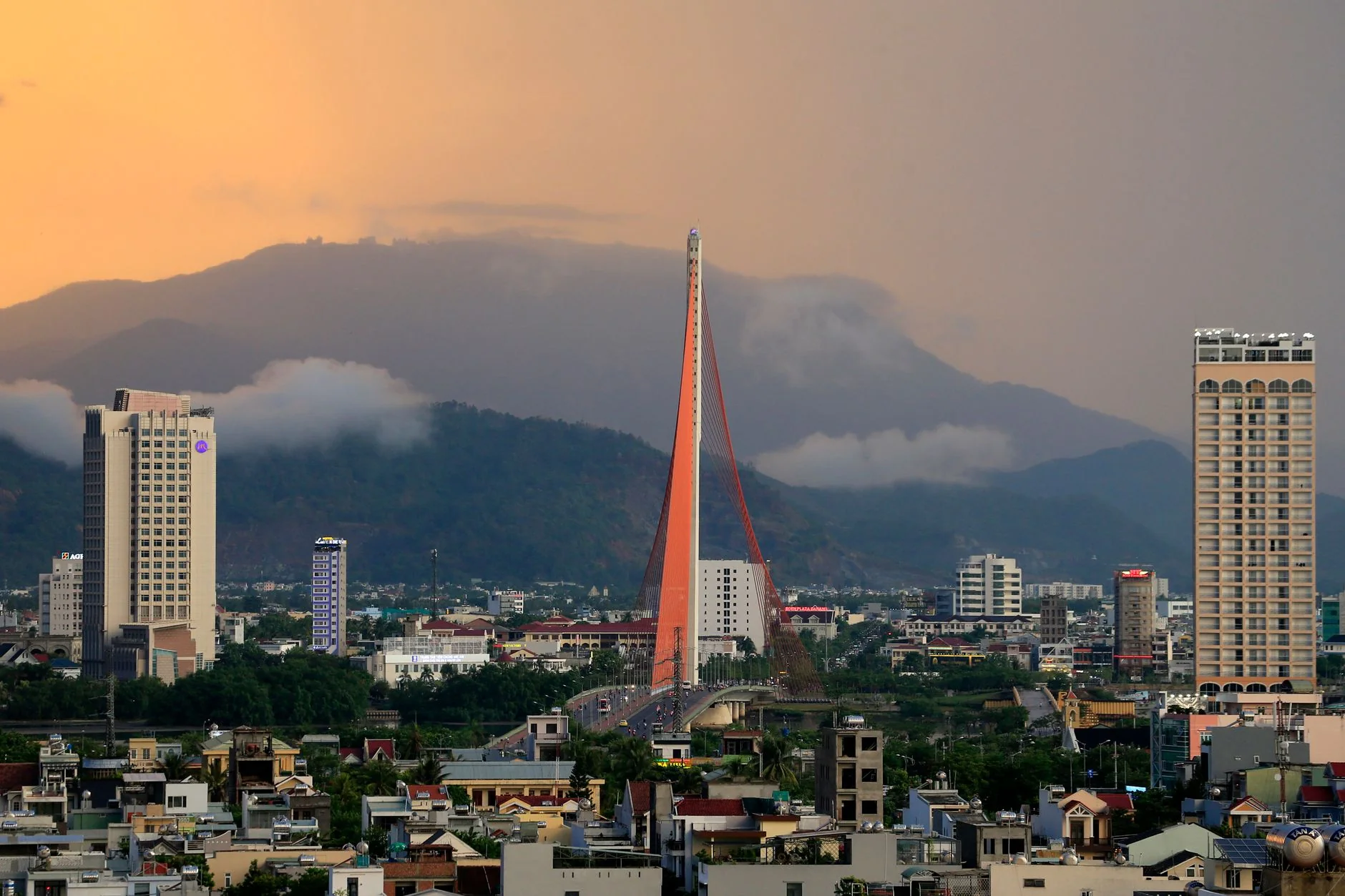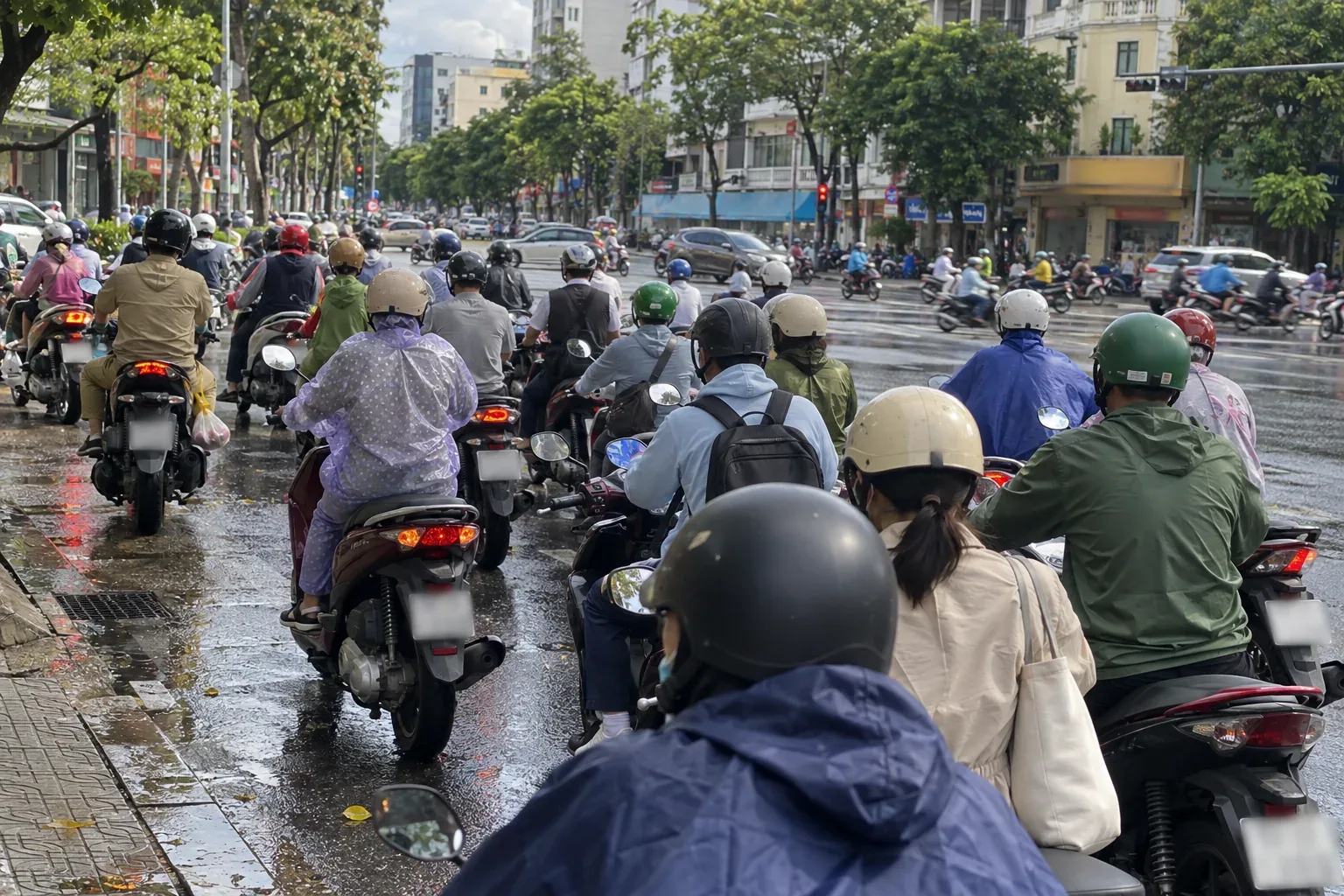
October is the wettest stretch of the year in Da Nang, and the same low-lying areas go under whenever a heavy spell arrives. Expect about 29 to 30°C by day, 23°C at night, humidity of 86 to 88%, and rainfall that the city administration puts at 550 to 1,000 mm a month in October and November. Most days stay workable; the trouble comes in single multi-day downpours like October 2022 and late October 2025. I run visa runs out of this city, so I read the rain forecast the way other people read email.
What is the weather in Da Nang in October?
Expect daytime highs of 29.6°C, nights of 23.2°C and relative humidity of 85.7 to 87.7%, which is hot, wet and very humid. Humidity peaks in October and November, against an annual average of 83.4%, according to the Da Nang city government.

The annual rainfall is about 2,505 mm, and October and November carry a large share of it. September is milder, and I wrote up that month in Da Nang in September if you are arriving earlier.
Which parts of Da Nang flood in October?
The areas that go under first are Cam Le, Lien Chieu, Hoa Vang, Thanh Khe, Hai Chau and Ngu Hanh Son. In the October 2022 flood all six wards of Cam Le stood in 0.6 to 1.5 m of water. In late October 2025 depths of 0.25 to 1.25 m were recorded in Cam Le, Hoa Xuan, Ngu Hanh Son, Thanh Khe and Lien Chieu.
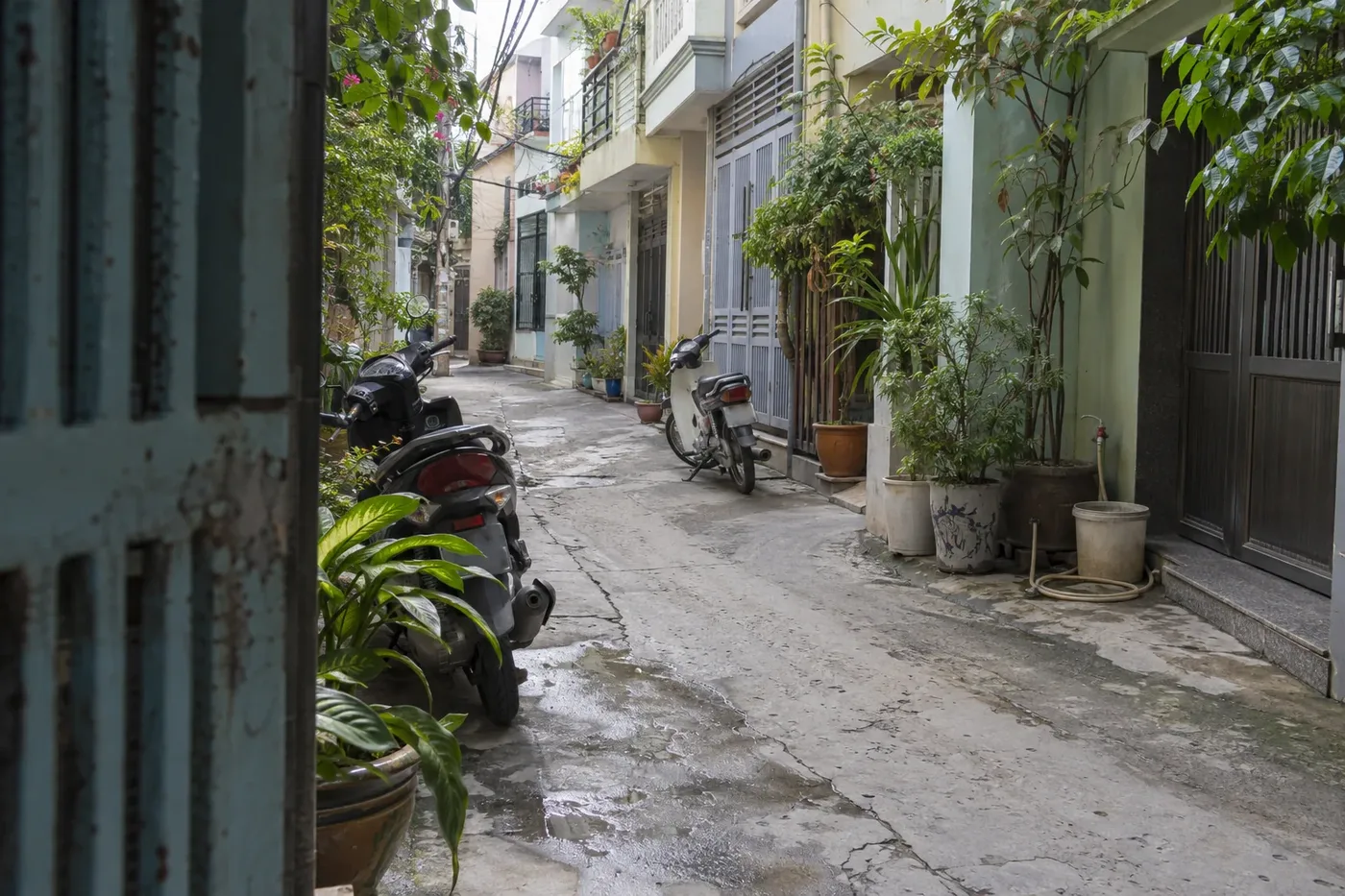
The northwest also fills quickly. Around the Cu De river, water reached 0.5 m on 17 and 18 October 2025, and landslides closed parts of the DT601 road to the mountain villages. The 2025 merger with Quang Nam left news reports using ward and commune names that older maps do not show, so I use area names here, which still match what you will see on the ground. Between a cheaper ground-floor flat and a dearer one on an upper floor in those areas, I take the upper floor for the wet months. Ask your landlord whether the street flooded in 2022 or 2025 before you sign, because a flooded ground floor repeats.
What did the two worst October floods look like?
The worst were 14 to 15 October 2022 and 25 to 31 October 2025. On 14 and 15 October 2022 the Da Nang station recorded 697.6 mm in 24 hours, with more than 500 mm in six hours. Four people died and more than 500 cars were reported damaged.
The late October 2025 flood was bigger. By 1 to 2 November it had killed 12 people in Da Nang, and more than 512,000 subscribers lost electricity. The Han river at Cam Le reached 3.25 m, above the 2009 level, and the flood warning for 25 to 29 October was issued at level 3, the highest.
How do I get a flood warning in time?
The forecast comes from the National Center for Hydro-Meteorological Forecasting at nchmf.gov.vn, and the Da Nang flood and storm control office publishes bulletins at pctt.danang.gov.vn. Both sites are in Vietnamese, and a browser translator is enough to read a warning level.
Save four numbers in your phone: 112 for rescue services, 113 for police, 114 for fire and rescue, and 115 for an ambulance. Calls are free.
How to protect your passport and electronics from flood and damp
Keep the passport in a zip bag above waist height, save photo copies to the cloud and lift electronics off the floor; the six steps below cover both a flooded ground floor and constant damp. Water damage in Da Nang comes in two forms: a flooded ground floor in a bad week, as in October 2022 and October 2025, and constant damp at 86 to 88% humidity all month. Each step takes minutes.
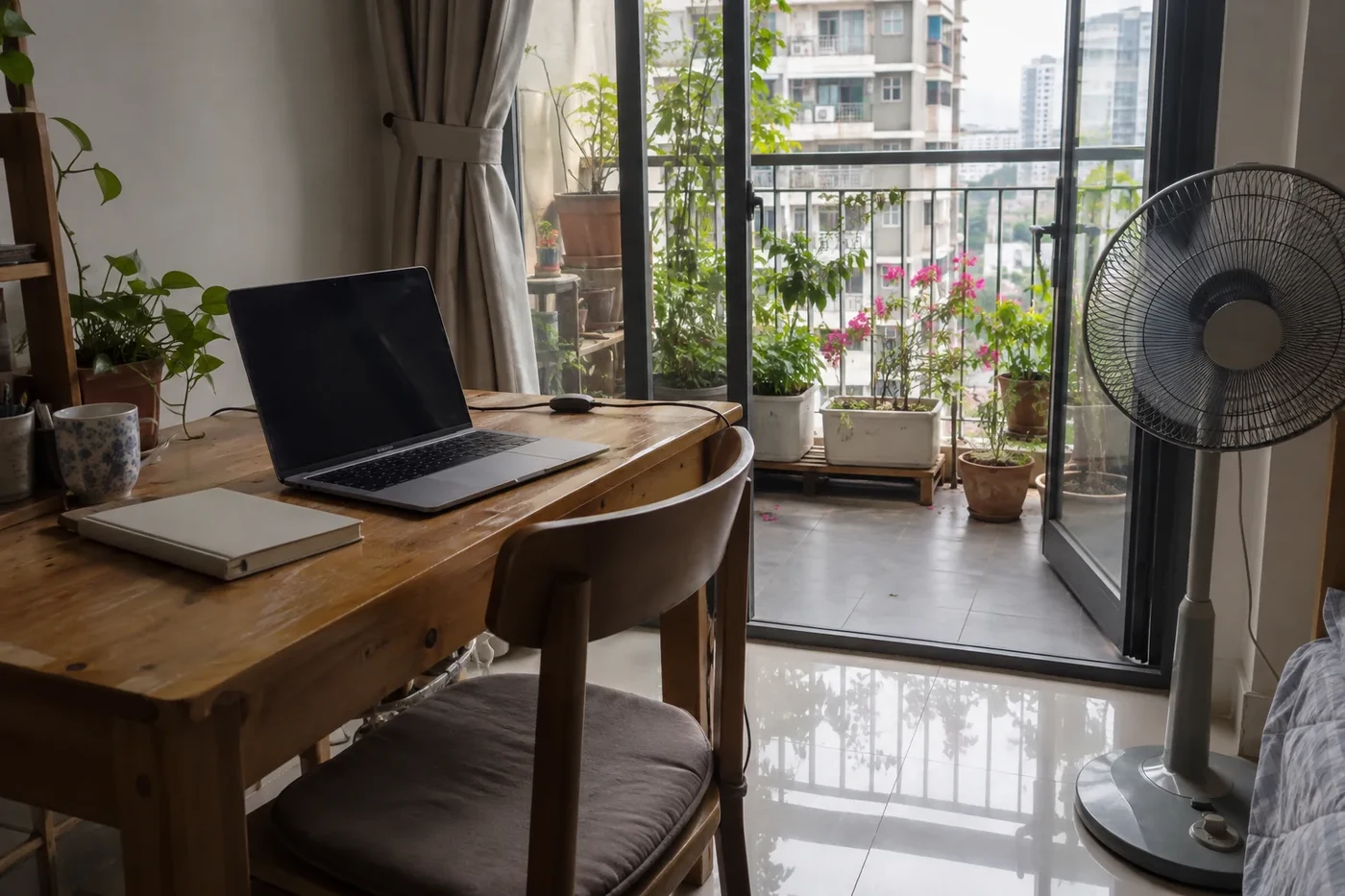
- Put the passport, the printed e‑visa and a few copies in a zip bag and keep the bag on a shelf above waist height, never on the floor.
- Photograph the passport photo page and the visa, then save the files to cloud storage. A soaked or lost original is much easier to replace with copies at hand.
- Charge your phone and a power bank before the forecast rain, because more than 512,000 subscribers lost power in late October 2025.
- Lift the laptop, router and chargers off the floor, and pack them in a dry bag when you leave the flat for the day.
- Keep silica gel or a moisture absorber in the laptop bag and camera case, and replace it once it clumps.
- Carry a waterproof phone pouch on the bike and a plastic sleeve for documents under the seat.
How do I keep mold out of an apartment in the rainy season?
Keep indoor humidity below 60%, ideally between 30 and 50%, which is the US Environmental Protection Agency guideline, and dry anything that gets wet within 24 to 48 hours. With outdoor humidity near 87%, a Da Nang flat needs air conditioning in dry mode or a dehumidifier running every day.

Open wardrobe doors on dry mornings, keep shoes and leather bags off the floor, and wipe visible mold spots early with detergent and water, then dry the surface. The mistake I see is leather bags and shoes left shut inside a closed wardrobe, because at that humidity they are the first things mold takes, so they get the open shelf.
What if my passport gets soaked or lost?
A foreigner who loses a passport in Vietnam reports it to the local police, then to the embassy for a new passport, and then to the Immigration Department for a new visa or exit permit. The steps run in that order, and each needs paperwork from the previous one: the police certificate, new photos and a note from the embassy.
A new passport carries no visa, so a lost one quickly becomes a visa problem. The police report and the embassy visit are yours to do with a translator app and a spare morning. The visa side I take over: message me on WhatsApp with the date you entered Vietnam, and I will tell you what is realistic.
Can I still do a visa run in the rainy season?
Yes, but build in a spare day around the border trip. Late October 2025 showed how fast mountain roads in the region can close: landslides hit national roads 14B, 14D and 14G and the Ho Chi Minh road, with about 62,800 cubic metres of soil coming down in total. I use this as a warning about the mountains, not as a report on the road to the Lao Bao crossing.
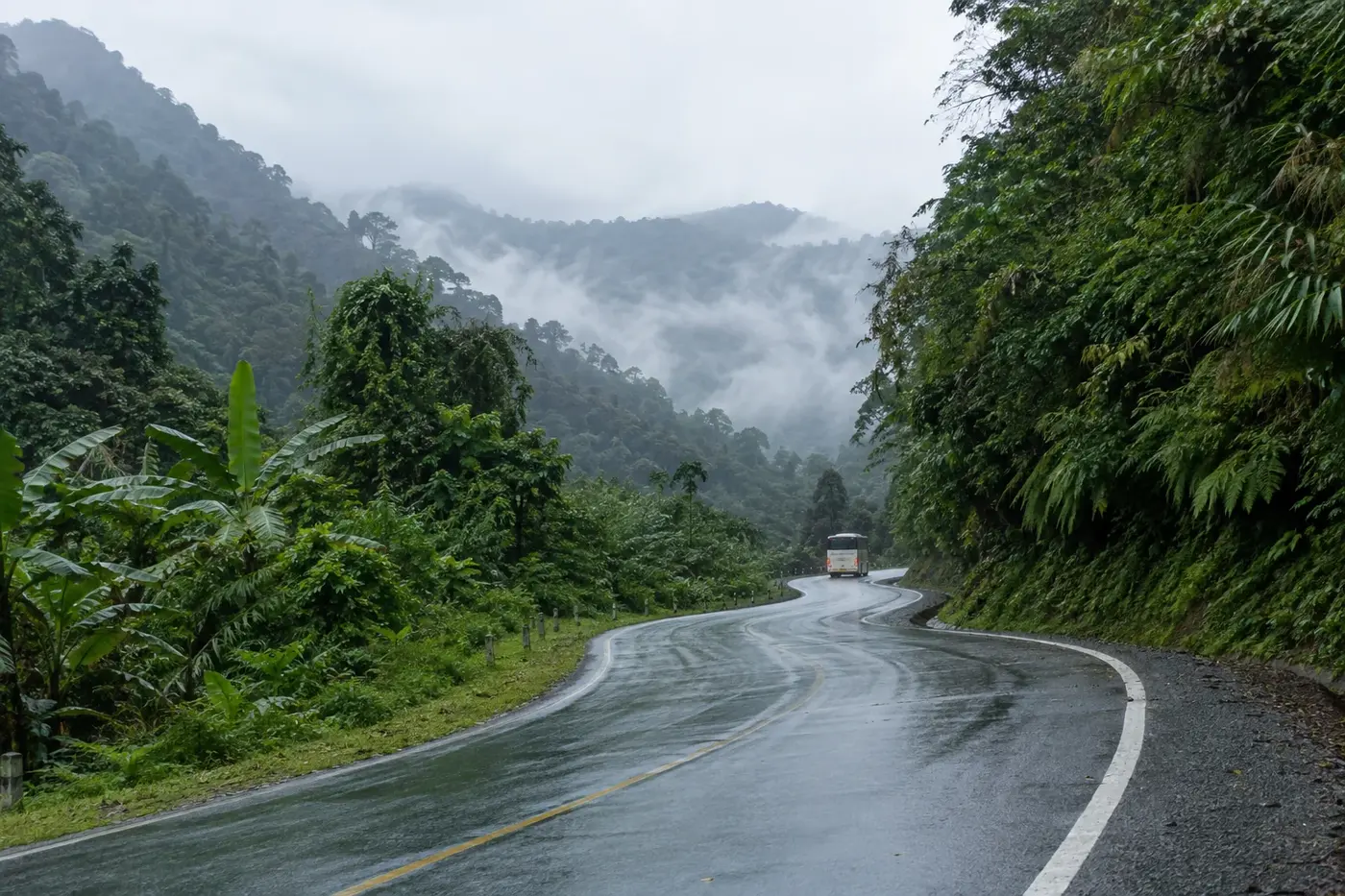
At BestBus Vietnam we run the Da Nang trip as a one-day visa run. An e‑visa is the other route: the state fee is $25 for single entry and $50 for multiple entry, valid up to 90 days, under Circular 28/2026/TT-BTC from 1 April 2026, paid on the official portal.
So should you plan a visa run in October?
Yes, plan it, and fix the date only after you read the latest bulletin at nchmf.gov.vn, with one spare day on either side of the border trip. For a visa that expires in the wettest weeks, the e‑visa avoids the road altogether, and it is worth starting the application a few days before the expiry date.
The e‑visa form takes one evening on the official portal, and the forecast is free. Deciding at six in the morning whether a rain-soaked road is worth the drive is the part I take off your plate: write to me with your visa expiry date and the city you start from, and I will tell you which day works.