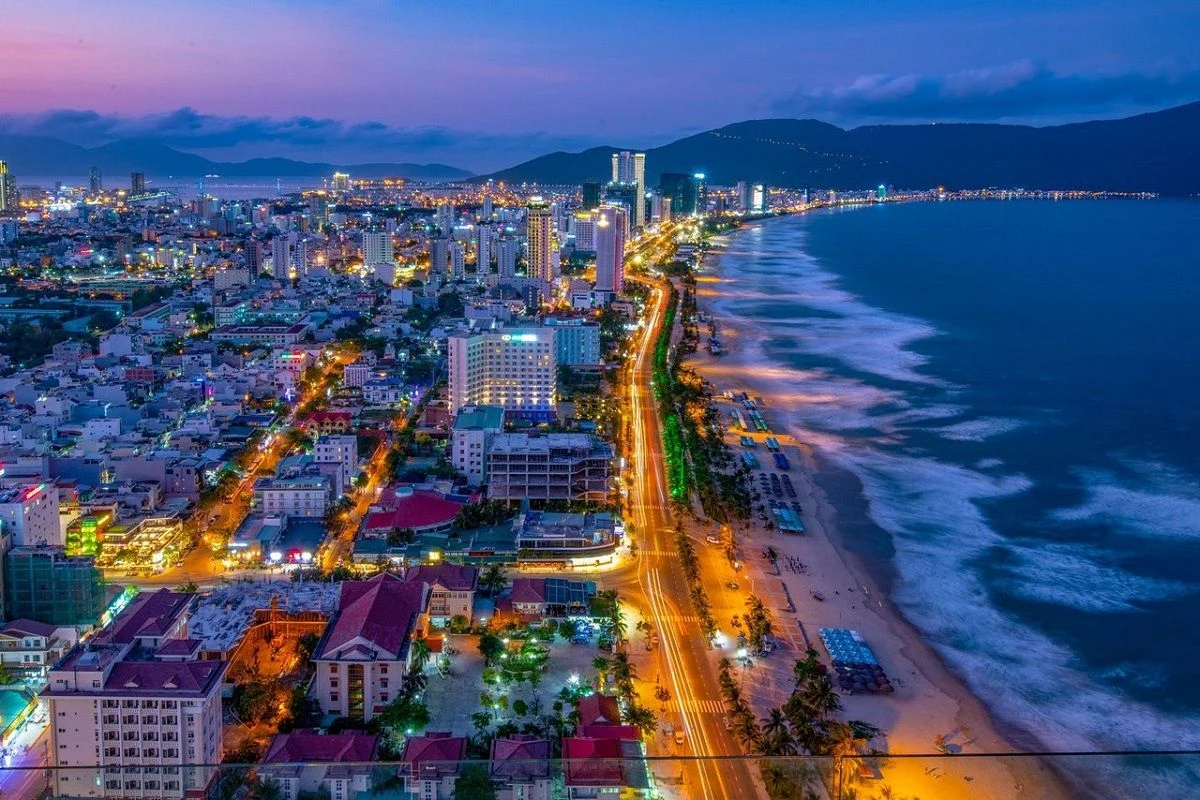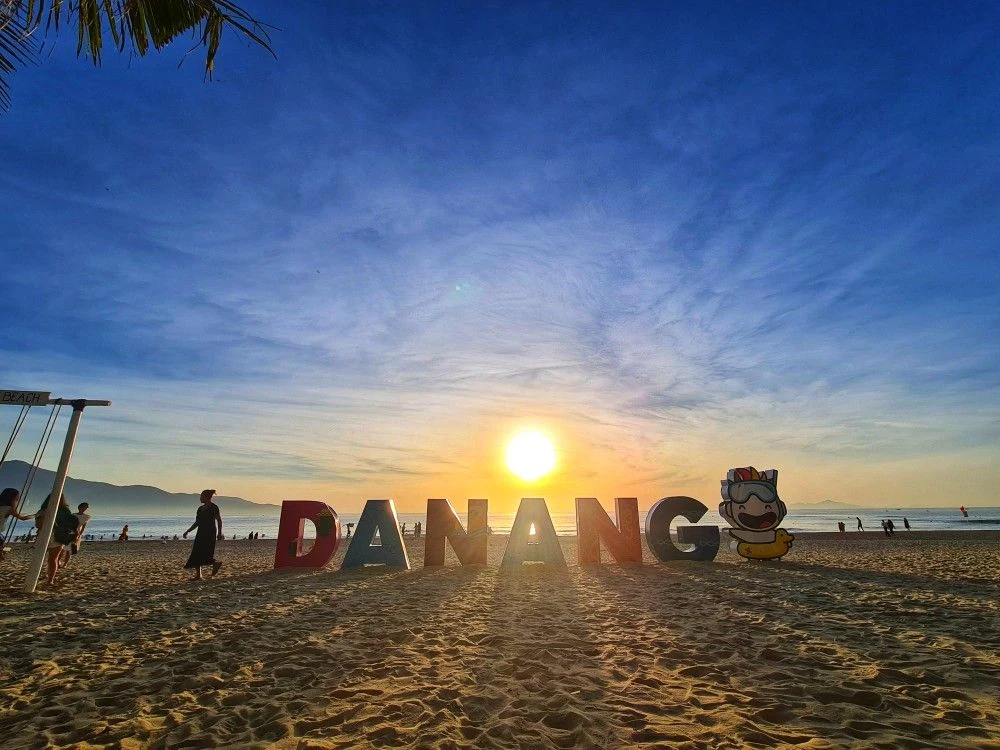
August is the last hot month in Da Nang before the rains: afternoons reach about 33°C, the sea sits near 30°C, and showers only build up toward the end of the month. In August I sort out housing, school dates and the days left on my visa.
How hot and wet is Da Nang in August?
Da Nang in August is hot and humid with mostly dry days. Climate tables give a daytime high of about 33°C, nights of 25 to 26°C, sea water near 30°C and humidity of 74 to 76%. Rain arrives in short, heavy showers that get more frequent toward the end of the month, and the proper rainy season starts in September.

Sources disagree on the August rainfall total (anything from about 100 to 300 mm), so I do not quote a single number. Plan for a dry morning on the beach and a 20-minute downpour in the late afternoon. Midday sun on the My Khe sand is the real problem, so carry a hat and sunscreen and keep walks for early morning and after 17:00.
Are typhoons a risk in August?
Typhoon risk in Da Nang begins in September. Central Vietnam sees about 3 to 4 typhoons a year, most of them between September and November, with the peak in October. August is the month before that, so a tropical storm warning is possible but rare, and I do not cancel a trip over one.

My habit is simple: from mid-August I look at the Vietnamese national weather bulletin once a day and keep the bike on a covered, higher street. The full routine for the stormy months is in the Da Nang September guide and in the typhoon season preparation guide for residents.
What happens with visas and flights around 2 September?
A visa date that falls in the holiday week of 29 August to 2 September needs spare days, because flights, hotels and border buses all fill up. Vietnam’s National Day on 2 September is the busiest local travel window at the end of summer. In 2026 civil servants have five days off, from 29 August to 2 September, and most private employers give two days.
The e‑visa can be done alone: it is issued on the official evisa.gov.vn portal, with a state fee of $25 for a single entry and $50 for multiple entries, valid up to 90 days. The catch is that the portal often rejects foreign bank cards, so the fee cannot be paid and the stamp keeps running. I tell people not to retry the card for days: that is how the spare days before 2 September disappear. A turnkey e‑visa from me costs $55 with a week of processing and $110 with one-day processing.
That is the moment I step in with BestBus Vietnam: I pay the state fee with a card the portal accepts, choose the right entry point and take the border run on a fixed day, so a one-day visa run from Da Nang, one of the visa services I run, does not collide with the holiday queues. Send me your stamp date on WhatsApp and I will tell you which day to pick.
When do rents in Da Nang start to soften?
Rents in Da Nang start to soften after the peak of domestic tourism, which runs from June through August. Short stays and hotels get cheaper from late August, and September to November is a shoulder season. There is no public monthly price series for long rentals, so the safest move is to negotiate once the summer rush ends.
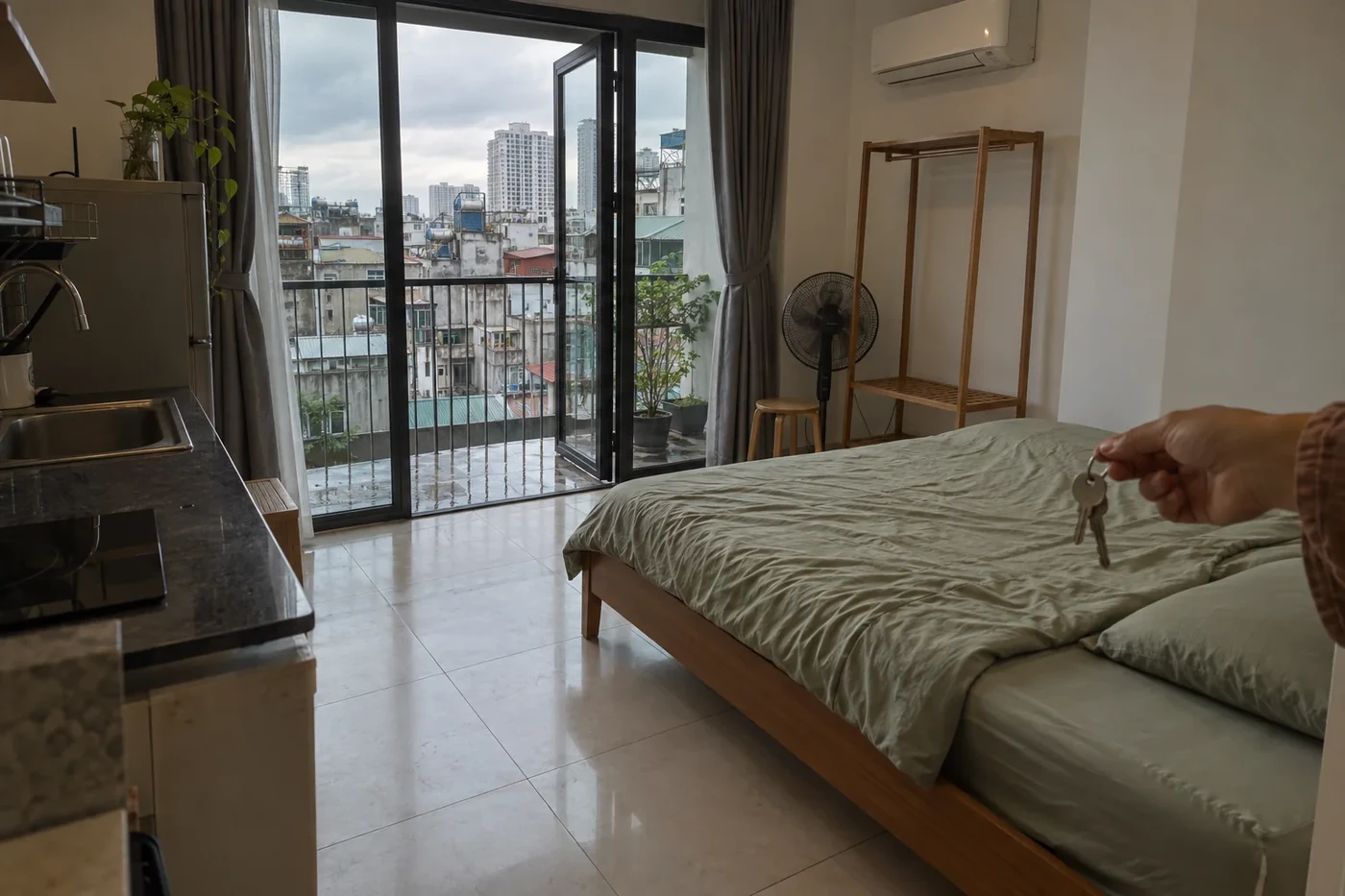
For a one-bedroom flat in An Thuong or My Khe, listings run at about $350 to $570 a month (9 to 15 million dong), with the sea side at the top of that range and studios lower. Take that as a rough guide only. A landlord with empty units in September can often be talked into a lower price, a free month on a one-year contract or included utilities. Of those, I push for the free month, because a landlord gives up one month more easily than a lower rate for the whole year. For the full checklist on viewings, deposits and contracts, see the long-term rental guide for expats.
How do school dates affect a family move?
Vietnamese public schools open the 2026-2027 year with one national ceremony on the morning of 5 September, and pupils report a week earlier, from 29 August (grades 1, 9 and 12 two weeks earlier, from 22 August). International schools run on their own calendar, so a family arriving in August has to ask each school for exact dates.
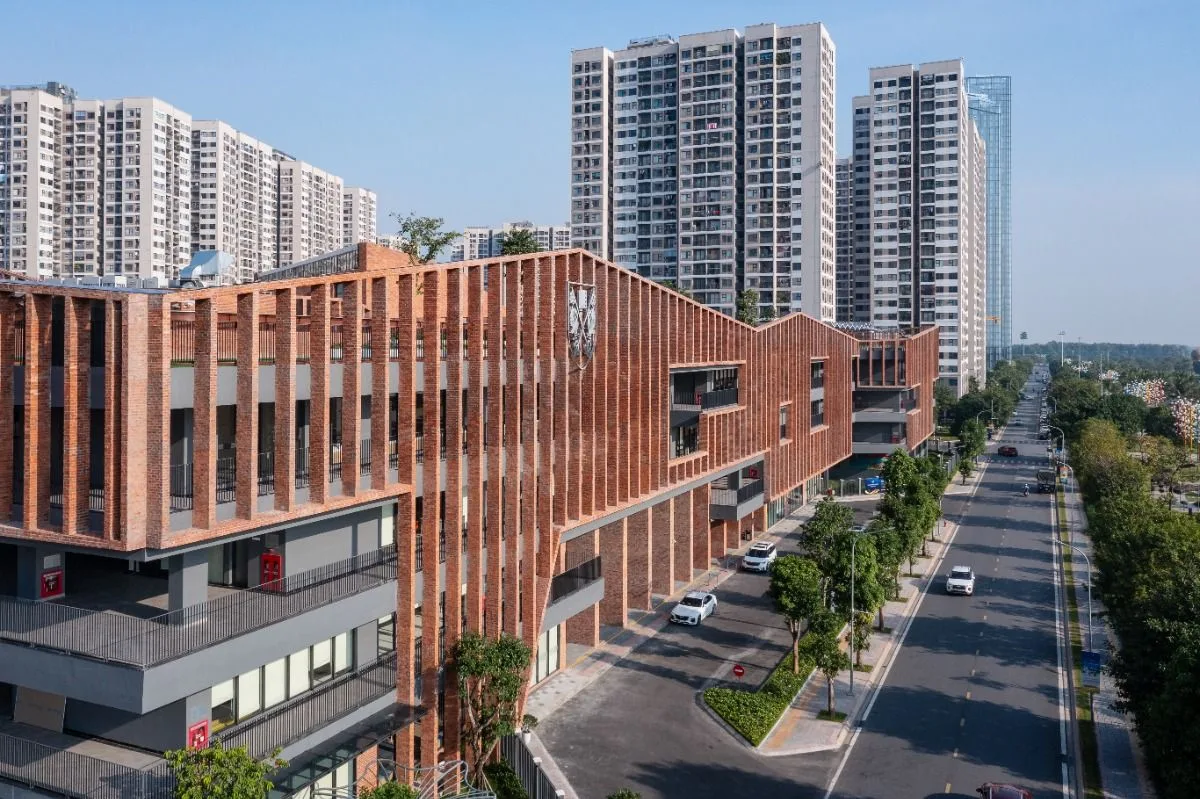
Past years show how different the calendars are. Singapore International School in Da Nang started on 5 August in 2024 and on 6 August in 2025, while the American school APU announced its 2026-2027 opening ceremony for 8 September. I treat the start date as the stricter filter: a school that opens in early August will not wait for a family that lands later. Tuition is the other filter: APU lists about 238 to 569 million dong a year (roughly $9,000 to $21,600, depending on the grade) and SIS about 498 to 626 million dong (roughly $19,000 to $23,800). These are 2026-2027 school price lists converted at the current rate, so check the figure with the admissions office. The wider picture of costs and schools is in the guide to moving to Vietnam with kids.
Step-by-step: what to book and ask before September
A short checklist covers most of what goes wrong in this month.
- Check the end date of your stamp or e‑visa and count back at least three spare days before 2 September.
- Book flights or the border bus for the week outside 29 August to 2 September.
- Ask each school for its 2026-2027 start date and enrolment deadline, in writing.
- Visit three flats in An Thuong or My Khe and ask for a lower price or a free month on a one-year contract.
- Start checking the weather bulletin every morning from mid-August.
- Put the bike on a higher street and fill a first-aid and water kit before the first September storm.
Quick summary: what to do in August
In August I sort out the stamp date first, then school dates, then the flat. The weather is hot and mostly dry, typhoons come later, and prices usually soften only after the summer rush. A visa that ends in the holiday week is the one item that costs real money if it slips.
If your stamp falls inside the holiday week, the portal can be done alone with a working foreign card and a bit of patience. For the days when the fee does not go through, or when there is no room to spare, I take the border run and the paperwork off your hands. Message me on WhatsApp with your city and your last day in the country, and I will say what fits before the end of August.
Frequently asked questions
Is August a good month for the beach in Da Nang?
Yes, the sea is near 30°C and most days are dry, but midday sun is strong and the beach is busy during school holidays. Go before 08:00 or after 16:30 and keep sunscreen on.
Can I enrol a child in a public school if we arrive in August?
Public schools in Vietnam enrol locally and the rules for foreign pupils vary by ward, so ask the ward education office and the school directly. Most expat families look at international schools first because those take international applicants.
What if a tropical storm closes the airport near my flight date?
Leave three spare days before any ticket or stamp date. If the airport closes, your airline will rebook you, but only the stamp date is fixed by law, so a short overstay can start while you wait.
Where can I follow official storm warnings?
The Vietnamese National Center for Hydro-Meteorological Forecasting publishes bulletins at nchmf.gov.vn, in Vietnamese. Your hotel, landlord or airline app usually passes the same warnings on in English.