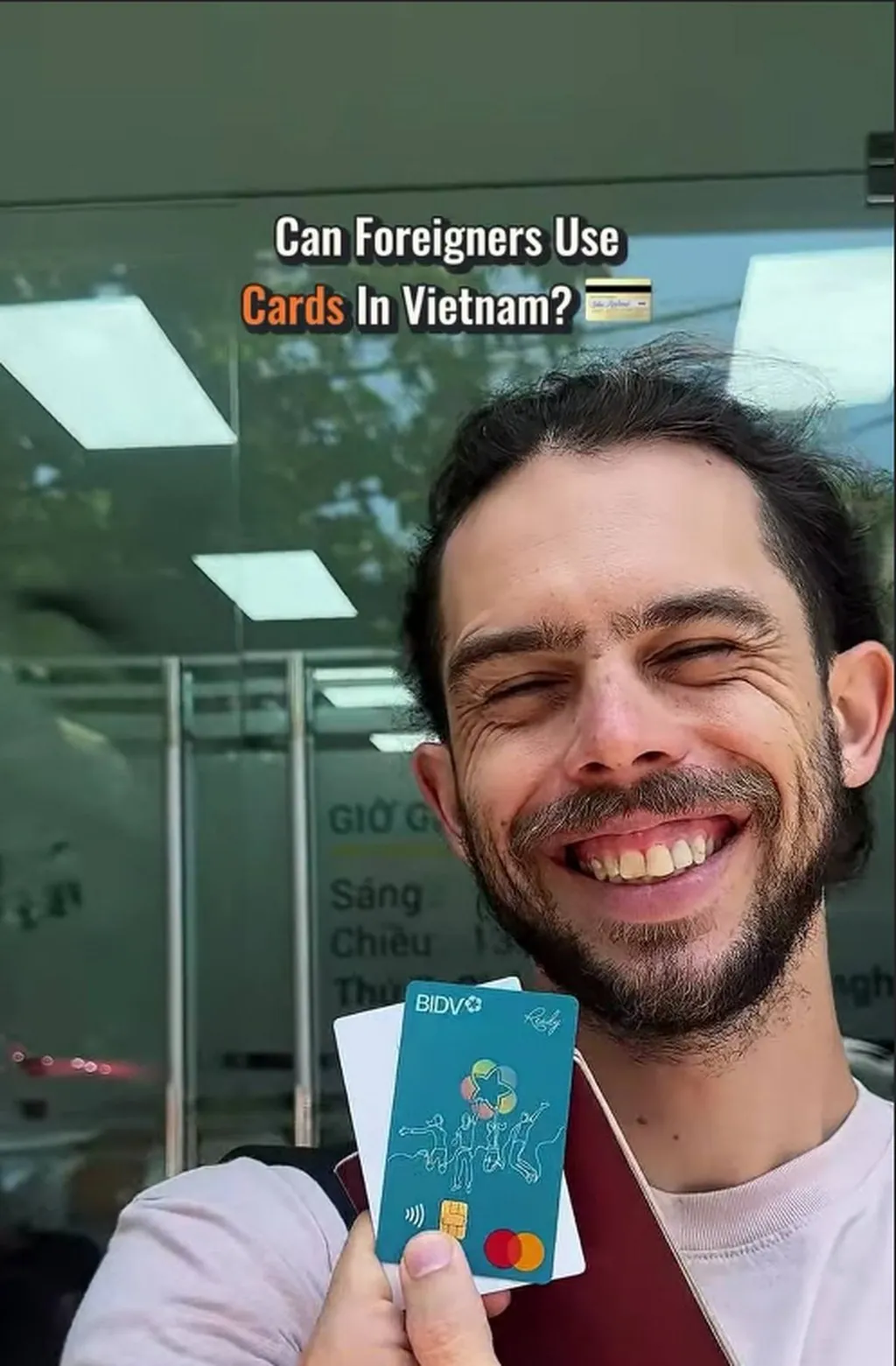
Whether a foreigner can open a bank account in Vietnam depends on one thing: what residence paperwork you can show. BIDV and Vietcombank both state on their card pages that a foreign applicant needs at least 12 months of residency in Vietnam. Some branches have opened accounts for people on a 90-day e-visa, but no bank publishes that as a rule, so treat it as a lucky branch, not a plan.
This guide compares four banks, lists the documents, breaks down the costs we could confirm on official pages, and covers what to do when the answer is no.
Can a Foreigner Open a Bank Account in Vietnam?
Yes, if your stay is long enough on paper. The short version:
- Work permit, temporary residence card (TRC) or long-term visa with 12+ months behind it: you qualify at the big state banks, and the account is a routine visit.
- 90-day e-visa: officially short of the 12-month bar at BIDV and Vietcombank. Some branches have accepted it; many refuse. Expect to be sent away at least once.
- Visa-free stay (45 days for many nationalities): the least likely to work. There is no visa to show, and the banks’ rule is built around residence documents.
- HSBC: a different question, because the barrier is money, not the visa (see the table).
Since 2024, banks also have to keep checking foreigners’ residence papers. Under Circular 18/2024/TT-NHNN, VietinBank says it tracks how long your documents are valid and suspends card transactions once they expire. An account opened on a short visa can therefore stop working when the visa ends.
Which Vietnamese Banks Actually Accept Foreigners: BIDV vs Vietcombank vs VietinBank vs HSBC
| BIDV | Vietcombank | VietinBank | HSBC Vietnam | |
|---|---|---|---|---|
| Visa / residence accepted | Card page: passport, visa and 12 months of residency | Debit cards: proof you may stay 12 months (visa, temporary residence certificate, TRC, labour contract) | Foreign customers welcome; documents proving residence must stay valid or cards are suspended | Foreigners can apply in a branch or by phone; ID and residence proof must be valid for at least 2 months at application |
| Minimum balance | Not stated on the card pages we read | Online account advertised as free of charge; no minimum published | Not published | Premier: VND 1 billion average monthly balance, or VND 100 million monthly salary |
| Card issuance time | Not published; the branch tells you at application | Not published | Not published | Not published |
| English at the branch | Varies by branch; city-center ones are your best bet | Varies by branch; English app and site | Varies by branch | English-language site; the most English-friendly of the four |
Where a cell says “not published”, the bank’s own pages do not give a number, and we would rather leave it blank than repeat a figure from a forum. Guides on the web quote anything from 50,000 to 2,000,000 VND for minimum balances, and they contradict each other.
BIDV is the bank most foreigners try first because its branches are everywhere and staff have seen passports before. Its card documentation for foreigners asks for copies of your passport and visa plus the 12-month residency condition. In practice, the result varies by branch: a city-center branch in Da Nang, Hanoi or Ho Chi Minh City is more likely to be flexible than one in a suburb.
Vietcombank publishes the same 12-month logic for debit cards. Its online account is advertised as free of charge and can be opened in the Digibank app, with one catch: until you verify in person at a Vietcombank office, transfers are capped at VND 400 million per month.
VietinBank issues cards to foreigners, and its public notice for foreign customers is about staying compliant: keep your residence documents valid and update them at the branch.
HSBC Vietnam is built for people with money moving in from abroad. Premier needs a VND 1 billion average monthly balance or a VND 100 million monthly salary paid into HSBC, unless you already hold Premier in another country. If you are a digital nomad on an e-visa with a normal balance, it is not your bank.
Documents You Need to Bring
Bring originals plus a printed copy of each:
- Passport, with enough validity left to cover the period you want the account for.
- Visa, TRC or work permit. Print the e-visa; branches prefer paper.
- Proof of where you live: a rental contract or landlord letter beats a hotel booking. Vietnamese banks often want a temporary residence registration slip from the local police.
- A Vietnamese SIM in your name. The one document people forget. The bank registers your number for OTP codes, so buy the SIM before the visit.
- Passport photos, in case the branch asks.
In Da Nang, the places you need before the bank visit are pinned on our Da Nang expat map: the Viettel store for the SIM, Vietcombank’s Hai Chau branch, the HSBC branch and exchange counters for cash. Open it on your phone and plan the order.
Costs and Fees: What the Account Actually Costs You
Vietnamese banks publish fee schedules, but foreign-customer fees often sit in PDF tariffs that change. These are the numbers we could confirm on official bank pages in September 2026:
- BIDV debit card: the BIDV Mastercard Platinum Debit page lists issuance as free and the annual fee at VND 300,000 for the primary card and VND 100,000 for a supplementary card. That page may describe a product no longer being issued, so ask which card the branch offers today.
- Vietcombank: the online current account is advertised as free of charge. The cap for accounts not verified in person is VND 400 million per month, which is a lot for a tourist and a wall for a business owner.
- HSBC Premier: the price is the balance, VND 1 billion average monthly, or VND 100 million monthly salary credited to HSBC.
What we could not confirm from a bank’s own page: monthly maintenance fees, minimum balances, fees for ATM withdrawals at other banks, and international transfer charges. Ask for the current tariff before you sign, and ask specifically about three lines: monthly fee, ATM fee at another bank’s machine, and incoming international transfer fee. Bring a photo of the tariff sheet home.
Also budget for the fee nobody lists: time. One branch visit can end with “come back with a residence slip”, so plan two trips.
Step-by-Step: What Happens at the Counter
- Arrive before 11:00. Branches are quieter and someone with English is more likely to be on the floor.
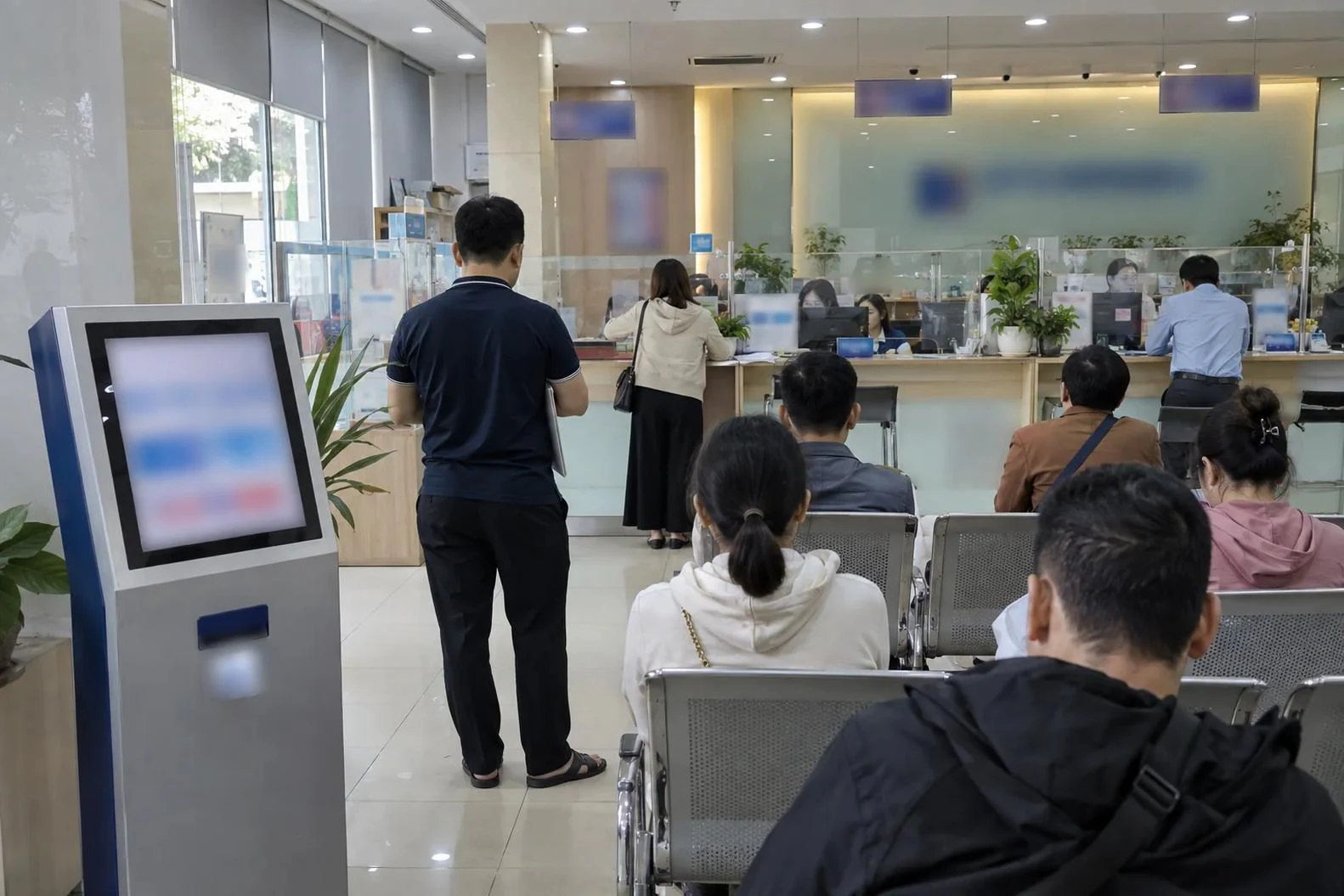
- Take a queue number and say plainly what you want: “open a payment account and a debit card for a foreigner.”
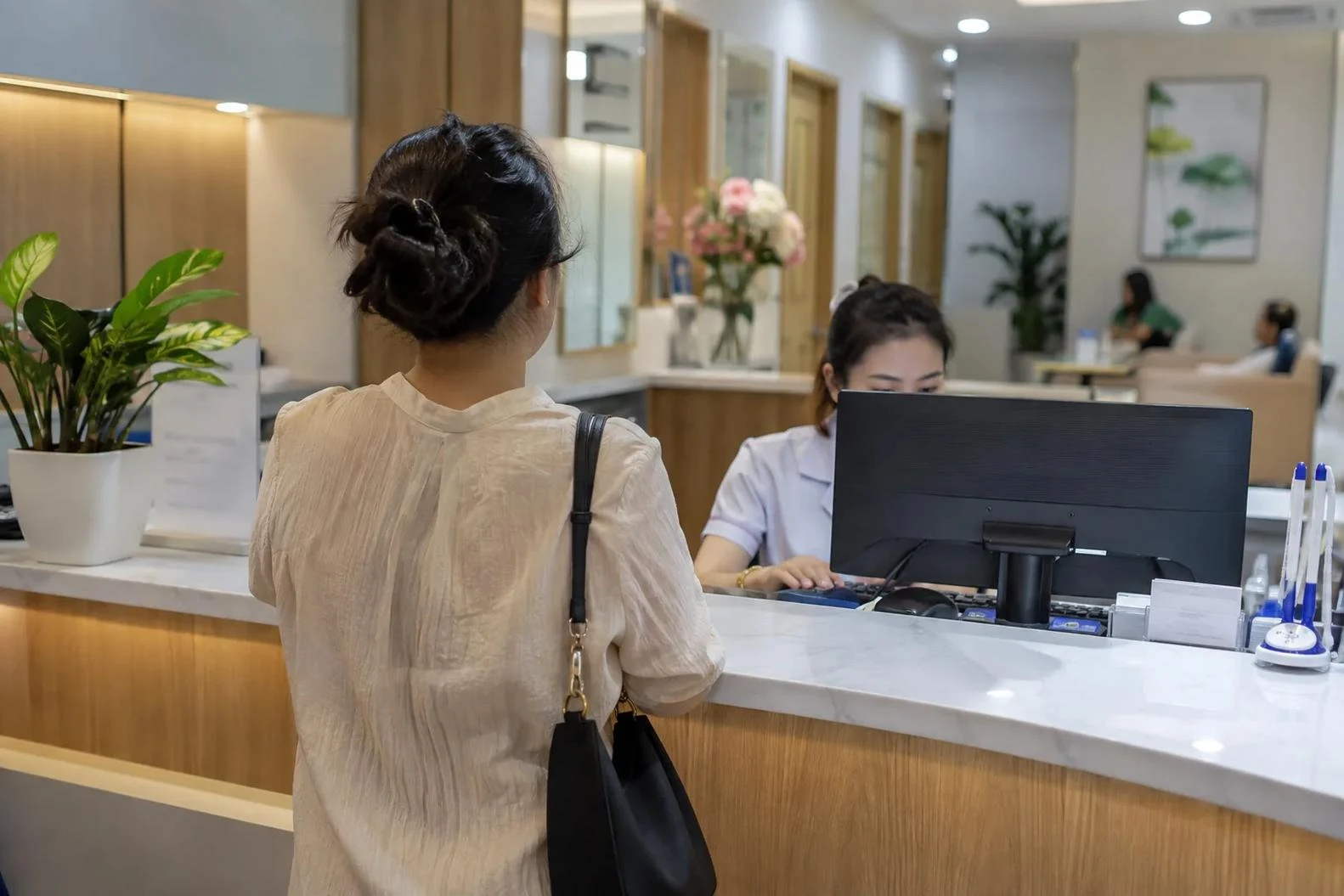
- The teller checks the passport, visa and residence proof, and will often call a supervisor. This pause is normal.
- Fill in the form, give your local SIM number, and confirm OTP registration.
- Pay the opening deposit, if the branch asks for one.
- Ask when the card is ready and whether you should collect it in person or have it delivered. The card time is not published by the banks, so get it from the branch.
- Activate the banking app with your SIM before you leave the building.
Expect 30 to 60 minutes if all documents are in order.
If the Branch Turns You Down: What to Do Next
A refusal often comes down to one missing paper, not the bank’s policy.
- Ask which document is missing, and write it down. “Need a residence slip” is fixable; “we do not open for tourists” is a policy answer.
- Try another branch of the same bank, ideally a city-center one. Individual staff familiarity varies more than official policy.
- Try another bank. Vietcombank, VietinBank and BIDV apply similar rules, but the person at the desk differs.
- Fix the paperwork. If the blocker is your visa length, an extension or a longer visa is the actual solution. That is the part I handle every day: e-visas, extensions and visa runs through our visa services. Before you queue at a second branch, send me your visa type and dates on WhatsApp and I will tell you whether a longer visa fixes the refusal or whether it is just that branch.
- Skip the account for now. You can live for months on cash and a foreign card (next sections).
Card vs Account: What You Get and What You Don’t
The account holds your money; the card is how you spend it. They are usually opened in the same visit, but they have separate rules: the residency condition on the BIDV and Vietcombank pages is written into the card terms. A card also carries its own annual fee, like the VND 300,000 on the BIDV Platinum debit, and a card can be suspended when your residence papers expire, even if the account stays.
For what a tourist e-visa holder can realistically get, see our guide to a Vietnamese bank card on an e-visa.
Paying Without a Local Account: MoMo, VietQR and Foreign Cards
You do not need a Vietnamese account to get through a normal week:
- Cash still works everywhere, and small vendors prefer it.
- A foreign Visa or Mastercard works at most hotels, malls and chain restaurants. Street food and small shops will not take it.
- VietQR codes are the way locals pay. The code is scanned from a Vietnamese banking app or wallet, so a visitor without a local account usually cannot use them.
- MoMo and similar wallets generally need a Vietnamese phone number and ID verification. Rules for foreign users change, so check the app’s current terms before you count on it.
If you buy a SIM on arrival, the payment options are not what stops you; the local account is.
Moving Money In and Out of Vietnam
Before you open an account, decide how money will reach it. A VND account can receive international transfers, but banks may ask for paperwork about where the money came from, and sending money out is usually harder than receiving. Ask two things at the branch: which documents they need for an incoming transfer and which for an outgoing one. Do this at account opening, not after the first transfer bounces.
Long-stay questions such as taxes, housing and insurance are covered in our relocation guide.
Next step: if the money will come from abroad, Best Ways to Send Money To and From Vietnam in 2026 compares Wise and Remitly against a bank wire.
The awkward part of this topic is that the bank’s answer depends on your paperwork, and most people learn that at the counter, after the trip. I handle e-visas, extensions and visa runs for people living in Vietnam, so I can usually tell from your visa and dates whether the account is realistic before you go.
If a branch has turned you down, or you want to check first, write to me on WhatsApp with your visa type and how long you plan to stay. If the visa is the problem, we sort the visa; if it is the branch, I will tell you what to ask for at the next one.
Frequently Asked Questions
Can a foreigner open a bank account in Vietnam on a tourist e-visa? Officially, BIDV and Vietcombank ask foreigners for proof of at least 12 months of residency on their card pages. Some branches have opened accounts for e-visa holders anyway, but that is branch discretion, not a rule you can count on.
Do I need a Vietnamese SIM card to open an account? Yes, plan on it. Banks register a local phone number for OTP codes and the banking app.
What happens to my card when my visa or residence card expires? Under Circular 18/2024/TT-NHNN, banks such as VietinBank check the validity of a foreigner’s residence documents and suspend card transactions when they expire.
Is HSBC an option for a regular expat? Only for a high balance. HSBC Premier asks for VND 1 billion average monthly balance or a VND 100 million monthly salary.
Can I live in Vietnam without a local bank account? Yes, many visitors do: cash, a foreign card, and a local SIM cover most days. A local account starts to matter once you rent long term or get paid locally.