Facebook groups usually win on price, and agents win on time. A studio in Da Nang runs $170-400 a month through either route, so the real difference comes down to the commission, how much room you have to haggle, and how much checking you do yourself.
For district-by-district numbers, see renting an apartment in Da Nang: real prices. This one covers who to rent through, side by side:
| Agent | Facebook group | |
|---|---|---|
| Commission | Free to you, or half to one full month of rent | None |
| Room to haggle | Small, the agent’s cut grows with the rent | Larger, you talk to the owner |
| Speed | Viewings in 1-2 days | A week of messages and viewings |
| Fake-listing risk | Low | High, you verify everything |
| Language | Agent talks to the landlord for you | You need Zalo and a translator app |
Facebook groups: cheaper, but you are the quality control
City groups on Facebook and chats on Zalo are where owners post directly, with no middleman fee built into the rent. Owners there will often drop the price for a longer contract. The same groups also host copied listings: stolen photos, a rent about a third below the market, and an “owner abroad” who asks for a deposit to “hold” the flat. Money sent to an owner who is conveniently abroad is gone the moment it leaves your account, so I treat that request alone as a reason to walk away.

Four checks filter out nearly all of it:
- Ask for a live video call from inside the unit, with the window and the street view in frame.
- Run the photos through a reverse image search; stolen ones turn up in a minute.
- Ask for a photo of the ownership certificate (the “pink book”, sổ hồng) and match the name to the person you pay.
- Send nothing before you have seen the flat and read the contract.
What an agent charges and who pays it
Some agents are paid by the landlord, so the service costs you nothing. Others charge the tenant between half a month and a full month of rent. Ask “who pays your commission?” before the first viewing; a straight agent answers straight away.
An agent earns more when the rent is higher, so expect less help negotiating the price down. What you get in return is translation, viewings lined up in a day or two, and someone who talks to the landlord in Vietnamese when the aircon breaks in month two. When the landlord covers the commission I take the agent without a second thought, but when the fee lands on you, it is the first number to haggle.
Walk-through checks before you pay anyone
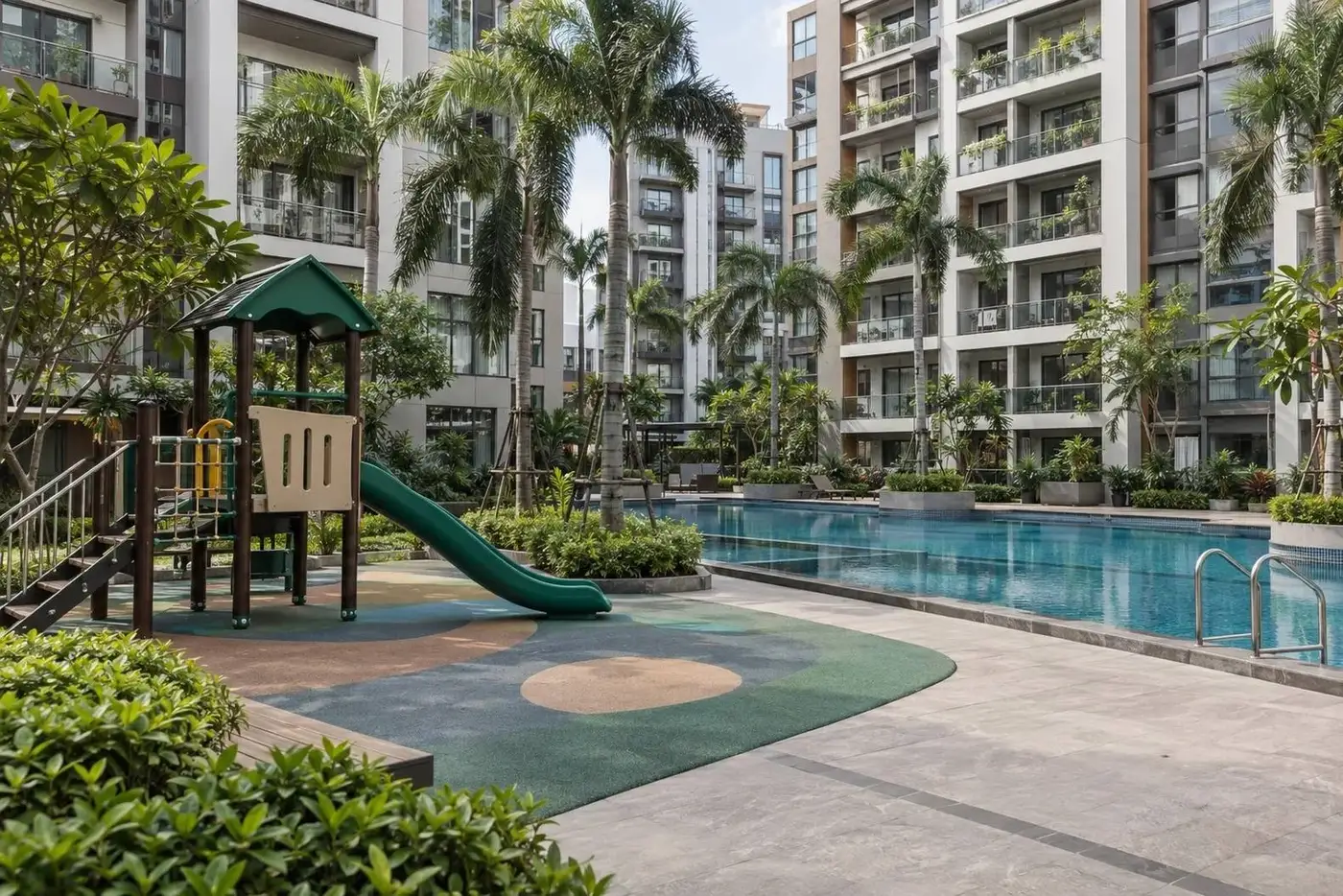
Turn on the aircon, open both taps, and test wifi in every room. Electricity is the big variable cost, around $30 a month with air conditioning, so ask which tariff the landlord bills: the government rate set by EVN is the one to get, and a marked-up private rate costs more. Water is about $4, internet $10-15, and newer buildings add $15-30 for security and maintenance. None of it appears in the headline rent, so ask line by line.
Deposit, contract and the police registration
Expect to pay the first month plus a deposit equal to one month on move-in, sometimes two, so carry two to three months of rent. The deposit comes back in full only if you finish the contracted term. Leave a week early and the landlord can legally keep all of it, because the term is written in the contract. I would trade a small rent discount for an early-termination clause every time, so negotiate it before you sign.
Ask at the viewing, “will you register me with the police?” Registration is the landlord’s job, and visa extensions and a TRC both depend on it. The same paperwork has a visa clock running behind it. The e‑visa application takes an evening on the official evisa.gov.vn portal, but a 90-day e‑visa ends long before a 12-month lease does, and that gap is the part of arrivals I handle at BestBus Vietnam: see what the visa and visa-run services cover.
Moving in: the receipts that get the deposit back
Get a written receipt for the deposit with the date and the amount. On handover day, photograph every room and send the photos to the landlord on Zalo the same evening. Those timestamps settle most arguments about damage when you move out.
Which route fits your stay
Landing for one to three months with no Vietnamese and a tight schedule points to an agent. A stay of three months or more, with a week to look around, points to Facebook. The best hybrid is to book a short-stay studio for 5-7 days at roughly $20-25 a night, view three to five places in person, then pick the channel. Real costs for a 1-3 month stay shows what that costs month by month.
A video call from the flat, a pink-book check and a signed receipt all fit into one evening. Matching the lease length to your visa dates is where plans quietly break. Message me on WhatsApp with your arrival date and I will tell you which lease length your visa can carry.
Frequently asked questions
What happens to my deposit if the landlord will not return it? Send a written request on Zalo that quotes the receipt date, the amount and your handover photos; that record is what gets a deposit back, and a landlord who deducts without evidence of damage has little to argue with.
Can I rent an apartment in Vietnam for just one month? Yes, but at short-stay prices of roughly $20-25 a night for a studio, because the advertised long-term rate usually starts at a three-month contract.
Does a 90-day e‑visa cover a 12-month lease? No, the e‑visa expires after 90 days, so a year-long lease needs an exit plan such as a visa run, an extension or a longer-stay permit, and the landlord’s police registration supports each of those.